blending an assortment of thoughts and experiences for my friends, relations and kindred spirit

blending an assortment of thoughts and experiences for my friends, relations and kindred spirit
By Alison Hobbs, blending a mixture of thoughts and experiences for friends, relations and kindred spirits.

Tuesday, December 20, 2011

In Paris, December 3rd

In the mirror of a French café near the Seine,
photo by Chris
On all three evenings of our weekend in Paris we took a walk (near our hotel) around what the Chinese would call the CBD of Paris, La Défense, with its architecture de qualité supérieure and quirky sculptures. We liked it and appreciated the vision behind the erection of La Grande Arche lining up with the Arc de Triomphe in the distance across the river.

It rained for most of the weekend, with a real downpour at the end after supper on the Sunday evening, but this didn't interfere with our enjoyment of the city. On Saturday morning, having taken a metro train to the Place de la Concorde, we strolled through the deserted Tuileries (I like deserted city gardens!) under our umbrellas then crossed the Seine to the Rive Gauche and St. Germain-des-Près district (where the writers Paul Guimard and Benoîte Groult used to live ... not to mention Pablo Picasso, Arthur Rimbaud, Paul Verlaine, Henri Matisse, Jean-Paul Sartre, Ernest Hemingway and F. Scott Fitzgerald) where we found the requisite artsy cafés, little high-end galleries and a well stocked, Canadian second hand bookshop, to which Chris had found a signpost. We also went into a photocopying shop where we got talking to a young British landscape architect (working on his portfolio) who'd been living in Paris for a while and could speak excellent French.


A view from the Batobus
From there we explored as far as the Monde Arabe on the river bank (we'll have to go back––a new museum is due to open there next February) before returning to the quais to board a batobus. I was flagging and needed the hour's sit down on its round tour as far as the Tour Eiffel and back. Back on land, we crossed the island bridges and wandered west of the Seine through the Marais, veering off down side streets to the Centre Pompidou, eventually. By this time it was dark; Christmas shoppers were swarming. It reminded me of Barcelona. Chris was determined to find Les Halles, the sleazy setting of some Maigret novels, and we did so, but it has been radically updated and cleaned up, the forum being reconstructed and landscaped, in the process of being transformed like Berlin's Potsdamer Platz or the People's Park in Shanghai. It's going to be huge and very impressive.

Monday, December 19, 2011

In Paris, December 4th

Zooming in on Montmartre, from the Arc de Triomphe
Luckily for us, the 280 steps to the top of the Arc de Triomphe were free of charge on Sunday, December 4th. Having walked the length of the long, straight avenues (Charles de Gaulle / de la Grande Armée) from the Pont Neuilly at La Défense to the Arc, we climbed up to see the views of the city from that splendid vantage point. Montmartre looked so higgledy-piggledy, with the dome of Sacré Coeur above, that it could have been Istanbul. Then we stepped back down and set off down the Champs Élysées, that now terminates at the ferris wheel (La Grande Roue, dramatically lit up after dark).

Champs Élysées from the Arc de Triomphe

Ave. Foch and Ave. de la Grande Armée. La Défense in the distance.
We'd walked from there! 
Avoiding lunch on the Champs Élysées, too touristy for my liking (where shopaholics were queuing to be allowed into Louis Vuitton or the new branch of Marks & Spencer), we found a cosy Brasserie on the rue de la Boétie where we could sit at a window to enjoy our steak-frites and beer. Good service, good food!

Back on the main drag we walked past another Marché de Noël, French-German style, thousands of people milling around:
... pas moins de 160 chalets authentiques (fabrication dans les Vosges) ...
Molière as César, 1657
We decided on impulse to take refuge the Petit Palais (opposite the Grand Palais, between the Pont Alexandre III and the Champs Élysées metro station), an imposing edifice built for the Universal Exhibition of 1900 and recently renovated (in 2005). Its permanent exhibition contained a substantial collection of paintings, including a lovely one I'd never seen before by Monet, Sunset on the Seine at Lavacourt. At the moment the Palais features an exhibition about the Comédie Française, which interested me a lot, having (once upon a time) studied the 17th century French playwrights. There was the original portrait of Molière as a young man, acting in a play by Corneille; there was Molière's leather armchair, rather the worse for wear all these years later. What interested me most was the painted depiction of productions through the centuries of the great plays by Racine and Molière, several of Le Bourgeois Gentilhomme and L'Avare, for example, none, to my surprise, of Tartuffe. If this exhibition is anything to go by, the Comédie Française seems to have preferred to stick to French drama, with few deviations into Shakespeare, say, except for an occasional performance of Hamlet in translation. A picture of the riot caused by the première of Victor Hugo's Hernani was shown. Another thing that surprised me was that I didn't recognise a single face on the wall of faces that were the present day troupe of the Comédie Française, France's top-ranking actors. Had contemporary film stars been among them I'm sure I'd have been able to identify some of those.

Candlelit Bach

I sat on the front row for an excellent performance of Bach's Wachet auf cantata yesterday evening, in St. Andrew's Church, by candlelight. The church choir there is directed by a well respected Ottawa musician, Thomas Annand, and includes professional or semi-professional soloists, so was bound to be worth hearing. The cantata includes two duets for bass and soprano soloists that are supposed to be dialogues between Christ and one of the "wise virgins" representing the receptive Christian soul, but are composed as love duets, the two voice parts answering and winding seductively around one another. Click here to hear what I mean.

The choir sang Cantata No. 65 as well, written for an Epiphany service in Leipzig: the accompanying orchestra included two French horns and a cor anglais used here as a substitute for the oboe da caccia Bach composed for, which soon afterwards became obsolete.

The female soloists also each sang an aria—one from Bach's Christmas Oratorio and one from the Magnificat (I knew them both)—the choir added three modern, unaccompanied Christmas anthems beautifully and softly sung, and at the end the congregation was allowed to join in with four carols. From where I stood, adjacent to the orchestra and close to the choir, I could watch the conductor and pretend to be one of the performers. I liked that.

Chris and I also spent a couple of hours or more singing carols in harmony at a friends' house on Saturday night. I had no voice left even for conversation after that, but it did put us in a Christmassy frame of mind.

Saturday, December 17, 2011

Hölderlin, Heine and Hesse

Friedrich Hölderlin
During my trip to Germany, I saw places where, at the beginning, middle and end of the 19th century, all three of these German romantic poets spent their time.

Friedrich Hölderlin lived for a long time in Tübingen. Here's a poem by him that I know and love:
Hälfte des Lebens (1805)

Mit gelben Birnen hänget
Und voll mit wilden Rosen
Das Land in den See,
Ihr holden Schwäne,
Und trunken von Küssen
Tunkt ihr das Haupt
Ins heilignüchterne Wasser.

Weh mir, wo nehm’ ich, wenn
Es Winter ist, die Blumen, und wo
Den Sonnenschein,
Und Schatten der Erde?

Die Mauern stehn
Hölderlin's house by the Neckar
Sprachlos und kalt, im Winde
Klirren die Fahnen.
A reasonable translation by Michael Hamburger goes like this:
The Middle of Life

With yellow pears the land
And full of wild roses
Hangs down into the lake,
You lovely swans,
And drunk with kisses
You dip your heads
Into the hallowed, the sober water.

But oh, where shall I find
When winter comes, the flowers, and where
The sunshine
And shade of the earth?
The walls loom

Speechless and cold, in the wind
Weathercocks clatter.
Hesse's bookshop in Tübingen
I believe I saw the descendants of those same swans he described, on the River Neckar, dipping their heads into the water around the Stocherkahne by the bank (that's the German word for punts, as found in Oxford and Cambridge), and then I quoted from the second verse to Klaus, the gentleman who was showing me old Tübingen; he knew the poem too.

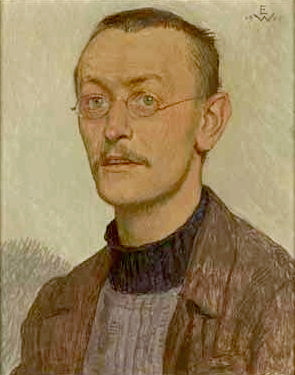
Hermann Hesse worked at the Heckenhauer bookshop in that same town (from 1895-1899), publishing his first book of poems there.

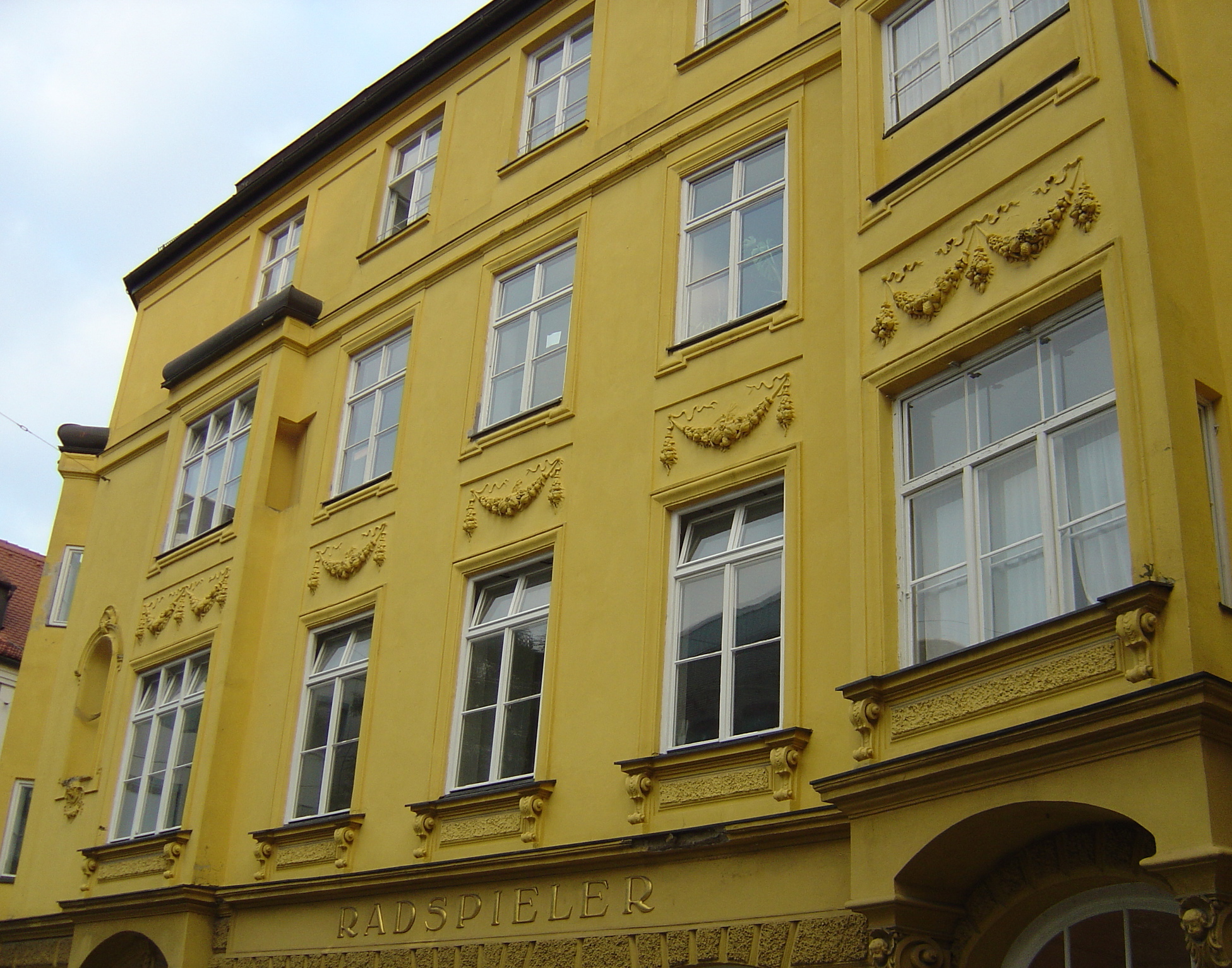
On the wall of Heine's lodgings
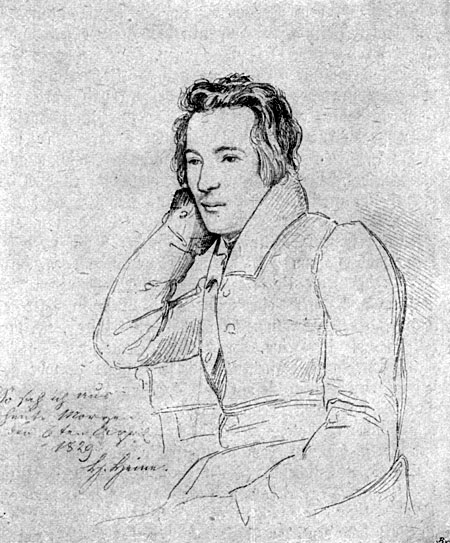
Heinrich Heine
Heinrich Heine spent a year in Munich in the 1820s, co-editing a political magazine, but wasn't very happy, finding that city kleingeistig (small-minded) and longing all the while for Berlin. His Buch der Lieder was published while he lived there in the Radspielerhaus. Chris sings several of the songs by Schubert and Schumann that were settings of those famous poems: Der Doppelgänger, Ich grolle nicht, etc. Heine ended up living in Paris, by the way.
Hermann Hesse

Thursday, December 8, 2011

Alexander's nativity play

Last Friday, which feels like months ago, I was sitting on a bench by the water feature at the Hampton Hill end of Bushy Park in London, near a stately home on its perimeter that used to belong to the Admiralty. The water feature is an artificial waterfall or weir falling into a pond in formal gardens. The rest of Bushy Park is more natural in appearance, the water running along dykes through the bumpy field where, that morning, antlered deer lay chewing the cud. Frost on the grass had turned to dew.

Applying the Crown Jewels
Trying on the costume
This was precious therapy for my daughter, worrying about the imminent end of her maternity leave from a demanding job and the even more imminent birthday party—15 children invited with their parents—for Alexander (five years old on Monday). Alexander's other excitement this week has been the school nativity play for which he'd been cast as both Narrator (someone who "says words") and one of the Wise Men ("I'm in the Wise-man's Team"). We had to make him a suitable costume, so I bought a length of curtain material, sewed a hem along one side, using my travel sewing kit, and threaded a purple ribbon through to gather it into a cloak. That would do. Dark clothes under the cloak and a home-made head-dress complete with the felt crown that Alexander decorated unaided with stick-on "crown jewels." He had seen the real Crown Jewels at the Tower of London so knew what he was about. A most convincing Wise Man. His Narrator's lines went like this:
The landlord had hoped he would get a good rest.
He hadn't expected this number of guests!
I warned Alex that the audience might laugh when they heard that, seeing the 120 children on stage, but that if they did, they'd be laughing at the story, not at him. He knew to recite the lines clearly and slowly, "not fastly."

Alexander's parents were amused when they heard that several children would be playing the part of the Star of Bethlehem. My son-in-law supposed that with 15 wise men in the Team, some would be disorientated by the extra stars and might go off searching for Baby Jesus in the wrong direction. The reason why there are only three Wise Men in the traditional version is that all the others had got lost, he said.

Alexander's primary school has just published the results of its Offsted school inspection to the parents of its pupils. Result, "good" in almost every respect. This is a large school with about 1000 students between the ages of 4 and 11.

I wasn't allowed inside the classroom when we went to fetch my grandson home and furthermore each child was checked at the school gate to make sure (s)he was going home with the correct adult; to me, from a far-away generation, these security procedures seem astonishingly strict.

Almost another week later

View of the Autobahn near Ulm
So much for the intention of keeping my blog updated during our Europe trip. It's hopelessly impossible, now Thursday evening; we have reached the outskirts of Munich after coming down the Autobahn from Stuttgart, driven at 180 kph by Peter who said he knew the road, having crossed the watershed (Wasserscheide) between the North Sea and the Black Sea and seen the Alps in the distance. Peter is a serious mountaineer who has led expeditions up Himalayan as well as Alpine peaks. When we got out of the car, he showed us photos of these climbs. Selling software systems must seem very tame in comparison.

In between journeys I am reading Breath by Tim Winton, having found it in a bookshop near the Sorbonne, in Paris; this novel's about the addictive, death-defying lifestyle of surfers on the western coast of Australia.

Old Rathaus, Sindelfingen
Sindelfingen
This morning Chris was giving his presentation at the ESE congress in the Sindelfingen Stadthalle, a few minutes' walk along the path by the stream from our hotel (Am Klostersee), and I was exploring the narrow, winding, cobbled alleyways below the Martinskirche at the top of the hill at the heart of Sindelfingen, the Kurze Gasse and the Hintere Gasse. On either side were beautifully maintained 16th and 17th century half-timbered houses; I passed the old town hall as well, its beams painted yellow, which at one time was a "salt house" and more recently a school. It is a museum, these days.

It's time for supper in Ismaning, now.

Monday, December 5, 2011

Written on the Eurostar from London to Paris

December 2nd

How civilised! I have a “solo” window seat and am travelling backwards as London recedes at high speed, or at least what I can see of it above the rail-side barrier. We may be rushing through Kent now; there are fields. Traffic on the motorways is at a standstill which makes me feel superior. The French speaking steward has just served me the petite collation to which I'm entitled on this standard premier coach, and un vin blanc avec ca:

Timbale de riz aux épices orientales (and a sesame seed bread roll)
Grosses crevettes marinées et salsa verde (with two kinds of beans)
Gâteau aux pistaches et au chocolat au lait, crème anglaise

In Flemish, to my eyes is indistinguishable from Dutch, it reads like a different meal:

Rijst timbaaltjje met tikkekruiden
Gemarineerde gambas met salsa verde
Gebak met pistache en melkchocolade, crème anglaise

The French steward approaches again, speaking to me in English this time, such a seductive accent. “Would you lack a kerp of tea, Madame?”

I gaze into his eyes and say yes.

At Dover, with a brief glimpse of the South Downs under the darkening sky, then we plunge without pause into the Chunnel, 28 minutes after leaving St. Pancras Station. At St. Pancras the way to the train was well signposted and plenty of comfortable seats in the departure lounge, some with plug in points, and coffee bars, newspaper stalls, but no opportunity beyond the security checks to acquire Euros. No matter. The info desk sold metro tickets, as day passes or by the carnet (un carnet de dix billets) for £15, cheaper than London transport, it seems. I'd been using my Oyster card all over London, on the buses, overland and underground trains, by far the easiest way of paying.

Time in the Chunnel was 22 minutes today, then we emerge in France. Respecter la mer en passant sous la terre! -- says the slogan on a large board by the railway.

The rest of the journey was travelled in the dark, nothing of France to be seen other than parallel motorways, until we got to Paris, Gare du Nord. Like my fellow passengers, nearly all businessmen, I read my complimentary copy of The Economist and once on the platform hurried to the Metro, Chris having advised me which stop to aim for (Esplanade de la Défense on Line 1, after changing trains at Châtelet). The train on Line 1 was dreadfully full; with commuters still on their way home at 7:30 p.m. I had to fight my way to the door. Even so, I like Paris, could feel at home here.

Chris met me at the station exit, arriving only 3 minutes later than he'd anticipated, and we followed the walkways to the Ibis Hotel by the Pont Neuilly. From our bedroom window we can see the Seine flowing by and can even catch a glimpse of the Eiffel Tower.