Was it only a week and a half ago that the Music and Beyond festival started, back in Ottawa? I have brought some pages of the programme on holiday with me, in order to catch up with the record of the concerts I went to, before I forget, for example, that I heard Germany's Menahem Pressler play the piano in a performance of Mozart and Beethoven Quintets for piano and wind on Friday, July 6th, the oboe, clarinet, horn, bassoon parts played by the principals from our local National Arts Centre Orchestra, all tall men, especially in comparison with the venerable pianist who looked half their size when they all stood up to bow. Pressler is now 86 years old, but doesn't seem to have lost his touch at all. Such beautiful melody lines for all the instruments in these pieces.
That afternoon, after a hasty lunch, I returned to the same venue for another, longer concert, this one featuring the works of Jewish composers through the ages, performed by a large group of musicians, taking turns to appear on stage. Despite the fact that until the 18th century little Jewish music was allowed public performances except in the synagogue (as festival director Julan Armour announced), a wide variety of music was presented to us, the first piece a Renaissance style Aria d'un Balletto, from an Italian-Jewish composer, Salamone Rossi, the first violinist playing an 18th century violin for this. Very fine music it was. There followed a movement from Meyerbeer's Quintet for Clarinet and Strings, like something by Weber or Rossini, but with a distinctly Jewish, folksy flavour in the penultimate variation (it was in Rondo form). In a similar style, but with a grander accompaniment on the piano, we then heard the Kihan for cello by Stutschewsky, and a Hungarian Rhapsody by David Popper, played mostly from memory by Paul Merleyn, whom I have seen performing several times before, though it only just strikes me that he looks very like Ian Bostrich. The composer was "the greatest cellist of his day," according to Mr. Armour, "the Paganini of 'cellists."
The rest of the concert presented 20th century music, an evocative piece called Quiet City for 13 players, by Aaron Copland, a Suite for Two Violins, Cello and Piano by Korngold and two preludes for the piano by Gershwin. Shades of R. Strauss in the Korngold who spent ten years of his life composing for Hollywood. What we think of as "film music" is actually late Viennese, said Armour, because its composers were not really American but European, Jews in exile during the war years. Another interesting aside was that Gershwin used to play tennis with Schoenberg in America (Schoenberg was Jewish, too). They respected one another's very different music greatly.
The concert finished enjoyably with a Canadian-Jewish piece by Srul Irving Glick, the Old Toronto Klezmer Suite, the second section including a slow duet between viola and 'cello (played by Mr. and Mrs. Armour) and the last one a lively Klezmer dance depicting The Rabbi's Wedding at the Palmerston Street Shul.
blending an assortment of thoughts and experiences for my friends, relations and kindred spirit

By Alison Hobbs, blending a mixture of thoughts and experiences for friends, relations and kindred spirits.
Monday, July 16, 2012

Seth and "all of human life"
I had the good fortune to see Vikram Seth in Ottawa last week. He was introducing the 3rd part of his creation (co-created with the composer Alec Roth): The Rivered Earth. I heard the famous writer introduce it at Dominion Chalmers Church himself, with the musicians ready to launch into the lunch hour performance.
A thin, small man, an aesthete, he told the audience that this part of the Rivered Earth cycle "takes me back home to India" because it uses translations of ancient Indian texts about Krishna as well as some of his (Seth's) own poems. A lady sitting in front of me was following them from his book as he read them out and as the music progressed. Parts 1 and 2 of the cycle had drawn on poems by the Chinese poet of the Tang Dynasty, Du Fu, and on poems by George Herbert.
In Indian philosophical traditions, the universe was composed of five elements: earth, fire, water, air and space (sky). Not only does The Rivered Earth try to express this, but when planning Part 3 for the 750th anniversary of Salisbury Cathedral, Seth decided it should have a human element too: "Why not all of human life?" he asked himself. Quite an ambitious project! Anyhow, it attempts to describe or comment upon the stages of human life from an Indian point of view: pre-birth, childhood, youth, old age, death, with the tenor speaking stanzas from hymns to creation before each section of the music and the solo violinist adding an "etherial meditation." Other musicians taking part were a small orchestra consisting of 7 violins, 2 violas, 2 cellos and a double bass, 2 percussionists and a harpist. Besides the instrumentalists there were two choirs singing: 15 children singing in unison (directed by the Cathedral choir man, Matthew Larkin), and Ottawa's elite chamber choir, the Seventeen Voyces, in prodigious harmony, who processed in from the back of the church behind the solo violinist at the start. The children's choir sang settings of Hindi nursery rhymes, like the way Mahler's symphonies incorporate young voices. One rhyme went something like "...chutney made from female frog ... drink it and you're drunk! ..." and another was about the child Krishna asking his mother for the moon (literally) that he could see reflected in a bucket. To match the Tamil classics, as I mentioned above, many of the words set were Vikram Seth's own, such as this poignant couplet about someone looking in the mirror in old age:
P.S. Another blogger has mentioned this concert: click here.
A thin, small man, an aesthete, he told the audience that this part of the Rivered Earth cycle "takes me back home to India" because it uses translations of ancient Indian texts about Krishna as well as some of his (Seth's) own poems. A lady sitting in front of me was following them from his book as he read them out and as the music progressed. Parts 1 and 2 of the cycle had drawn on poems by the Chinese poet of the Tang Dynasty, Du Fu, and on poems by George Herbert.
In Indian philosophical traditions, the universe was composed of five elements: earth, fire, water, air and space (sky). Not only does The Rivered Earth try to express this, but when planning Part 3 for the 750th anniversary of Salisbury Cathedral, Seth decided it should have a human element too: "Why not all of human life?" he asked himself. Quite an ambitious project! Anyhow, it attempts to describe or comment upon the stages of human life from an Indian point of view: pre-birth, childhood, youth, old age, death, with the tenor speaking stanzas from hymns to creation before each section of the music and the solo violinist adding an "etherial meditation." Other musicians taking part were a small orchestra consisting of 7 violins, 2 violas, 2 cellos and a double bass, 2 percussionists and a harpist. Besides the instrumentalists there were two choirs singing: 15 children singing in unison (directed by the Cathedral choir man, Matthew Larkin), and Ottawa's elite chamber choir, the Seventeen Voyces, in prodigious harmony, who processed in from the back of the church behind the solo violinist at the start. The children's choir sang settings of Hindi nursery rhymes, like the way Mahler's symphonies incorporate young voices. One rhyme went something like "...chutney made from female frog ... drink it and you're drunk! ..." and another was about the child Krishna asking his mother for the moon (literally) that he could see reflected in a bucket. To match the Tamil classics, as I mentioned above, many of the words set were Vikram Seth's own, such as this poignant couplet about someone looking in the mirror in old age:
Who is this stranger, foolish-wise,/ Who looks at you with your own eyes?The music and seriousness of intent from the creators and performers was so overwhelming that I came away afterwards shaking with emotion. Tremendous!
P.S. Another blogger has mentioned this concert: click here.
Smallest rooms
Between flights at Chicago O'Hare I had time to draft a blogpost about toilets I have known. Last week we had a couple of new "ultra high efficiency" ones from the Ottawa Envirocentre installed in our house in which the flush works by a suction - syphon mechanism, involving a reservoir of air and only 3 litres of water per flush. The contractor who fitted them told me my water bills would halve, now; that remains to be seen.
However, what inspired this post wasn't the eco friendly toilets at home but the seat in the Ladies' at this airport. Swathed in a plastic bag, it was, as if straight from the packing box, but the point was to keep the seat clean. A list of instructions told me to wave my hand near the sensor, at which the seat rim appeared to swivel, exposing a presumably cleaner section for sitting on. On second thoughts, it was the plastic that swivelled, not the seat: that was an optical illusion. Now this is something I didn't experience in Tokyo, though the Japanese are hygiene conscious too, with their devices that don't only flush the bowl but flush you, too. Those had more comfortable seats than a plastic bag; they were gently warmed and padded.
At the other extreme are the holes in the ground to squat above in Beijing, Hangzhou and central France (at the Viaduc de Millau pitstop). Some of the cafe toilets in Barcelona were rather olde worlde as well, with a chain to pull--how often do you see one of those, these days?--and so cramped that even turning round in one was a challenge, and I'm small. For most of the people walking past me in Chicago, the situation would have been impossible.
The most memorable toilet of my travels, though, was the one I sat on in a 2 star hotel somewhere in France in 1993. That was in a much more spacious room, a bathroom with floor to ceiling sash windows on the first floor up, at the corner of the building from whence, while sitting on the Throne, I had a magnificent view of the main street below and all the shoppers.
First visit to San Francisco

Our first stop for refreshment and a sit-down was at a New York bagel outlet, Noah's. Here's Chris outside Noah's, with a jazz trio, saxophonist and friends, just out of sight behind us.
 Then we crossed the plaza and main road by the water's edge, to wander a long way along the Embarcadero from Pier 1 to Pier 45. The busiest was Pier 39 and in that area I remembered the Scarborough sea front. There was a whole museum (former warehouse) full of slot machines dating back to the 1890s, still in use by the masses of tourists whose tastes still aren't very sophisticated. There was an Aquarium, tour boat docks, and (as I rightly anticipated) a Ripley's Believe It Or Not museum. We had some fresh and tasty fish and chips in mock newspaper, served to us by a couple of Mexican girls who appeared to be about 12 years old. Then we walked further, stopping frequently to gaze at the superb views across the Bay to the Golden Gate Bridge (topped with low clouds) and Alcatraz prison on its island, the many and various ships and boats and the distant hills. Moored at Pier 45 was a very large Liberty Ship (built in the 2nd World War and now a museum ship) and a US navy submarine of the same vintage.
 The weather all day was glorious, bright, sunny, cool, clear and breezy. Choppy waves broke against the sides of the boats; cormorants and pelicans flew by. Every tourist attraction had a queue in front of it, so instead of joining one of these we decided to walk up Telegraph Hill, one of San Francisco's many steep slopes. I have never been in such a hilly city except perhaps Barcelona. In fact it reminded me very strongly of Barcelona with Spanish vocabulary everywhere, the muddle of houses, the Spanish style of architecture, the panoramas and the long seafront. Coming down the other side of the hill back into the main part of the city we had to watch our step, the pavements were so steep and uneven. No escalators here as there had been in Barcelona. The sidewalks looked ancient as did the famous electric ("emission free") trams-- or street cars, I should say.
 Much more to add about all this, but I'm sleepy. We made use of the outdoor pool for a while when we got back to the hotel and this evening had a really good Mexican supper at Chevvy's across the road from the hotel, a restaurant that has an eye catching slogan posted outside, saying : "BEHOLD! The ten hour Happy Hour." The sunset seen from our room was gorgeous, as were the flowers and flowering trees we saw today.
Sunday, July 15, 2012
On another trip
We're away again! I'm writing this at the Courtyard Marriott hotel near the Hilltop Mall (!) in Richmond, CA. We explored the Mall last night after discovering that the charger for Chris' cellphone had been left at home in the kitchen (deliberate use of passive verb there). The mall has a little "train" to ride on from one anchor store to the next, if you wish, and the shop assistants are mostly Spanish speakers. In fact I used my Spanish last night. Outside our window, with a misty view of The Bay east of San Francisco, are two tall pine trees that sway in the breeze. We're on a level with the tops of the pine trees.
Yesterday's flight across the continent was enjoyable, allowing us remarkable views of Lake Huron, Lake Michigan and the Chicago skyscrapers. Chicago O'Hare airport was predictably huge and we had nearly 5 hours in which to wander around Terminal 1, which has 5 concourses. I liked the decorations in the underground passage between them -- jazzy lights and curves. Flying on to SFO on a direct flight rather than the two legs via Las Vegas that we'd booked (the Ottawa flight was late setting off so the agent rerouted us) we overflew a great river, the Missouri perhaps, the prairies and the foothills, desert like, of the Rockies, then the snowy steep mountains themselves, with spectacular anvil clouds over part of them. Orographic cloud over the coastal hills as we approached the Bay, Chris remembering the approach from the old flight sim we used to play with in Cwmbran 20 years ago, on the Atari computer we used to own. Our luggage had come ahead of us on a previous flight.
A long taxi ride with a Chinese speaking gentleman to where we're staying cost us $100, and it's just as well I had printed out the google map instructions or he'd have got lost. We crossed big bridges across the Bay past the container port and had good views of the city skyscrapers.
 |
| Moving walkway at Chicago Airport |
 |
| Thunder clouds over the Rockies |
A long taxi ride with a Chinese speaking gentleman to where we're staying cost us $100, and it's just as well I had printed out the google map instructions or he'd have got lost. We crossed big bridges across the Bay past the container port and had good views of the city skyscrapers.
Sunday, July 8, 2012
Bach, Haydn and company
The first of the Music and Beyond events I went to was at Tabaret Hall on Thursday morning, a "Coffee Concert." This was a selection of trios and sonatas by J.S. Bach, the players using instruments of Bach's period. According to the programme notes, the "Baroque 'cellist" is a "vibrant presence in the Montreal early music community"––it seems musicians have to specialise these days. The oboist is an "American Bach Soloist," the violinist directs the Tilford Bach Society in the UK and the harpsichord player is Ottawa's cathedral organist (Matthew Larkin).
The "trios" were actually duets for violin and oboe, the other two players underlining their counterpoint with a basso continuo, effectively pre-classical quartets. The sonatas on the programme, one for violin, the other for oboe, were also trios, arrangements of 3-part organ works (separate lines of music for the left and right hands and the feet). The C# minor Adagio of BWV1016 was a beautifully "etherial" piece of music, as the violinist told us between items––it meant a lot to him as he'd first met his wife after hearing her play this on the flute.
 After this concert I pedalled my bike over the canal and through the grounds of City Hall to arrive at the next concert with only a minute to spare; because the volunteer ushers were late admitting people from the long queue round the block it didn't matter. At this concert in the blessedly air-conditioned Dominion Chalmers United Church I heard the Fine Arts Quartet from Wisconsin-Milwaukee university; its two violinists have kept this ensemble together since the 1980s; the other two players have joined them more recently, bringing superb instruments with them. The viola's tone seemed as rich as the 'cello's and had an unusually shaped "belly." They performed three quartets for us.
Haydn's Opus 74, No. 2 is absolute magic, especially the Andante Grazioso, gracious indeed, that features a luscious 'cello line at the start, with the other three parts in close harmony, a variation in the minor with the 2nd violin given prominence and a triplet accompaniment of the two upper parts in the last variation. Haydn was a true democrat, giving everyone an equal voice. The surprise cadences in the Menuetto are also typical of him. The other two quartets in this concert were by Dohnanyi and Zimbalist writing in the Dvorak style (although they were Hungarian and Russian, not Czech), romantic, folksy music. Easy listening, I'd call it, not as subtle as the Haydn, but it's probably not fair to make comparisons.
(I wrote this post at the flying club, yesterday, while Chris was taking the German Ambassador and his wife for a ride in PTN.)
The "trios" were actually duets for violin and oboe, the other two players underlining their counterpoint with a basso continuo, effectively pre-classical quartets. The sonatas on the programme, one for violin, the other for oboe, were also trios, arrangements of 3-part organ works (separate lines of music for the left and right hands and the feet). The C# minor Adagio of BWV1016 was a beautifully "etherial" piece of music, as the violinist told us between items––it meant a lot to him as he'd first met his wife after hearing her play this on the flute.
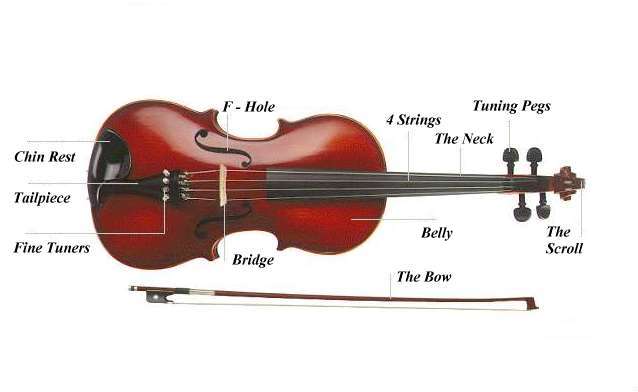 After this concert I pedalled my bike over the canal and through the grounds of City Hall to arrive at the next concert with only a minute to spare; because the volunteer ushers were late admitting people from the long queue round the block it didn't matter. At this concert in the blessedly air-conditioned Dominion Chalmers United Church I heard the Fine Arts Quartet from Wisconsin-Milwaukee university; its two violinists have kept this ensemble together since the 1980s; the other two players have joined them more recently, bringing superb instruments with them. The viola's tone seemed as rich as the 'cello's and had an unusually shaped "belly." They performed three quartets for us.
Haydn's Opus 74, No. 2 is absolute magic, especially the Andante Grazioso, gracious indeed, that features a luscious 'cello line at the start, with the other three parts in close harmony, a variation in the minor with the 2nd violin given prominence and a triplet accompaniment of the two upper parts in the last variation. Haydn was a true democrat, giving everyone an equal voice. The surprise cadences in the Menuetto are also typical of him. The other two quartets in this concert were by Dohnanyi and Zimbalist writing in the Dvorak style (although they were Hungarian and Russian, not Czech), romantic, folksy music. Easy listening, I'd call it, not as subtle as the Haydn, but it's probably not fair to make comparisons.
(I wrote this post at the flying club, yesterday, while Chris was taking the German Ambassador and his wife for a ride in PTN.)
Saturday, June 23, 2012
Not yet mentioned
(This post should have been published at the beginning of June. I found it still in the drafts folder.)
We went to a rehearsal of Verdi's Requiem at the NAC, some of our friends singing in the choir for this.
With the Diplomatic Hospitality group I had a guided tour of the new Van Gogh exhibition at the National Gallery and afterwards took a look at the other recently talked-about exhibit there, The Clock.
One day, Chris and I drove to Syracuse airport in the USA and I drove back across the border on my own, a one-way distance of over 300 kilometres, or 200 miles if you still think in those units (you have to, down there), for the sake of a replacement GPS unit that had been installed in PTN. Our newly equipped plane brought Chris back safe and sound and at the weekend he took me up for a flight as well so that I could witness the GPS in action during an instrument approach to Gatineau airport.
I joined in the gardening at the Flying Club on the spring clean day and helped a little at Elva's house as well. We found a garden centre in town that's run by someone I know and bought some plants there.
I've been reading books ("A Man of Parts" by David Lodge––about HG Wells, "A Sense of the World––How a Blind Man became History's Greatest Traveler" by Jason Roberts) and watching videos (Route 132, Passport to Pimlico, The Shipping News, Look Back In Anger––a good variety of films there) and next month I'll be attending quite a few concerts, having bought myself a festival pass to the Music and Beyond series. As one of the "Early Birds," buying my pass over a month in advance, I saved myself $15. Attendance at the festival costs me $85 and, impossible as it is, if I were go to all of the 21 performances that take my fancy, that would work out at just over $4 per world class concert.
The other thing worth recording is our visit to the city's sewage treatment plant, which I'll describe in my other blog.
Subscribe to:
Posts (Atom)