blending an assortment of thoughts and experiences for my friends, relations and kindred spirit

blending an assortment of thoughts and experiences for my friends, relations and kindred spirit
By Alison Hobbs, blending a mixture of thoughts and experiences for friends, relations and kindred spirits.
Showing posts with label CFUW Diplomatic Hospitality. Show all posts

Friday, January 16, 2015

What to do on a cold day in Ottawa


The Smithvale Stables on Carling Avenue offers horse-drawn wagon rides through their woods and fields, the wagon being fitted with sleigh runners. This morning the weight of the wagon, loaded with diplomats and their friends and children, broke the icy crust that had formed on top of the snow, blown into drifts. Some of us walked in its wake on snowshoes.

Uschi on the right was borrowing my husband's snowshoes

Coming back to the barn into wind, the windchill was a bitter -24ยบ: I had my tubular scarf over my face again, right up to my eyes, plus a hat, plus the hood of my padded coat. It was still cold. The inside of the barn (aka "Banquet Hall") warmed us up though, with the usual hot chocolate and chilli beef to go with the other food we'd brought, and a trio of musicians––co-incidentally called "The Diplomats"––kept us entertained and got us dancing, especially the three young sisters who'd come along with their grandmother on this school-free (PD) day.

Sisters inventing a dance to the music in the barn

Sunday, March 16, 2014

Goodbye to an intrepid lady

I have just come away from a memorial reception to celebrate the life of Elizabeth, who died last week; instead of the usual conventions there was no religious service for her funeral and no speeches were made either. A large number of her friends and relations simply assembled for a tea party with snacks, presented on the upper floor of a local funeral parlour with neoclassical pillars. Actually Carol and I went in the wrong direction on our arrival and made a detour through the padded coffins (fortunately empty, the ones we could see, at least) in the basement, before reaching the correct venue. In the upper rooms, photos and other memorabilia (Elizabeth's snowshoes, her skates, her wartime service medals!) were on display so that groups of people could move from one part of the room to another reviving their memories of her or asking one another questions about her. I thought this was a good idea; it encouraged people to mingle and it focussed their minds on why they were there. A slide show of pictures from her life story and a video recording was being played: a TV interview with Elizabeth from not so long ago. The words weren't really audible but the animation of her face brought her to life again.

She was already in her late 70s when I met her in 1995. She and her husband helped us to settle into Canada. Chris and I attended the Ottawa Quaker Meetings in those days, where Elizabeth and Earlston befriended us, inviting us––and not only the two of us but also our family and the friends who visited us in Ottawa!––to their home on several occasions. They were an inspiring couple in every way, thoughtfulness, kindness and goodwill personified, telling wonderful stories of their adventures and taking an interest in our own stories too. Theirs were the more exciting. When young, she had learned to fly and he had become a navigator on a corvette. They met in wartime, in Scotland, where she was a dietician at a Royal Canadian Navy hospital. Pictures of their marriage in uniform decorated the room today. When peace was declared they went to British Columbia and had four sons––taking them to other parts of the world as they grew up. On one occasion, Earlston having given Elizabeth a Land Rover for her birthday, they drove, with the boys in it, all the way from Venezuela to Ottawa; the journey took months. When Earlston retired they acquired a 42 foot ketch that they sailed for ten years, to the Caribbean, across the Atlantic, all round the Mediterranean, along Europe's canals (with its mast lowered) to the Baltic, round the Baltic, home across the Atlantic again and finally into the Great Lakes.

Their home on the southern edge of Ottawa was a lovely place, its large back windows overlooking a rocky bend in the Jock River. In retirement Earlston became engrossed in philosophy; Elizabeth practised home hospitality, keeping her style of welcome very simple, very Canadian. She introduced many people, including me, to Diplomatic Hospitality, the CFUW service group she co-founded in 1972.

Elizabeth's ancestors must have been extraordinary people, too. She told me once that her grandparents, living on the southern shore of Lake Ontario, were among those who helped runaway slaves to safety, on the Underground Railroad, by hiding them at their house.

During 1995-6, our first year in Ottawa, Elizabeth came to visit us, and brought a little pot plant with her as a gift to me. I still have it in my kitchen. It is flowering at the moment.

Friday, April 12, 2013

A tour of Algonquin College

The main campus of Algonquin College is just south of Baseline in Ottawa, with smaller branches in Perth and Pembroke. International students are encouraged to study here and have a residence on campus. They have to pay the full fees and pass a stringent test in English before they're admitted. Students from over 100 countries are registered at the college at present, helped by the college to get their VISAs and their study permits.

This week, the Diplomatic Hospitality Group of CFUW-Ottawa (of which I'm a member) invited diplomats' families to tour Algonquin College, and because of its international reputation, the event was very well attended. We met in one of the salons for refreshments provided by the college and to hear an introduction by the President, Dr. Kent MacDonald. Students no longer use textbooks, he told us. That information was reinforced when I visited the campus "bookshop," afterwards, and found it almost devoid of books! The students are encouraged to take their "iPhones and laptops" into class, instead––in fact, this is compulsory.

In order to give the students and alumni a sense of  achievement and to generate income, each department is run as a business. This is perhaps most obvious in the school of culinary arts where the students' practical work is on sale to the general public. There's a delicatessen and restaurant on site, well worth a visit, and catering skills are taught and practised as well. Hence the college can afford their well equipped wine tasting facilities and state-of-the-art kitchens. At the Restaurant International, staffed by students on the Hospitality program, a posh four course meal, elegantly served, can be enjoyed for $25.

As an indication of the institution's financial success, new buildings have sprung up like mushrooms around the campus. Near the bus stops, the futuristic, $70 million Algonquin Centre for Construction Excellence, opened in 2011, incorporates a "living wall" of tropical plants in its atrium, managed by the engineering and horticulture students. On my tour, I saw the Cabinet making facilities in this building, with girls learning there as well as young men. They also have a fully equipped school of carpentry with apprentices making roof beams on site, in the comfort of an indoor environment.

The schools of Advanced Technology and of Electrico-mechanical Engineering seem to have very sophisticated facilities. Mechanical technicians in the tool making workshop were referring to data on computer screens as they used their lathes. The School of Media and Design was another stop on our campus tour. Horticultural Industries comes under this heading, as does Professional Writing. We caught a glimpse of a Theatre Arts workshop in action and walked through another room full of students who were creating animated films and video games in preparation for their end of term exams. In this wing, a live radio station broadcasts daily, manned by the students, giving them practical experience as well as providing publicity for local musicians; likewise a campus newspaper is put together by the School of Journalism for the sake of the students' portfolios.

Probably the most impressive part of our tour was our visit to the Health and Community Studies facility. Here, they train nurses in fully equipped pseudo wards and surgery theatres, using expensive and lifelike (or should I say deathlike?) "mannequins" to practise on, whose fingers have a rubbery feel. Apparently the mannequins have a (programmable) pulse and really bleed. One of them is capable of giving birth every five minutes and the newborn baby's very realistic, too. Virtual reality, as in flight simulators! The nursing students can be monitored by their supervisors from behind a one-way mirror. For the Dental Hygiene diploma, during a 3 year course, aspirant dental hygienists are trained in a proper clinic, open to the public who can volunteer to be guinea pigs, with row upon row of fully equipped dentist's chairs at their disposal.

Saturday, January 19, 2013

In one day

I know how lucky I am.

Here is a selection of photos I took yesterday, when I left the house at 7:30am to drive to Kanata with Chris. Later in the morning I helped to host a party at the Smithvale Stables for diplomats' families, the repeat of an event that took place this time last year.

Ottawa riverbank, early morning (view from Dick Bell Park)

Bales of straw for the horses at the stables

Sleigh ready to take passengers

First ride: they're off!

The horses' breath, between sleigh-rides

On the wagon, looking down

View from the ride, looking forward

Looking back the way we'd come

Musical chairs (my camera steamed up when we came indoors) 

The band, wearing their nautical hats for a sea shanty

Warming up to the music

A "Musical Ride"
 
Two hours later, in PTN.... the River Gatineau from above

Final approach for a touch-and-go at Gatineau aiport

Returning to Rockcliffe with the sun setting beyond the city

Turning base above the Ottawa River, in the Rockcliffe circuit

Chris had taken the afternoon off work in order to make the most of the good flying weather. After an hour in the air we came back home, spoke to my mother in Cardiff, to our daughter in London and to our son in Australia. Then friends visited us for a cosy supper with wine and one of those Bougie Doozie candles from Chelsea on the table.

I do not take my privileged life for granted.

Sunday, October 28, 2012

German and Chinese

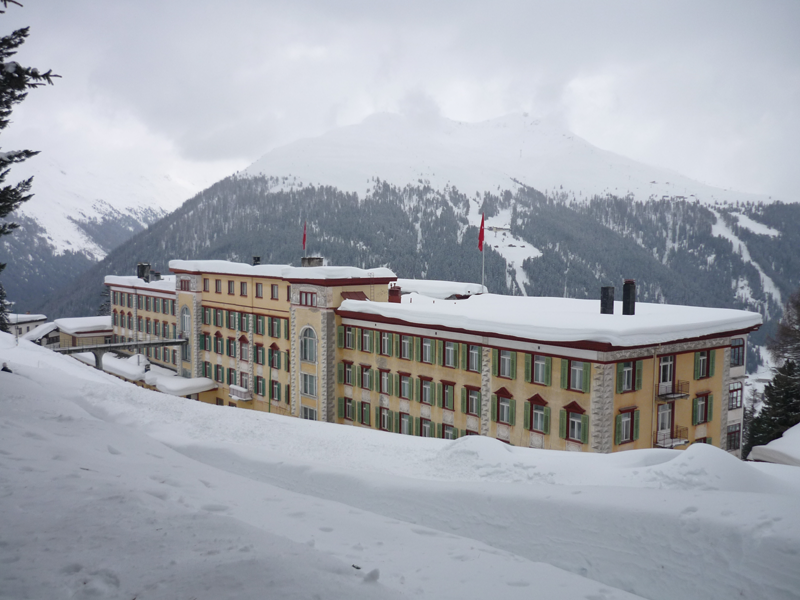
The old sanatorium at Davos, the setting of Mann's novel
I spent a few weeks this summer reading in German. I read both volumes of Thomas Mann's Der Zauberberg again (a "set book" when I was studying German at university and a favourite of mine) and got hold of a film of the novel that wanders rather from the original, but is still in keeping with its spirit, though I was disappointed with its interpretation of the last chapter. I've been watching DVDs of a German TV dramatisation of Buddenbrooks as well. Sabine of the German Embassy left some books behind when she left Ottawa this summer, one of which was the novel Eine Handvoll Glรผck by Barbara Noack, set in wartime Berlin and the few years before. Apart from the Berliner Dialekt used in the dialogue I found that story a very readable one.

Since September I've been in charge of the weekly meetings of the German-speaking Konversationsgruppe (26 people) that's part of Ottawa-CFUW's Diplomatic Hospitality service. Chris, who is also needing to study the language like mad in preparation for a business trip to Bremen, Stuttgart, etc. discovered something useful on the Deutsche Welle website: Langsam gesprochene Nachrichten: international news read out by German newsreaders at an abnormally slow pace and very clearly articulated, which gives non-Germans a better chance to follow what's being said––brilliant idea. I wish I'd had access to this when I was a teacher in the old days. I've told my Konversationsgruppe about it, anyhow. We've had five meetings so far and at the last one I decided to hand out some copies of extracts from a little book of old Chinese stories ("Anekdoten") entitled "Und Buddha Lacht" and translated by a German sinologist called Franz Kuhn, who died in 1961. As a matter of fact, Dr. Kuhn was the great uncle of Dagmar, one of my German-Canadian friends, and Dagmar was there to tell us a great deal more about him than appears in the Wikipedia article! Also present was Lolan, Chinese by origin, who with her in-depth knowledge of China's history and culture could help us appreciate the background to the stories.

I have also been taking some more Mandarin Chinese lessons on Skype with Mr. Yin of the Ottawa Chinese Language Centre, and practising with my daughter-in-law Sha or my friend Yiwen when the opportunity arises. I hope I'm making progress, have been trying to use modifying words like "yฤซnggฤi" (should) and "kฤ›nรฉng" (perhaps) as well as the very basic vocabulary, in order to make my sentences in Chinese a bit longer than they were to start with.

Tuesday, April 24, 2012

At the Chรขteau

Charles Melville Hays

Chรขteau Laurier pool
The Chรขteau Laurier, Ottawa's grand hotel, is 100 years old this year and on June 1st, current and former hotel staff are going to have a private party there to celebrate its birthday.

The man whose project the hotel originally was, Charles Melville Hays, never lived to see the its opening in 1912 because he perished with the Titanic that same year. His portrait hangs in the lower lobby near the pool. I saw the hotel pool, filled with salt water, on Friday, and it appeals to me, but if I want to indulge myself by swimming in it, a one-off visit to the obligatory Health Club would cost $20 plus tax, and a month's membership $125 plus tax. Maybe for the sake of keeping fit ...!

A corner of the Karsh Suite
Another impressive part of the guided tour was to the suite on the 4th floor where the world-famous, Armenian photographer Yousuf Karsh used to reside. It's preserved in the original style of furnishing with a chandelier donated by Karsh's wife, with Chinese cupboards and of course with photographs by Karsh hanging on the walls. More of these are on display in the entrance lobby and in Zoe's lounge (named after PM Wilfred Laurier's wife) with its grand piano.

Carpet in the foyer
More than 70 lady diplomats or wives of diplomats had turned up that day, as well as their Canadian friends in the Diplomatic Hospitality group, and the hotel had set aside the western end of the ballroom for coffee / tea and scones and jam, etc. to be enjoyed at round tables after our tours. Before we tucked in to the magnificent spread we were also treated to a Fashion Show of equally magnificent proportions, with fourteen tall and slender girls poised on tall and slender heels modelling Elena Hinke's flowing creations (turn your volume down before clicking on that link!) in black, royal blue, turquoise, mustard, olive greens and scarlet: smart, elegant and sophisticated clothes. Silks and black lace predominated. The audience was thrilled, and not a price tag in sight.

Ms. Hinke, left, with one of the models


Monday, January 30, 2012

"It's all about balance"

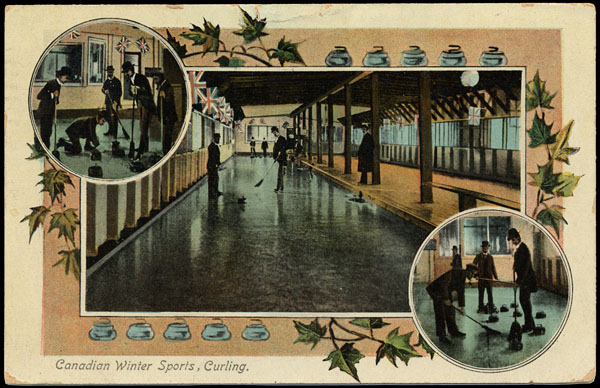
I have to be careful here, because if I get the terminology wrong, I will look foolish. Early this morning the RA Centre on Riverside introduced a large number of us in the Ottawa CFUW's Diplomatic Hospitality group to the basics of curling.

The first thing to do was to take our sports shoes across to the inspection table to make sure there wasn't a spot of dirt on them that would compromise the ice we'd be playing on. "You have worn these shoes outside, haven't you?" said the shoe examiner with a hint of disapproval as she turned my shoes over, before attacking the soles vigorously with a vegetable brush dipped in a bowl of water.

There are six "sheets" on the ice at this curling rink and a dozen or more ladies in red jackets had made themselves available to give us instruction in six groups, making sure that we didn't fall over on the ice, or if we did, that we'd be able to get up again. They were all keen amateur players and, it seemed to me, very well trained teachers too. They wore special black curling shoes with a removable rubber sole cover for the "off foot," usually the left one, that had a very slippery "slider" attached. We novices were lent portable sliders, slightly less slippery underfoot.

I was in a group with a Japanese lady, an Italian lady and another novice Canadian. The first exercise was to walk up and down (without deploying our sliders) on the bobbly ("pebbled") surface of the ice to see what it felt like, and then to repeat the walk sweeping the tee line on the ice with our long handled brooms: Women with Brooms in this case, not Men with Brooms (with Paul Gross as the Skip).

The rock is made of polished granite
To deliver the shot, you've got to have flexible hip joints and knees, although players over the age of 85 or so are permitted to use so-called curling sticks that allow them to stay upright while playing; we weren't given the option of trying these. We had to practise getting up off the ice in case we fell, holding ourselves in the "throwing" position without overbalancing and finally pushing off from the hack (i.e. starting block) with the slider under our left foot, sliding ourselves forward and keeping our balance in the process. I did it all too gingerly because the surface of the ice looked like a very hard surface to fall on, but was admonished for looking down at my feet and eventually persuaded that I'd keep my balance better if I looked ahead, up into the eyes of my instructor. I had the use of a sliding support for my left hand but my right hand was free to flap about (it should be held extended). All of us breathed a sigh of relief when given a rock (with a handle) to hold and release. These objects are about 20 kg in weight so gave us a reassuring illusion of steadiness while pushing off from the hack.

Apparently there's a way to vary the delivery that gives you an even better sense of balance: having the slider under the right foot instead! However I have only discovered this since coming home and browsing the Internet.

The last exercise before we could begin to let fly with the rocks was to move the sliding foot back as a prelude to our slide, keeping that foot flat on the ground, which is only possible if one sticks one's bottom in the air, brings one's left knee to its full bend and has one's right knee well behind one's centre of gravity, practically scraping the ice. It's not as easy as it looks! I thought of all the Chinese people I'd seen last year, squatting flat footed in the parks of Hangzhou to chat to one another. They'd have had no trouble with this sport.

The male curlers enjoying their Spiel
We also got some instruction on how to aim the rock with a rotation of the hand and how to interpret the arm movements of the person towards whom we were aiming. The curling rink is a chilly place and by this point in the lesson my hands and feet were growing numb so the instructors suggested that two of us should practise sweeping the ice with our brooms to keep ourselves warm as well as to assist the rocks' progress while the other two in our team were practising longer and longer shots. We never got round to actually scoring because the electronic whistle blew, ordering us off the ice so that some serious players (men) could have their go after the rink had been cleaned with a wide sheepskin brush. However, I did manage to deliver a couple of rocks as far as the house before we repaired upstairs for coffee and the ladies were all after me to sign up for curling lessons at the RA next season.

Friday, January 20, 2012

Konnichiwa!

Canadian snowshoes under Japanese feet
The Japanese Embassy graciously said hello (ใ“ใ‚“ใซใกใฏ) to our snowshoeing group today, at their Residence in Rockcliffe Park, and served us not only tea and coffee but also a hot and delicious chicken soup with mushrooms to counteract the effects of this very cold day. Another successful Diplomatic Hospitality morning with a hundred people present. We looked at pictures of winter in Japan and learned that the Japanese use snowshoes for winter in their country too, although they're rounder than ours.

Bathing in the hot springs at the feet of Mt. Fuji appeals to me, but I'll be surprised if I get the chance to do that next month.

Sunday, January 15, 2012

Horses in the snow

Our outing to Smithvale Stables was a real success; about 80 people turned up despite the winter storm that was causing difficult driving conditions on highways and byways. Our diplomatic friends loved the snowshoeing between sleigh rides, the horses didn't seem to mind the snow and the campfire at the pick-up spot burned brightly, with Carol handing out marshmallows to stick on skewers and toast in the glowing cinders. If you tried to remove the burnt crust from your melting marshmallow, your fingers got very sticky. Everyone was smiling and, indoors, feet were tapping to the Irish and Scottish tunes that the band was playing.

Some of the diplomats' families were experiencing their first winter here. Outside, under the trees a little way beyond the stables, nine horses were on the loose, kicking up the snow with their playful hooves and snorting at us. Among them were young ones, experiencing their first winter, too.


Monday, January 9, 2012

Diplomatic Hospitality plans

Our Diplomatic Hospitality group is off to the Smithvale Stables this coming Friday where we have the choice between taking a horse-drawn sleigh ride, skating on the pond, cross-country skiing or snow shoeing around the grounds. There'll be marshmallows to roast on an open fire outside and at the end of the morning we'll find warm refreshments indoors, in the "banquet hall." Musicians––the Lyon Street Celtic Band––will liven up the proceedings and might persuade us to do some dancing.

I was at a lengthy meeting this morning making plans for this and other outings. I came home in the car of a Canadian friend who is a diplomat's wife herself and appreciates the need for distraction and good company when posted abroad. She spent two years in North Africa once, unable to go out to work and feeling lonely and bored, she told me, quite a typical experience in the diplomatic missions. So the service we offer to diplomat families in Ottawa is worthwhile.

It's good fun for the organisers, too. The following week we're invited to the residence of the Japanese Ambassador near Rockcliffe Park, which is another good location for snowshoeing, and at the end of the month we'll be going curling at the RA Centre.