blending an assortment of thoughts and experiences for my friends, relations and kindred spirit

blending an assortment of thoughts and experiences for my friends, relations and kindred spirit
By Alison Hobbs, blending a mixture of thoughts and experiences for friends, relations and kindred spirits.

Wednesday, May 16, 2012

Going to see Beethoven in Bonn

Köln dock, from the ship
The KD (Köln-Duesseldorf) fleet of ships has a 180 year history; they belong to the oldest continuously traded stock company in Germany. I learned that when sitting on the Rhein Fantasie, this morning, waiting to set sail from the Pegel dock in Koeln for Bonn, 37 km upstream.

Bows of my ship, in Bonn
I was on my own this time, the other people on board being mostly seniors (mine was a Senioren-Ticket too) on a joy ride up the famous Rhine valley. At one point a table of 8 started singing Zum Geburtstag viel Glueck! to the Happy Birthday tune, supplementing their late breakfast with glasses of champagne. I ordered the cheaper, Zweites Fruehstueck, myself, having already had a first, hasty one at the Novotel. We sailed under the bridges and out of the city, past willows and poplars on sandy shores, past swans and rowing parties and barges, some of which could be ranked with ocean going freight ships, so big they were, from Holland and Switzerland (Maastricht, Vierwaldstaettersee) as well as from Germany, flying their flags, some of them loaded with Hapag Lloyd containers.

TÜV, east of the river, where Chris was working that day
We stopped at Porz, the Köln suburb where you'd find the airport and the TÜV headquarters, and at Wesseling, which was the big petrol port with cranes, docks and oil refineries. We'd got this far the night before, about half way between Koeln and Bonn, on the dinner cruise that I've not yet mentioned in this blog. The Wesseling quayside was being beautified, under the large romanesque church that stands there, with newly planted rows of pollarded trees. This morning the sun came out between heavy showers at this point and I caught a first glimpse of the Sieben Gebirge, the 7 hills across the river from Bonn, as we went around a bend.

Heavy industry at Wesseling

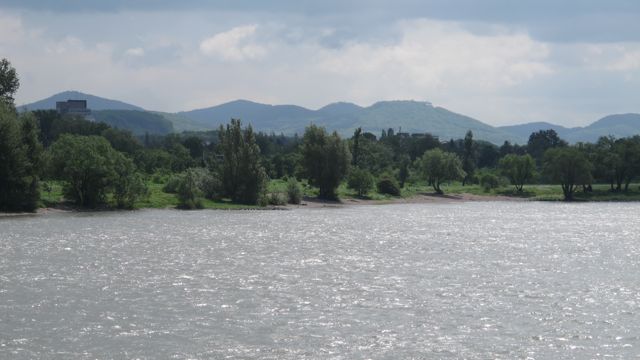
Siebengebirge ahead
Vendor in Bonn, advertising her asparagus in a loud voice
On deck they had wicker basket deck-chairs such as you'd see on the beaches of the Baltic Sea, but not enough for more than a few people to sit in. They shelter you from the wind. I sat in one for a short while, but soon had to get up to disembark by the Opera House in Bonn. It's a very attractive city to walk around, the central squares full of market stalls selling flowers and stalks of asparagus: "Spargel, frische Spargel, deutsche Spargel!" chanted the vendors. For lunch I had a bowl of potato soup with strips of smoked salmon in it, one of the Traditionsrezepte at the Müller-Langhardt Kaffeehaus that has been a Treffpunkt since 1913; this is the place where Adenauer used to sit, apparently, over his postwar coffees. Genscher and Kohl frequented it too.

In the Müller-Langhardt Kaffeehaus, Bonn, on a quiet day

Beethoven outside the post office in Bonn
My goal was Beethoven's birthplace, the Beethoven-Haus, although I think it's misnamed because he only ever lived there for a few days. Most of his childhood and youth was spent at a house in the Rheingasse. I'd already been in that part of town on my way up the hill from the boat, but went back to look. Needless to say it had all been flattened by 1940s bombs so Beethoven's parents' house no longer exists, not even as a reconstruction. All the same, my Beethoven pilgrimage touched me. I saw the tiny Christening cap he had worn; I saw the viola he had played. In the room displaying his hearing aids was the last grand piano he'd owned (after he went deaf). Its keys were like worn-down teeth. Imagine! A letter written by the composer to his doctor in 1801 was on display. It read:
...meine Ohren, die sausen und Brausen tag und Nacht fort; ich kann sagen, ich bringe mein Leben elend zu, seit zwei Jahren fast meide ich alle gesellschaften, weils mir nun nicht moeglich ist, den Leuten zu sagen, ich bin Taub, haette ich irgend ein anderes Fach, so giengs noch eher, aber in meinem Fach ist das ein schrecklicher Zustand ...
Roughly translated, that means: "my ears hum and roar away day and night. I can tell you, I'm living a miserable kind of life. For the last two years I've been avoiding all society because it's not possible for me now to tell people I'm deaf. If only I had another job it would not be so bad, but with my job this is a terrible state of affairs."

Beethoven died at the age of 57 but a sketch of him on his deathbed makes him look far older. He must have lived with his teeth permanently clenched because the life mask shows the tight muscles round his jaw, his mouth and his chin. His death mask made him seem like a different man, younger, those muscles finally having relaxed.

I returned to Koeln in 20 minutes, by train.

Monday, May 14, 2012

Koeln am Rhein

All the following pictures were taken today (Monday, May 14th):

Here is Chris with his colleague, Yi. We'd walked from the hotel along the east bank of the Rhein to the cathedral (Dom), without encountering any traffic beyond bikes, once we'd crossed the main river road. The building below the cathedral is a museum. All architecture in this area is either modern or reconstructed in amedieval style. Koeln was flattened by bombs at the end of the 2nd world war; the cathedral alone was spared. It had taken some 15 centuries to build it and the famous spires that make it the second highest church in Europe (Ulm is the highest) were a 19th century addition.


Next to the cathedral is the railway station, a wonderful conjunction, because travellers emerging at the end of their journey, as we did on Sunday, walk out to a breathtaking view. This is the sort of high speed train we arrived on from Frankfurt airport, less than an hour away by this means of transport:


Inside the Dom is a huge statue of St. Christopher (Chris' namesake) carrying the Christ child across a mythical torrent. It's mentioned in the poem by Heinrich Heine, famously set to music by Schumann at the end of the Dichterliebe song cycle that my husband sings.
Und holt mir auch zwölf Riesen,
die müssen noch stärker sein
als wie der
starke Christoph
im Dom zu Köln am Rhein.
Another artwork in the cathedral, a painting that shows the Virgin Mary (this one, I think) is mentioned in another of those Schumann songs.


After our visit to the Dom, Chris went back to the hotel and thence to Eindhoven in the Netherlands for a business meeting, and Yi, who was free till later in the day, came to the Zoo with me, where we saw a bear who reminded me of someone I know well.


Other animals and birds in the zoo ...


At the Zoo station, on the other side of the platform, is the entrance to Koeln's Seilbahn across the Rhein. Yi and I took a ride on it, which gave us some fantastic views of the river and the city.


This is the park on the west bank where we walked after getting out of our cable car.

The banks of the Rhein were liberally decorated with flowers. Yi said I matched these:

When Yi had joined the other colleagues and gone to work with them, I had the rest of the afternoon to myself, which I spent wandering around the "Neu-Altstadt" in the network of streets behind our hotel, a most attractive area:

One of the churches in this district is St. Gregory's, with a 17th century graveyard for the "destitute" of those days, and an appropriate relief on the church wall.


Wednesday, May 9, 2012

Cultura ecuatoriana

Ecuador may be on the equator, but in its mountainous regions it doesn't have a particularly hot climate.

One morning last month a small group of us met at Maria-Rosa's apartment to learn a little (in Spanish) about her country, to see some pictures of its landscape and have a taste of its food. We read about Ecuador's cultural heritage as we sat around her table sampling quinoa fritters with blueberries and whipped cream. Quinoa, said Maria-Rosa, is an ancient staple food from the Andes, better for you than gluten rich wheat.

We found out about the very mixed races of Maria-Rosa's homeland:
Sigún el censo poblacional del 2010, el Ecuador tiene una población con la siguiente mezcla étnica: 71,9% mestizos (indígenas / caucásicos), 7% indígenas, 6,1% caucásicos, 7,2% afroecuatorianos y 7,4% montubios.
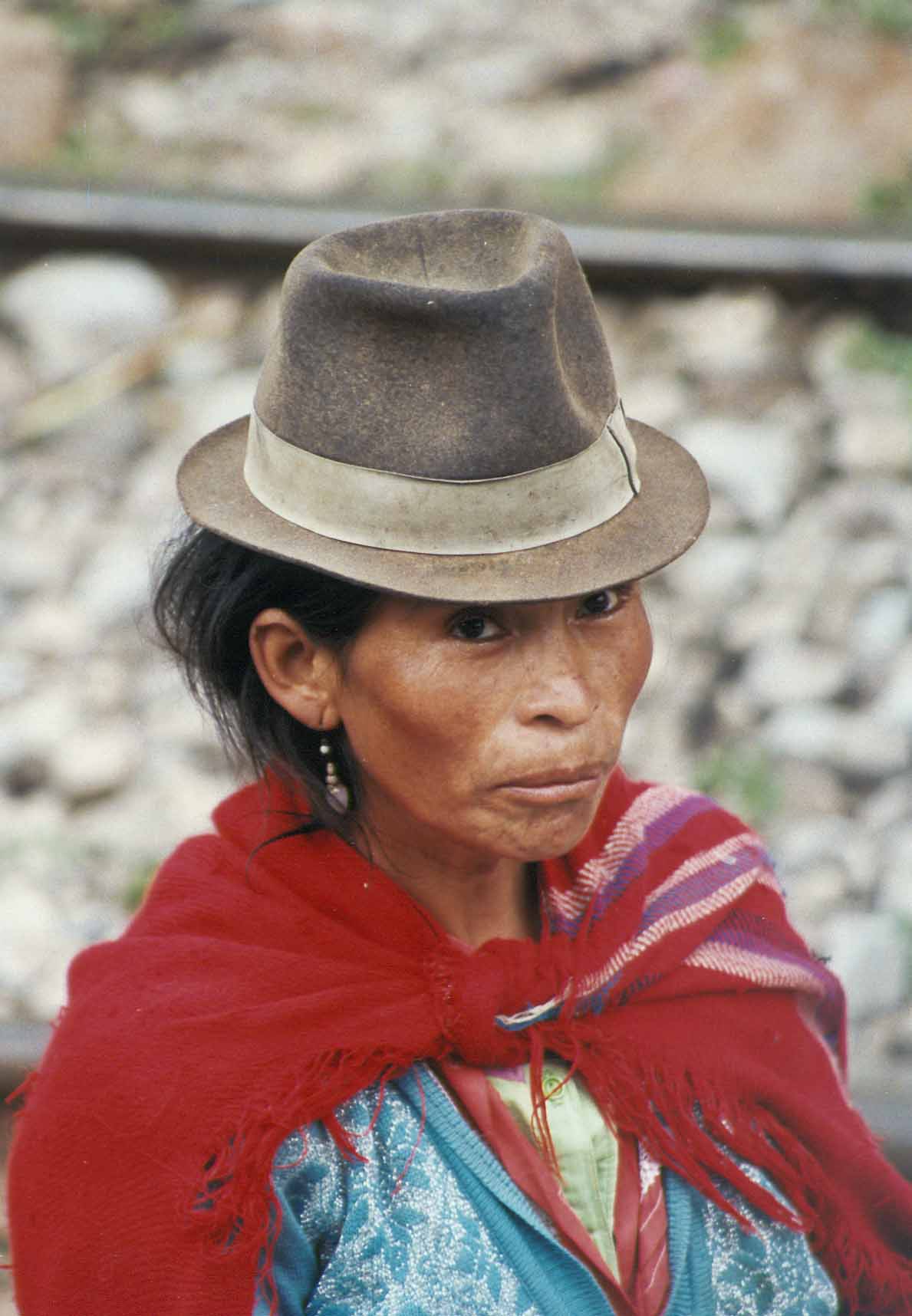
In the old days, many Spaniards intermarried with the Quechua people, who still have an identity of their own:

El mayor grupo étnico de Ecuador, estimados en aproximadament 2 milliones, es el de los Quechuas andinos ... La peculiar música de la flauta andina, actualmente conocida en todo el mundo; alimentos como la quinua [= quinoa] y el cuy [=guinea pig]; los coloridos ponchos de lana y las elaboradas blusas bordadas son todos elementos inconfundibles de la cultura Quechua.

In the province of Esmeraldas, by the coast, live a people of African descent (originally African slaves brought to this part of the world by the conquistadors):

...la población afroecuatoriana ejerce una fuerte influencia cultural sobre gran parte de la sociedad ecuatoriana, especialmente con su ritmo de marimba, su música salsa, sus festivales de danza ...

Maria-Rosa confessed to us that she likes to dance the salsa. "Would you like me to teach you?" So she put rhythmic music on, and we danced back and forth beside the Ecuadorian flag, swaying our hips. I was wearing flat and clumpy walking shoes, not the right style for this at all. Maria-Rosa looked more the part in her sandals with the high heels.

Monday, May 7, 2012

Maps and measurements

I wonder if my daughter and son-in-law and their fellow metrologists at the NPL in London, know this: if you click on the measurement tool for Google Earth, it can not only show you a distance between two points on the surface of our planet in conventional units like kilometres and miles, but can also give the answer in more unusual units (rods, poles, perches, furlongs), in ancient units, such as cubits, or in humorous units, such as attoparsecs and Smoots.

We came across this entertaining distraction while my husband was looking up his cycling distance to work, last night. The long, straight section of Ottawa's Greenbelt Trail that passes the Nepean National Equestrian Park, for example, is 20 American football fields in length. What fun.

Anyhow Chris has done the long ride (for the first time) this morning. It took him an hour and 10 minutes and he reports that his legs are feeling the distance.

I love all kinds of maps. Last night, at a friends' house, we also had the chance to study navigation charts for the lakes on the Rideau River system, and I've been packing my old maps and relevant Stadtpläne from Germany and Switzerland to take on our imminent travels so that we'll be able to see where we are. We decided not to book seats on the Köln-Bern flight after all. We now have tickets to go by train instead, which will take us for a half-day ride, mostly up the valley of the Rhine.

Tuesday, May 1, 2012

Awful English

My computer gave me some advice the other day, but it left me baffled:
If you do not use Java applets, it is recommended that you disable the Java web plug-in in your web browser.
I don't think my lack of comprehension is my fault. I think it is due to a lack of imagination in the person who came up with the message, who can't fathom or doesn't want to remember what it's like to be a newcomer to this jargon. Tonight I got a memo about disabling my active cookies as well; I don't suppose everyone user knows what that means, either, let alone how to set about all this disabling.

I can always ask my husband, but there plenty of people not married to techies, who must feel very irked by such messages. What they need is a translation. The trouble is, the sort of linguist who might be able to find a way of conveying the requisite information more clearly (me?) is not the sort of person who would ever want a job of that kind.

A similar problem arises in the scientific community to which my daughter belongs.

She recently received a notice saying, “Don’t be waitlisted. Book Exhibit Space now. 70% of expo floor sold!” and commented, "Now that’s the first time I’ve heard waitlist rather than waiting list, let alone having it used as a verb!"

My daughter is involved in the processing of observations made from spacecraft that orbit and monitor our planet. In the European Long Term Data Preservation Common Guidelines, with which she has to comply, the stated aim is:
To preserve the European (including Canada) Earth Observation space data set for an unlimited time-span ensuring and facilitating its accessibility and useability. EO Space Data are fundamental for the future of science and are a humankind asset.*
Emma says that "people even talk like this. I think they read so many documents like it that they think this is the only way to get the correct register. But I struggle – and I’m a native English speaker."

Bad writing comes from laziness and sloppy thinking and makes me angry, especially when the subject is so important.  The "correct register" to these people is an exclusion zone for everyone else. Emma ought to point out that bad writing causes confusion, I suggested, and for ammunition I recommended John Humphrys' acclaimed book, Lost for Words;-- The Mangling and Manipulating of the English Language, published by Hodder and Stoughton in 2004. (She bought it and read it! Now she'll need the nerve to confront the culprits with their shortcomings.)


*  Couldn't this have been better phrased? I thought so. I gave it a try:
We aim to preserve European / Canadian data on earth observations from space indefinitely, making sure the data are easily accessible. Observations of the earth from space are fundamental to the future of science and to humankind.

*****
Humphrys wrote:
The great skill of management-speak is its ability to state the obvious in such a way that normal human beings won't have a clue what it means [...]  It puts the author on a pedestal and the rest of us in our place.
On the last page of his book he quotes a Roman rhetorician, 2000 years ago:
One should not aim at being possible to understand, but at being impossible to misunderstand. 

Wednesday, April 25, 2012

The Alliance

In 1883, during the 3rd Republic, France was a major colonial power. That was when L'Alliance Française was founded in Paris and although it's mainly known for the diplomas it offers in French as a foreign language, its primary purpose was, and still is, to "faire défendre la culture française" for the benefit of francophiles in different parts of the world. It is a not-for-profit organisation.

On Monday this week, with a francophone / francophile group, I met the director of the Alliance in Canada, M. Hervé Devoulon. He also runs the Ottawa chapter (which is on MacLaren Street), having previously worked in South Korea, Venezuela, North Korea (!) and Australia.

He told us that, in the early days, it was mainly the expatriate wives of French diplomats who founded and managed the local associations comprising the Alliance, who created libraries and organised lectures in French in places like Melbourne, Sydney, Montreal, Toronto. Each group required permission to operate from the management in Paris. Language courses were initiated later, in response to demand, and the Alliance now has a presence in 136 countries, with 30 chapters in Australia alone, for example, each of them independent of the others. The country where the Alliance Française is making the most progress these days, where business men want to give the impression of being well enough educated to speak French, is China, "... sous la protection de certaines universités chinoises," so that the administration there becomes "un peu compliquée."

The biggest Alliance Française in the world is in Lima.

Brazil, Chile and Cuba (at least for the last couple of years) are being very supportive, and since the Berlin Wall fell, many Alliance Française associations have sprung up in Eastern European countries too. In the United States there is less French language teaching going on but a lot of "petits clubs" in existence. In Canada the Alliance Française is represented in 9 locations, the largest chapter being in Toronto where 75 profs are employed to tutor 6000 students.

M. Devoulon was very careful about answering questions on how the Alliance Française is received in French-speaking Canada. "On y va avec prudence," he said. "Je marche sur les oeufs." In the end he confessed that the Alliance no longer has a home in Montreal; in fact "le Canada francophone n'a pas besoin de nous pour défendre la langue." The Quebeckers have their own way of doing that.

It is the western provinces, he said, that represent today's "territoire de mission" in Canada.

Ottawa's branch of the Alliance Française (founded in 1905) is above all a cultural centre. It has a modest "médiathèque" where you can rent French films (including films made in Quebec). It puts on exhibitions on a theme by groups of local artists; for example in 2008 Chris and I attended a vernissage there when Raymond Aubin's photographs were on display. Photography competitions, seminars and lecture series take place. On Fridays (in competition with the Friday film evenings at the Goethe-Institut!) the Alliance shows a film in French––entrance is free to all.

Of course what keeps the Ottawa chapter in business is its role in the "marché des langues," offering French courses, especially to the large number of anglophone government workers employed in Ottawa who have to take exams in Canada's official 2nd language. In comparison with the other private language schools in and around town, M. Devoulon claimed that instructors at the Alliance Française are "plus professionnels," having had their training in France.


Tuesday, April 24, 2012

At the Château

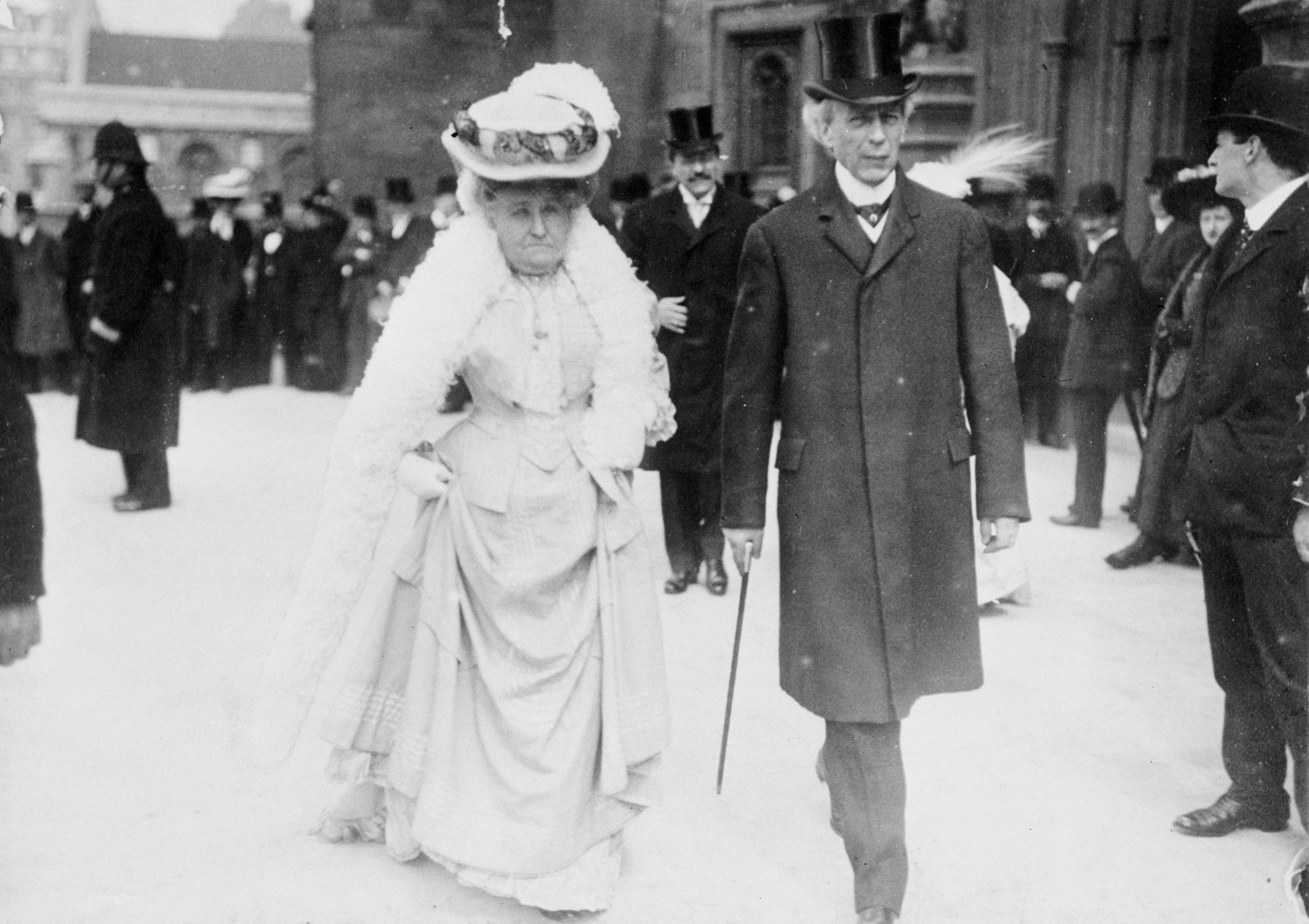
Charles Melville Hays

Château Laurier pool
The Château Laurier, Ottawa's grand hotel, is 100 years old this year and on June 1st, current and former hotel staff are going to have a private party there to celebrate its birthday.

The man whose project the hotel originally was, Charles Melville Hays, never lived to see the its opening in 1912 because he perished with the Titanic that same year. His portrait hangs in the lower lobby near the pool. I saw the hotel pool, filled with salt water, on Friday, and it appeals to me, but if I want to indulge myself by swimming in it, a one-off visit to the obligatory Health Club would cost $20 plus tax, and a month's membership $125 plus tax. Maybe for the sake of keeping fit ...!

A corner of the Karsh Suite
Another impressive part of the guided tour was to the suite on the 4th floor where the world-famous, Armenian photographer Yousuf Karsh used to reside. It's preserved in the original style of furnishing with a chandelier donated by Karsh's wife, with Chinese cupboards and of course with photographs by Karsh hanging on the walls. More of these are on display in the entrance lobby and in Zoe's lounge (named after PM Wilfred Laurier's wife) with its grand piano.

Carpet in the foyer
More than 70 lady diplomats or wives of diplomats had turned up that day, as well as their Canadian friends in the Diplomatic Hospitality group, and the hotel had set aside the western end of the ballroom for coffee / tea and scones and jam, etc. to be enjoyed at round tables after our tours. Before we tucked in to the magnificent spread we were also treated to a Fashion Show of equally magnificent proportions, with fourteen tall and slender girls poised on tall and slender heels modelling Elena Hinke's flowing creations (turn your volume down before clicking on that link!) in black, royal blue, turquoise, mustard, olive greens and scarlet: smart, elegant and sophisticated clothes. Silks and black lace predominated. The audience was thrilled, and not a price tag in sight.

Ms. Hinke, left, with one of the models