blending an assortment of thoughts and experiences for my friends, relations and kindred spirit

blending an assortment of thoughts and experiences for my friends, relations and kindred spirit
By Alison Hobbs, blending a mixture of thoughts and experiences for friends, relations and kindred spirits.

Monday, February 13, 2012

Parks and gardens of Tokyo

I took the Hanzomon (Z) Line to Otemachi in order to see the Imperial Palace Gardens, but to my disappointment they are closed on Mondays. Therefore I stayed this side of the Sakurada Moat and palace walls to walk through the Outer Garden on the pebbled footpaths, admiring the pale, soft, dried up lawns under the ornamental pines. By crossing busy Uchibori Dori I could access another green space, the Hibiya Park, with fountains, ponds and an open-air stage at the centre. One corner of this park used to be a burial ground long ago, and with reference to this terracotta figures stood in the flower bed. There was a small hillock where more pines grew, their trunks decorated with a sash, or obi, made of straw, and labelled with their botanical names in Latin. Ornamental cabbages and flowering pansies were growing in neat rows near the tennis courts where women were playing sets with one another; perhaps their husbands were those gentlemen I saw striding purposefully towards their lunch venues in their dark suits.

I followed some of these gentlemen into a Trattoria on the ground floor of the Press Centre and was served a salad, a teacup of cream of pumpkin soup, a pile of spaghetti drenched in pesto sauce and a strong cup of Italian coffee. This meal cost the same as my hotel breakfast but was a better deal, the “continental” breakfast having been two slices of toast with jam with coffee and juice, preceded by a green salad in a vinegary dressing with shredded carrot and lots of onions. I was interested to watch my fellow diners at lunch time, the women as smart as the men, except that their face masks rather spoiled the effect as they came in. They took them off, of course, while eating.

Afterwards a long search for a Post Office led me under the railway lines (along more busy streets) to the Shinabashi “City Centre” around the Shiodome, an ultra modern shopping mall-cum-office block complex, tall trees in the glass covered basement, skyscrapers scores of floors high and people walking & riding the escalators like little model figures in an architect's maquette. There I found a lady in a print shop who sketched a map for me to show me where the nearest post office was so that I could finally buy some stamps for my postcards. (Not that I've found many postcards yet, either.)

By following my nose and the walkway signs that were translated into English I made my way under flyovers and across wide roads at ground level into the haven of the Hama Rikyu Garden, once owned by a Shogun in the Edo period of Japanese history and later by the Imperial Family who donated this piece of land to the City of Tokyo after it had been “dilapidated” (i.e. destroyed) first by a Great Earthquake and secondly, I'm afraid, by 2nd World War bombers. It was restored by the City. It was a lovely place, as I'd guessed when I spotted it from the river cruise yesterday, full of bending pines, salt water ponds (fed by a tidal stream through a sluice gate) and walkways including a sea wall and a path up a little mound called Little Mount Fuji. Ducks and a heron fished in the ponds and on an islet in one there was a Tea House I may return to when I'm not so full of coffee. A bridal couple, the girl in a red kimono, was having photos taken and big birds of prey, eagles maybe, were fighting a noisy battle with the ravens.

I caught the river boat from the landing stage where we'd pulled in before and sailed back to Asakusa from where I know how to get back to the hotel.

The dogs of Tokyo have their own designated playgrounds, by the way. There's one by the riverside, a long, thin, fenced off area with an artificial lawn where they can chase balls to their hearts content and where their owners have to clean up after them, closely supervised by a uniformed officer. I didn't see any dogs in the other parks.

Sunday, February 12, 2012

Getting our bearings in Tokyo


On the Metro
"Ohayoo gozaimasu!" they kept saying around the hotel and in the street, with a bow to us; I guessed that meant "Good morning!" and so it did.

Two Buddhas offering wisdom and mercy at Sunsoji Temple
Today we began to master the Tokyo Metro system by taking two trains to Asakusa so that we could take a look at the Sensouji Temple gardens near that station. The ticket machines require some previous study  if you want to use them with confidence, but I was lucky enough to find a metro man in uniform to help me on my first attempt. You can also select a display in English on their screens and can buy two tickets at once, which saves time if there are two of you. If you make a mistake with the fare selection it doesn't matter as long as you realise that you can pay the difference in your fare at the end of the journey at a Fare Adjustment machine (look out for it; it's yellow). There are PASMO cards available, like the London Oyster cards; I haven't bought one yet. If you don't have one of these, covering all the networks, you may have to cross from one network to the other (Lines A, I, S and E are in another system from the others) and pay for a separate ticket as you change over, which is a nuisance. Anyhow, we had plenty of time to spare today and one another for mutual comfort in the face of adversity. Every station we walked through today was spotlessly clean, with artwork on display; Suitengumai has travellators on a slope as well as escalators.

We paid attention to the advice given in English: "Be careful of the door! ... Mind your steps!"

Many visitors at the Sensoji Temple
The Sensoji Temple had a main hall where the Buddhist faithful were queuing politely to offer their prayers and throw coins into a large coin receptacle in front of the screen that protected the Buddhas. Some stopped on the way to waft incense smoke onto their clothes, by flapping their hands in the smoke from the incense burners. It was highly reminiscent of our temple experiences in China. In the gardens were stone Buddhas and other statues, one labelled the Shibaraku Statue, that Chris thought would be an apt symbol for the RIM employees' "Be bold!" campaign in Canada. It was of the 9th Danjura Ichikawa, a 19th century Kabuki actor, "depicting Shibaraku, his forte" -- the role of a fierce warrior wielding a sword. Another sight to remember was the pair of giant straw sandals, O-Waraji, at the temple gate, that symbolised the power of Ni-on. "Wishing for being goodwalkers, many people will touch this," the notice in English explained. On the other side of the gate stood a pair of muscular, far larger than life Deva Kings painted red, the one with "opened mouth style" showing all his teeth in a snarl. The other was a "closed mouth" one.

After a walk down the line of outdoor hut-shops, ever so like the Christmas markets in Munich and Stuttgart that I remember from recently, except that they sold Japanese ware (of quite good quality), we had a disastrous lunch at a nearby Starbucks, disastrous for Chris at least who took one look at his chicken sandwich and couldn't face it, containing melted cheese, gravy and cabbage. I ate all of mine and most of his. I was hungry and drank some green tea with it. Chris did manage to consume a carton of orange juice and a cinnamon bun there. Later, on the river boat, I had a large cup of iced oolong tea as well.
Buskers at the river cruise departure point

Bridges across the Sumida River
We bought return tickets for the river cruise from Asakusa to the Hinode pier some 16 bridges further downstream on the Sumidagawa (gawa means river, I assume). The next bridge would have been the last one (the Rainbow Bridge) before the river reached Tokyo Bay and its container port. I won't describe the cruise in detail here. I enjoyed it so much I may do it again before the week is out.

"Rainbow" Bridge with the port of Tokyo beyond
A street in the touristy Asakusa district 

Saturday, February 11, 2012

First impressions of Tokyo

The Japanese flag
I thought that this morning's daybreak (seen from 35000'), with the red sun rising in the east beyond a low layer of deep red-orange stratus, was very appropriate for our approach to Japan. When we landed, our border checks were handled with aplomb by the immigration officers so that we got through to the luggage hall within a few minutes and at the other side of the gates we were met by Chris' colleague Hayato, a welcome we hadn't expected. He gave us some maps and brochures, helped us rent a phone for me and buy return tickets for the "Airport Limousine" bus. Our hotel is adjacent to its terminal, the "TCAT" at Suitengumai metro station.

Leaving the airport
Beaches on the coast to the north of the city. Endless skyscrapers, one canal after another. The ticket collector at each bus stop bowed politely to the bus driver. A clean, efficient look to the city. What deferential people! All citizens we've spoken to so far speak English. Many people wear face marks for fear of catching the flu. A "Happy Honda" factory, rice paddies between the built up areas, a series of toll gates, and Tokyo Bay surrounded with cranes. Mother and child in kimonos sharing the lift with us. A French cafe in the airport Bus Terminal where there was a well used smoking section. No Diet Coke with caffeine for Chris, only bottles of Coke Zero. In our hotel bathroom (far too small for Chris) is a heated toilet seat and a device that automatically "rinses your posterior with warm water" when you sit on it and press the button with the fountain symbol.

This afternoon we walked along the banks of the Sumida River which was nicer than the dark street with all its crossings below the spaghetti-like flyover next to where we're staying. Everything is neat and tidy, even the cardboard box houses constructed by the homeless people who live under a bridge near here.

Tuesday, February 7, 2012

Fast forward

Tuesday evening

As the announcer on the Paddington - Bristol train said, "we shall now be proceeding forward." The last thing we want to do, as Chris puts it, is to proceed backward.


It's not easy to find time for blogging on my travels. Things happen faster than I can write notes about them (more so than at home) and even as I write, my husband comes into the hotel room from his day's work at the Safety Critical Systems Symposium dying to interrupt and tell me all about that, too.

We are in Bristol, after a weekend with the grandsons in the London snow. Tomorrow, while Chris gives his presentation here and attends his Symposium Banquet, I travel on to Cardiff to see some more of my mother and sister. They joined me for a few hours in Bristol today. My sister came here yesterday as well; two days in a row she and I boarded the SS Great Britain moored in the dock where she was built in 1839, restored to the glory of her maiden voyage to Melbourne in 1852, “the best museum I've ever visited,” said Faith. Today we shared it with Mum, and I had the bonus pleasure of being allowed to step aboard John Cabot's (replica) vessel, The Matthew, moored a few paces away. That one (the original, I mean) sailed for Newfoundland in 1497, the first British ship to cross the Atlantic. Cabot's real name was Giovanni Cabboto.

On the waterfront in Bristol is a plethora of museums, one of them, Arnolfini, a modern art gallery that has an exhibition on the theme of museums that made us think: what are they? What is the point of them?

Up the slope from the river, next door to our hotel, lies Bristol Cathedral, where yesterday afternoon before supper I attended Evensong sung by The Consort of girls and boys from the 6th Form of Bristol Cathedral school. I remembered the words and their musical settings so well: Stanford's Magnificat in B flat that I sang once, myself, long ago.

Supper with Chris' colleagues Michael and Gary was at Carlo's, an Italian restaurant of high repute, all bright with mirrors and lights, where the waiters looked like penguins.

Monday, January 30, 2012

"It's all about balance"

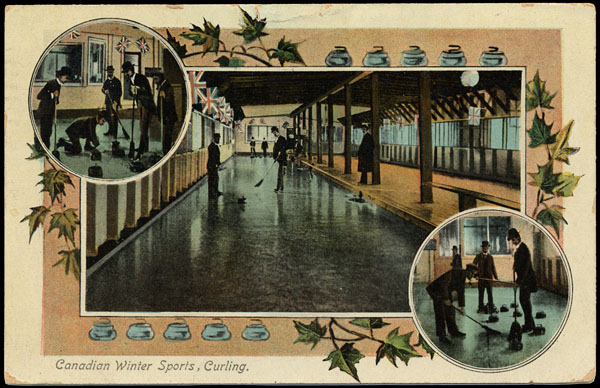
I have to be careful here, because if I get the terminology wrong, I will look foolish. Early this morning the RA Centre on Riverside introduced a large number of us in the Ottawa CFUW's Diplomatic Hospitality group to the basics of curling.

The first thing to do was to take our sports shoes across to the inspection table to make sure there wasn't a spot of dirt on them that would compromise the ice we'd be playing on. "You have worn these shoes outside, haven't you?" said the shoe examiner with a hint of disapproval as she turned my shoes over, before attacking the soles vigorously with a vegetable brush dipped in a bowl of water.

There are six "sheets" on the ice at this curling rink and a dozen or more ladies in red jackets had made themselves available to give us instruction in six groups, making sure that we didn't fall over on the ice, or if we did, that we'd be able to get up again. They were all keen amateur players and, it seemed to me, very well trained teachers too. They wore special black curling shoes with a removable rubber sole cover for the "off foot," usually the left one, that had a very slippery "slider" attached. We novices were lent portable sliders, slightly less slippery underfoot.

I was in a group with a Japanese lady, an Italian lady and another novice Canadian. The first exercise was to walk up and down (without deploying our sliders) on the bobbly ("pebbled") surface of the ice to see what it felt like, and then to repeat the walk sweeping the tee line on the ice with our long handled brooms: Women with Brooms in this case, not Men with Brooms (with Paul Gross as the Skip).

The rock is made of polished granite
To deliver the shot, you've got to have flexible hip joints and knees, although players over the age of 85 or so are permitted to use so-called curling sticks that allow them to stay upright while playing; we weren't given the option of trying these. We had to practise getting up off the ice in case we fell, holding ourselves in the "throwing" position without overbalancing and finally pushing off from the hack (i.e. starting block) with the slider under our left foot, sliding ourselves forward and keeping our balance in the process. I did it all too gingerly because the surface of the ice looked like a very hard surface to fall on, but was admonished for looking down at my feet and eventually persuaded that I'd keep my balance better if I looked ahead, up into the eyes of my instructor. I had the use of a sliding support for my left hand but my right hand was free to flap about (it should be held extended). All of us breathed a sigh of relief when given a rock (with a handle) to hold and release. These objects are about 20 kg in weight so gave us a reassuring illusion of steadiness while pushing off from the hack.

Apparently there's a way to vary the delivery that gives you an even better sense of balance: having the slider under the right foot instead! However I have only discovered this since coming home and browsing the Internet.

The last exercise before we could begin to let fly with the rocks was to move the sliding foot back as a prelude to our slide, keeping that foot flat on the ground, which is only possible if one sticks one's bottom in the air, brings one's left knee to its full bend and has one's right knee well behind one's centre of gravity, practically scraping the ice. It's not as easy as it looks! I thought of all the Chinese people I'd seen last year, squatting flat footed in the parks of Hangzhou to chat to one another. They'd have had no trouble with this sport.

The male curlers enjoying their Spiel
We also got some instruction on how to aim the rock with a rotation of the hand and how to interpret the arm movements of the person towards whom we were aiming. The curling rink is a chilly place and by this point in the lesson my hands and feet were growing numb so the instructors suggested that two of us should practise sweeping the ice with our brooms to keep ourselves warm as well as to assist the rocks' progress while the other two in our team were practising longer and longer shots. We never got round to actually scoring because the electronic whistle blew, ordering us off the ice so that some serious players (men) could have their go after the rink had been cleaned with a wide sheepskin brush. However, I did manage to deliver a couple of rocks as far as the house before we repaired upstairs for coffee and the ladies were all after me to sign up for curling lessons at the RA next season.

Wednesday, January 25, 2012

More Japanese

Now this is interesting. Once again, I've been researching the vocabulary we'll need when dining out in Tokyo and what do I find?

fork = fooku
knife = naifu
spoon= supuun
napkin = napukin
cup = kappu
glass = gurasu, koppu
a bottle of wine = wain
koohii to miruku = coffee with milk
soup = suupu
butter = bataa
cheese = chiizu
pork = pooku
beef = biifu
steak = suteeki
juice = jyuusu
pie = pai
ice cream = aisu kuriimu
tip = chippu

Since you don't pronounce, or hardly pronounce the single "u"s, those words sound (in romaji spellings) remarkably familiar. I assume, then, that all the concepts listed above must have seemed outlandish to the Japanese until they felt obliged to accommodate English-speakers in their country. Vegetarian is listed as "begitarian." In any case, as in other parts of the world, it may be considered trendy to have anglicised one's vocabulary.

However, I mustn't let this lull me into a false sense of security. The phrases I'll need day to day are still very different from what I'm used to.

please = onegai shimasu
thank you = arigatoo gozaimasu
excuse me = sumimasen
Chikatetsu no rosenzu o kudasai.= May I have a map of the subway, please?
Nihongo wa amari joozu ja arimasen. = I don't speak Japanese very well.
Wakari masen. = I don't understand.
Eigo o hanashimasu ka? = Do you speak English?
Doozo yoroshiku onegai shimasu.= Nice to meet you.


I studied my map of Tokyo yesterday and got some ideas from it, and a sense of where our hotel is located. I love maps.

Monday, January 23, 2012

In the cold, keep moving

Along the Quarry Trail on the edge of Kanata people feed the wild deer with carrots and apples which encourages them not to be shy. The chickadees aren't shy either, a constant coming and going of them on our outstretched hands yesterday afternoon, as we stopped to feed them seeds.

We've kept up a series of Sunday walks since Christmas, last week in bitterly cold conditions through the streets of Rockcliffe Park to the rockeries (buried in snow) and then back to our starting point past MacKay Lake (a "Conservation Area"), the previous Sunday at Mud Lake, the week before that on the Larriault trail in the Gatineau Park, on New Year's Day in Montreal and on Christmas Day itself following dog walkers' home made trails through the woods above Ojai Road on a steep hillside in Chelsea.