blending an assortment of thoughts and experiences for my friends, relations and kindred spirit

blending an assortment of thoughts and experiences for my friends, relations and kindred spirit
By Alison Hobbs, blending a mixture of thoughts and experiences for friends, relations and kindred spirits.

Sunday, October 28, 2012

German and Chinese

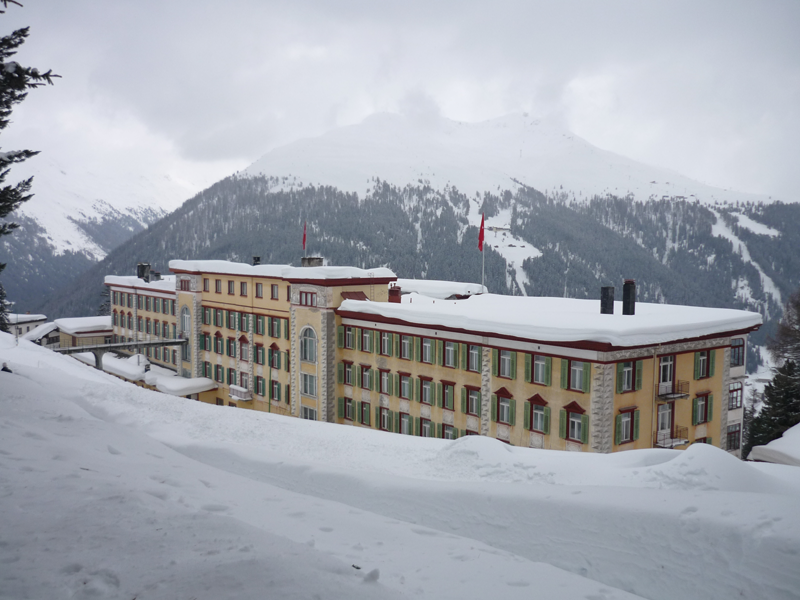
The old sanatorium at Davos, the setting of Mann's novel
I spent a few weeks this summer reading in German. I read both volumes of Thomas Mann's Der Zauberberg again (a "set book" when I was studying German at university and a favourite of mine) and got hold of a film of the novel that wanders rather from the original, but is still in keeping with its spirit, though I was disappointed with its interpretation of the last chapter. I've been watching DVDs of a German TV dramatisation of Buddenbrooks as well. Sabine of the German Embassy left some books behind when she left Ottawa this summer, one of which was the novel Eine Handvoll Glück by Barbara Noack, set in wartime Berlin and the few years before. Apart from the Berliner Dialekt used in the dialogue I found that story a very readable one.

Since September I've been in charge of the weekly meetings of the German-speaking Konversationsgruppe (26 people) that's part of Ottawa-CFUW's Diplomatic Hospitality service. Chris, who is also needing to study the language like mad in preparation for a business trip to Bremen, Stuttgart, etc. discovered something useful on the Deutsche Welle website: Langsam gesprochene Nachrichten: international news read out by German newsreaders at an abnormally slow pace and very clearly articulated, which gives non-Germans a better chance to follow what's being said––brilliant idea. I wish I'd had access to this when I was a teacher in the old days. I've told my Konversationsgruppe about it, anyhow. We've had five meetings so far and at the last one I decided to hand out some copies of extracts from a little book of old Chinese stories ("Anekdoten") entitled "Und Buddha Lacht" and translated by a German sinologist called Franz Kuhn, who died in 1961. As a matter of fact, Dr. Kuhn was the great uncle of Dagmar, one of my German-Canadian friends, and Dagmar was there to tell us a great deal more about him than appears in the Wikipedia article! Also present was Lolan, Chinese by origin, who with her in-depth knowledge of China's history and culture could help us appreciate the background to the stories.

I have also been taking some more Mandarin Chinese lessons on Skype with Mr. Yin of the Ottawa Chinese Language Centre, and practising with my daughter-in-law Sha or my friend Yiwen when the opportunity arises. I hope I'm making progress, have been trying to use modifying words like "yīnggāi" (should) and "kěnéng" (perhaps) as well as the very basic vocabulary, in order to make my sentences in Chinese a bit longer than they were to start with.

Friday, October 26, 2012

A puppet Faust

Since flying back from New Brunswick and Quebec, I've had a wealth of different experiences, not least of which was my attendance yesterday evening at the extraordinary solo performance of Goethe's Faust (Part I), at St. Paul's University.

St. Paul's, originally intended for the "Oblates of Mary Immaculate," is still to some extent a Theology college, and indeed when I arrived (alone in the dark) at the front entrance there was a tall monk on the steps wearing a long skirt and a hood, talking French into a cellphone, but nowadays it is also shares its premises with the Ottawa branch of the Goethe Institut. I know Cristina, the lady who runs the Goethe Institut here, and she had invited me along to the show in the auditorium.

The visiting performer was Bridge Markland from Berlin, a woman who has mastered multiple roles as a high school teacher, translator, drag artist, dancer, children's theatre producer, actor, puppeteer, and performer in variety shows. Not necessarily in that order. She gives "one-woman-transgender-performances" in sex clubs and performances of classical drama by Schiller, Goethe, Kleist, in schools. It seems to me she belongs to the German cabaret tradition of the 1920s and 30s; she'd have been quite at home with those people (I noticed that she used a Brecht-Weill song at one point in her show).

Anyway, what we were watching was Ms. Markland's performance of Faust in the Box:


It was so clever, thoroughly kreativ! (It had taken two years of preparation.) As you can see in the video, she pops in and out of a cuboidal box and dons various dressing-up hats in order to be different characters, although as Mephistopheles, in a very devilish interpretation, she doesn't wear any hat on her bald head. Sometimes, in the scenes where two or three people are interacting, she resorts to glove puppets. For the famous "poodle" scene she unpacked a wind-up dog from a toy shop that stood on its back legs and did somersaults. For the cathedral scene she simply hung a Holy Virgin doll over the side of the box and lit a candle on the floor of the stage. For example.

She knew the play backwards, every line, and her mouth moved to the voice-over reading, a recording by a cast of German actors (collaborators) that came through concealed speakers, the muscles of her face also responding to whichever character was speaking as she "listened" to her puppets saying their lines. Sometimes all we saw were two puppets, as she herself hid in the box below. The most original idea she'd had was to integrate the words of pop songs into the text (she mouthed those too, along to the music), so that, for example, when Gretchen was meeting Faust, we saw the Gretchen character singing and jigging about to Madonna's Like a Virgin, which had the audience in stitches. Sometimes only half a line from a song was used to interrupt the Goethe dialogue––technically it was very well done and a lot of the songs were in English––so that the audience really had to concentrate to work out the allusions.

I was pretty much exhausted at the end, after 80 minutes of this, and so must she have been, but she's used to it. She then took a swig of water and proceeded to solicit questions and comments from the audience, which took another twenty minutes or so. She seems completely bi-lingual, spoke in a mix of German and English. She also performs an English version of Faust-in-the-Box, combining two established translations with some ideas of her own, is doing that in Vermont on the next stage of her tour, and has begun to perform Robbers-in-the-Box too, in various places (her take on Schiller's Die Räuber). Somebody asked her if she'd be willing to come to Ottawa again to give another of her performances and she answered, "As long as you'll pay for my air fare!" and added, interestingly, that she'd also like a hotel room to herself, because, off stage, she likes to be privat.

Wednesday, October 24, 2012

Thursday and Friday: two Loupi nights

Where we stayed in Rivière-du-Loup
That was a bad case of writer's block. According to this blog I've been stuck in Quebec for the last two-and-a-half months! Let me post this and move on now.

August 9th

Our flight from Rimouski to Riviere-du-Loup was short and sweet, over enchanting scenery; the valley leading to St.-Fabien and the little harbour at Trois-Pistoles looked particularly appealing from the air.

We landed, found a motel (the one in this photo) and in the afternoon took a three hour whale watching cruise from the mouth of the Rivière to the other side of the St. Lawrence on a small boat accommodating a large party of Chinese tourists, so full that we didn't even get a seat. It was a perfect day for the experience though, the water, unusually, as smooth as silk.


Hungry when we came back on shore, we tried for a table at the pub on the headland, Au Boucaneux, but it was full––you need a reservation if you don't want to wait for a table for hours––so we had sandwiches and chips at the snack bar next door instead.

Next morning we were fog bound. It was raining too, with the cloud ceiling and visibility so low that we couldn't fly anywhere. Instead, after breakfast at Mike's we rented a car and, having made sure that PTN was still safely tied down at the airport, we went for a walk from the Parc des Chutes at the edge of the town. The notices encouraged us to "...Observez la chute de 33 mètres, du haut des deux passerelles surplombant la rivière du Loup" where there was an old, recently renovated hydro station and the gateway to a network of walking trails. In spite of the rain, we followed the longest, Path No. 1, keeping a look out for red squares on the trees. This route took us through an apple orchard where sculptures had been planted too. In fact the whole area was a park for experimental art. A curtain of eyes had been hung under the footbridge spanning the river.


At lunchtime we found a nice coffee shop on the main street on the hill, then made another visit to the airport again, still swathed in cloud. It was worth the detour, because an extraordinary sight met our eyes. A Junkers 52 had flown in, defying the clouds at a low altitude (skud running all the way from Toronto! We'd heard it flying in before we spotted it. "What's that?" we said.)


Being a groovy plane, the Junkers (built in Germany in 1939, but now Swiss owned) on this flight was being sponsored by Rimowa: "the luggage with the grooves." It wasn't just any old flight; the crew had taken the aircraft from Switzerland to California via the Faroes, Iceland, Greenland, etc. and were now on their way back home, a  real adventure. The journey log is on their website. As a newly captured prisoner-of-war after the Battle of Crete, my father had once ridden in a 'plane like this: it was his first ever flight, in fact, in 1941. We walked all around the one at Rivière-du-Loup, and talked to its crew before they left for their supper in town.

Our supper was at Les Jardins de Lotus after we had checked into the Loupi once again.

The following day, August 10th, we flew home via Trois-Rivières, taking a half-way break there and breaking through the cloud there too.

Hey, I'm back at last. Now I can start writing about all the other experiences I have had since.

Sunday, August 19, 2012

Wednesday, into Quebec

August 8th

Lifting off from Charlo we struck out across the Baie des Chaleurs, IFR but in good visibility, climbing to cross the hills on the Quebec side and eventually "maintaining 6000" feet ASL, which gave us a good vantage point for spotting the towering cumulus ahead. Even in the morning the bigger clouds appeared to be building quite rapidly above the Gaspésie once we had left the coast. We requested a detour around one cloud before returning on course which took us straight towards another, that we penetrated. We reckoned it was towering to 20,000' at most, not really dangerous yet; despite definite turbulence as we entered and left the cloud it didn't seem too drastic in the middle, just very wet––heavy rain washed our windscreen clean; it needed that. Beyond this encounter with "active weather" we could see our way to the coast, i.e. the Gulf of St. Lawrence.

A twin-prop Navajo ahead of us cancelled IFR to allow us to do a long RNAV approach over the water, partly covered in a thin low layer of mist, to Mont Joli (CYYY). We know this airport but hadn't approached it like this before, flying a 12 mile final quite low over the sea! This airport is much livelier than the one at Charlo, advertising chartered flights to the Ile d'Anticosti: rich people fly there, willing to pay $4000 for their hunting and fishing experience. Another vehicle that stops at Mt. Joli airport is the courtesy shuttle bus from the Motel Gaspésiana by the shore at Ste. Flavie down the hill. This institution takes pride in the service it provides, so we were willing to order our lunch at their restaurant with its view of the rocky beach (tide out). The tables were stylishly laid, the waitresses looked smart in their navy blue uniforms and freshly caught cod was on the menu.

Before going back up the hill to our 'plane we decided to take a walk along the road (Rte 132) to see Le Grand Rassemblement again, Marcel Gagnon's concrete figures emerging from the sea and clustering together by his house, the Centre d'Art that I've mentioned before in this blog, where we stayed in 2009. There they were again, none of them submerged because of the low tide and some with seaweed for hair, this year. There were extra ones on tethered rafts, and when we turned away and returned up the road to the airport we passed another Gagnon creation, a flock of concrete sheep with their shepherd on the grassy slope by the Mont Joli Motel.

This time round we chose not to stay in Ste. Flavie but to fly on to Rimouski, taking the precaution of booking a room at the Comfort Inn before setting off. It was the high season. We feared we'd be too far from the centre, around the Institut Maritime, but we found we could walk there in less than an hour, along the Promenade de la Mer. Rimouski is a cultured town and a chamber music festival was going on in the area: the Concerts aux Iles du Bic, now in its 11th season. If we'd known about this beforehand we might have planned our summer trip differently! Unfortunately most of the concerts were happening in country churches at some distance, e.g. in St.-Fabien-sur-mer. The Bic islands are in an area of outstanding natural beauty, but we'd have needed more time and preparation to get there and back from Rimouski ... or perhaps not! I have just discovered from the website that a festi-bus shuttle could have served our purpose: how frustrating to find that out too late. Anyhow, we did catch part of a free, outdoor concert that was taking place in the central gardens of Rimouski's Place Publique, hearing two young performers, David Stylenko, on saxophone and Olivier Tremblay-Noël, on the marimba. I haven't been able to discover who composed their duet for "anche et baguettes" (reed and sticks) but it was French-style music of very good quality. Lots of people were sitting on the grass listening carefully.

We had a panini at Tim Horton's, a walk down the Boulevard where the shops are, including a good French bookshop that stays open 12 hours a day in the summer season, and wandered back to the Promenade just before high tide. If you scroll down to the bottom of this page (or read the French version) you'll find some information about the Tide Tower. We climbed onto the lookout to see the view and while we were up there heard the signal announcing the turn of the tide––la pause entre le flot et le jusant. An elderly gentleman sitting on the bench up there told me that, and kept talking to me when not reading his book (marking it with a pencil from time to time). He comes up to sit there every evening. He said he was born in Rimouski but had left the town for 43 years until he came back six years ago. He had missed the sunsets.

The spy in your midst

You never know who's listening; it may be one of us.

Yesterday evening we were at a very nice dinner party with friends and, as usual, when the wine glasses had been topped up, stories began to be told. In the middle of the night I woke up realising what the connecting theme had been.

Our host and hostess told us about their experience at a séance with a ouija board on a three-legged table that wobbled convincingly (!) and Chris came out with his story about participating incognito in a spiritualist meeting, once, in Welwyn Garden City. He'd volunteered to report back to the Quakers, whose premises the spiritualists were using, coming to the conclusion that the practice was mostly harmless nonsense, best left ignored.

G's story was of the occasion when he had offered to infiltrate a meeting of one of the religious groups opposed to the Gay Pride movement, to find out what their tactics were. This was shortly before the vote in the Canadian parliament that passed the law allowing same-sex marriages. He said that the viciousness of the opinions voiced hurt and shocked him, but his emotions didn't prevent him from taking notes; in fact the avidity of his note taking was favourably commented upon. "If you only knew!" he was thinking. At the end, so as not to give himself away, he had to join a prayer circle on Parliament Hill, arms entwined with the people who sought to stamp out his way of life. He still shudders to think of that.

M has just come home from a trip to Saudi Arabia to visit her family who recently moved there from Syria. She wore the obligatory veils and was glared at for allowing some of her hair to show. On flights to Riyadh the ladies on the 'plane take over the lavatories for the last hour of the flight, changing out of their western into their Arabic clothes, although underneath the robes they wear skimpy shorts and T-shirts. It is so hot (50º) and dusty in that city that you simply cannot go outside. Even indoors, if you want to keep the house clean, you have to do the dusting twice a day, and everyone's eyes are red. You can't see out of the windows because they are small and high in the walls of rooms. M coped with the climate and with the rules for Ramadan by sleeping during the day till 4 p.m. and staying up all night, but soon felt terribly claustrophobic. She took a trip to Mecca and saw the Kaaba: she hadn't expected the holy site to be surrounded by towering modern hotels. She is glad to be back in Ottawa, where she can be herself again.

All of these spy stories "speak" to me. I've often felt like a close observer myself, both at home and abroad, only pretending to belong, and am often taking notes.

Saturday, August 18, 2012

Tuesday, to the Baie des Chaleurs

August 7th

Belle Isle Bay (near Saint John) from above
On a bright, clear day we were able to take off north to Charlo airport across the wilds of New Brunswick, a 1 hour 50 minute flight north up the St. John River to the Gagetown area, then further north, crossing a hundred miles of forest. There wasn't much to look out for on the map. We crossed several rivers, such as the Southwest Miramichi, the Little Southwest Miramichi, the Northwest Miramichi (those names telling a story of confusion among the early explorers?) and the Nipisiguit River, where it became more hilly below us, sighting Bathurst Bay to the east. Then came the Tetagouche and the Jacquet River and our first sight of the Baie des Chaleurs / Chaleur Bay ahead, widening out from the mouth of the River Restigouche. This area is full of pack ice in winter, so the map informs me, so "chaleurs" may be an exaggeration.

On landing at Charlo we taxied up to the fuel pumps next to a much larger aircraft, a Hercules:


Wild and hilly scenery in northern New Brunswick
The airport was manned by one man; it used to have commercial flights landing here, but now it has been closed to commercial operations and looks as if it belonged to a ghost town, full of empty chairs and abandoned car rental desks. The citizens of Charlo and Dalhousie feel bitter about this neglect: "It's political!" we were told.

There's a Best Western hotel at Dalhousie, the grandly named Manoir d'Adelaide (a black and white portrait of the lady, a severe Victorian matron, hung in its lobby) where we got a room, not so swish as our accommodation at the Saint John Hilton. Adelaide's rooms and corridors, 22 years old, smelled of wet carpet and a corner of our room was still very damp underfoot. We wondered why the carpets had needed cleaning until we noticed a sign outside the hotel––Congratulations Linda and André––that explained it.

Causeway over Eel River
The bi-lingual Restigouche area is sadly run down, as we heard from our taxi driver and the Wikipedia article about Dalhousie reinforces that story:
Following the closure of the pulp and paper mill in 2008, Pioneer Chemicals closed a processing plant on the western edge of the town. As a result of the closures of these industries, the New Brunswick East Coast Railway and its subsequent owner CN Rail announced that it was declaring the railway spur into the town surplus. [...] The town's only remaining industry is the Dalhousie Generating Station, a thermal power plant operated by NB Power, which is in the process of being decommissioned. While there are several smaller employers, the largest employer in the town at the current time is the Dalhousie Nursing Home.
The fishing industry has gone too (at Tim Horton's, I overheard a local man complaining about the fishing restrictions) and the paper mill has been demolished, obliterated, leaving a wasteland on the shore. This piece of land could be turned into something spectacular, given the natural beauty of the area, but the question is, can enough money be made available? "What can we offer tourists? the Dalhousie council must be wondering, although the long distance buses and ViaRail trains no longer stop here. According to the leaflets we saw, the Eel River Micmac reservation has some new tourist outlets, you can go duck-spotting on the marsh by the causeway or you can book a guided tour of the church graveyard, starting at 10 p.m.

The cash register on display at the Dalhousie museum
Strolling around the town, we found the Provincial Court and a regional museum. The young gentleman who welcomed us to the museum was extremely attentive to us (maybe his only visitors that day) walking round with us and telling us what every exhibit was. They had smoothing irons, wringers and very old washing machines upstairs and a glamorous cash register among the historic artefacts downstairs. There isn't a lot of history in these parts, with nothing to display between the prehistoric giant scorpions and the 19th century lumber trade.

From there we walked in the sun to the RV campground by the beach with its lighthouse and view of rocky, bird covered islands (the Bonamy Rocks) near the shore and beyond them the great bay and the distant hills of the Gaspésie on its other side. If only they could "sell" this spectacular scenery to more visitors and if only the tourist season lasted more than six weeks a year, the people of northern New Brunswick might stand a chance of economic recovery, but two-thirds of Dalhousie's population have moved away, including most of the younger generations; its most thriving business at present is a rest home for seniors.

After supper we went for a walk to the dock near our hotel and met a woman on a fishing boat clearing up a mess in rubber gloves. Some youths had trashed her boat "... and the police are useless," she told us. The dock smelled of shellfish, taking me back to my youth on the Yorkshire coast. Beside a flock of resting seagulls, we sat on a piece of driftwood on a beach choked with old sawdust and watched the sun go down.

Tuesday, August 14, 2012

Monday, along the St. John River

August 6th

Cable ferry, Westfield Point
"Uptown" at Saint John, during our breakfast at Cora's again, not very early in the morning, we watched the low cloud begin to lift, but had already booked a third night at the Hilton (at the special holiday weekend rate of $119 per night this was too good an opportunity to miss) and decided to drive around in the rental car for the rest of the day, exploring the lower reaches of the St. John River. Come to think of it, I ought to link this post to my River Diary blog.

As soon as we left the coast road out of town the sky above us was clear and blue: no sea mist beyond the immediate vicinity of the shore, and it was turning out to be much finer than forecast. Our first stop was at Westfield Point at a ferry station at the lower end of a wide stretch of river called Long Reach. The two ferry boats in operation here were operated by cables, a local invention from the 1900s. Its reliability is not perfect*, but in normal weather conditions it works fine. Originally, horses used to haul the cable around the drum, but now it's fully automatic.

* That accident report contains some very interesting information about the Westfield ferry, by the way.

Scenery seen from one of the ferries
Around the tourist information building in the car park, from which country music was being broadcast ––"...drifting too far from the shore ..." on fiddle and mandolin, for instance––several historic plaques told the story of this area. French (Acadian) settlers and British Loyalists had settled here, with co-operation from the native population. When the Loyalists arrived after the American War of Independence (ca. 1784) each family was granted an urban plot at Saint John plus a larger plot up-river. We drove through several of these little communities, hardly any of which had shops, lodgings or places where you could buy food, up the west side of Long Reach as far as Nerepis Marsh, the name meaning "place where the eating is good," presumably a reference to the ducks and fish that still live there.

The old church at Kingston
From the marsh, not finding any other ferry in the vicinity of Hampstead (as marked on my obsolete road map of the maritime provinces) and unwilling to drive as far as the bridge beyond Gagetown on this occasion, we did a U-turn and backtracked to the ferry we'd spotted at Evandale. I'd also spotted some parasols there that hinted at a place for lunch between our road and the river––the Evandale Resort, a riverside inn with mooring facilities for motorboats. After eating there we drove onto the ferry, crossing onto a sizeable peninsula between Long Reach and Belle Isle Bay, an inlet of the St. John. We got onto the wrong road, raising a cloud of dust, and had to turn around again. Someone was tending a magnificent vegetable plot on the hillside. Crossing the water on the longest of the cable ferries at Long Point where a spit of sand pointed into the lake we carried on to a place called Kingston––Westfield ... Hampstead ... Kingston: it sounds like a tour of greater London––where we came upon the oldest surviving Anglican church in New Brunswick, Trinity Church, clad in white clapboard siding. We parked for a pause at the General Store which is about as old as the church (1788), selling Irving Oil (as does every other roadside halt in NB), then drove down another country road back around many curves to the Westfield ferry again.

Sand Cove beach
Time to return to the hotel now, we thought, but we took a wrong turn for the third time and ended up at Sand Cove instead, near the Irving Nature Park where you can hammer at the rocks in search of fossils. The part of the beach we walked along had sandy cliffs eroded by rain; in the distance we could see a container ship anchored out at sea.

After another supper at A Taste of Egypt we walked further through the atmospheric streets of old Saint John, through a rough area with pawn shops and liquor stores. In a park square stood a lonely statue of Samuel de Champlain (who named the Rivière St. Jean) that clearly didn't fit with the statues of Thomas Carleton and Sir Samuel Tilley in King's Square further uphill.

People apart, coming together (detail) by Hooper
The former docklands were being gentrified, it seemed, with new waterfront condos for sale and souvenir shops for cruise passengers. There used to be an imposing customs house in this part of town, a fine piece of architecture to judge from the old photos; it had been torn down in the 1960's to be replaced by concrete blocks with no curves to them; what a shame. However, more recent buildings have given the city quite a stylish, modern look, and the realistic sculptures of townsfolk by John Hooper, such as the group of People Waiting outside Barbour's General Store, are great fun.

People Waiting, by John Hooper (plus me)