blending an assortment of thoughts and experiences for my friends, relations and kindred spirit

blending an assortment of thoughts and experiences for my friends, relations and kindred spirit
By Alison Hobbs, blending a mixture of thoughts and experiences for friends, relations and kindred spirits.

Friday, October 18, 2013

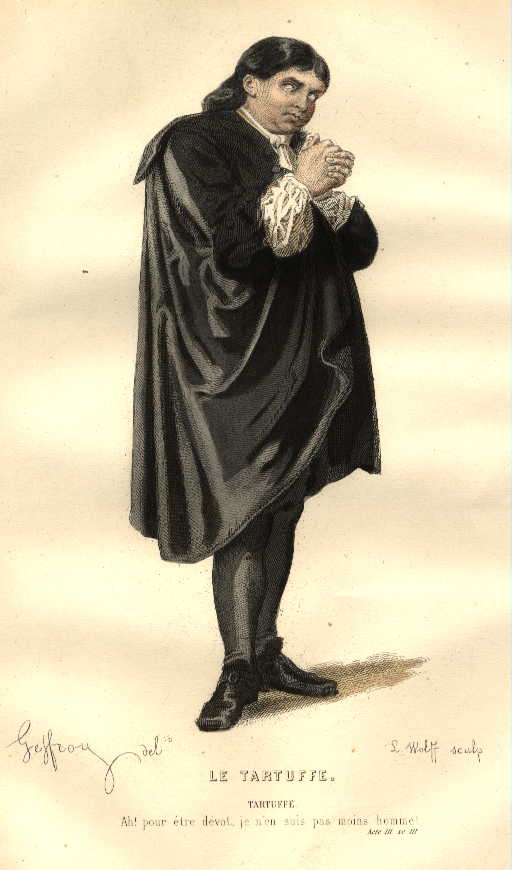
Tartuffe in Newfoundland

We had tickets for the preview of Tartuffe at the National Arts Centre last night. It wasn't in French, because this was an English Theatre production, set, in fact, in St. John's, Newfoundland, in 1939, and the English version was Molière's French translated into subtly rhyming couplets using the Newfoundland slang of the 30s––very clever indeed. The man who did the translation was also the actor who played Tartuffe on stage (Andy Jones) who says:
I used a lot of expressions from Newfoundland. I consulted three dictionaries, and used many familiar turns of phrase. I also made up a few expressions of my own.
Molière would have recognised the plot, although Orgon in this version becomes a wealthy fish merchant who is also a veteran of the first World War; he has lost an arm in the war:
It's important to the ending of the play that the main character be a hero in a recent war. World War I was a significant event in Newfoundland. We lost a greater per capita proportion of men than any of the other dominions in the British Commonwealth. Almost every family was touched by the war. Orgon becomes a believable character as a World War I hero.
The French names of the characters were preserved, and Molière would have recognised some of the dialogue too. One scene was a fairly literal translation of
DORINE. Madame eut avant-hier la fièvre jusqu'au soir, Avec un mal de tête étrange à concevoir.
ORGON. Et Tartuffe?
DORINE. Tartuffe? Il se porte à merveille, Gros et gras, le teint frais, et la bouche vermeille.
ORGON. Le pauvre homme! [etc., etc.]
The "poor man" gets his comeuppance in the final scene which was brilliantly staged in this production with all the other protagonists turning to worship Orgon instead, wearing the famous tablecloth, in which he's become entangled, like a toga.

Before we went into the theatre we listened to a discussion between the artistic director, Jillian Keilly, and the enthusiastic wardrobe manager, Marie Sharpe, both of whom are from Newfoundland themselves. It was quite a revelation to hear how important the costumes, lighting and set-design are to a show such as this and how much care is taken over their creation. The set was big and on four levels; it looked like a house split in half, a life-sized, thoroughly furnished doll's house with a board walk winding through rocks in front of it and a deck with washing line to the side. Lively use was made of the doors and stairwell. In the distance (backdrop) was a hint of other houses under a northern sky. The music sounded authentic too, the actors turning into a band of evangelists between scenes, singing Jesus-loves-you songs in a NFL style, in harmony. They have remarkably good voices.

The audience laughed throughout and enjoyed it immensely.

Tuesday, October 15, 2013

Sunday night in Toronto

Sunday, October 13th

Gatineau paper mill, on our departure
It was a misty, then sunny morning in Ottawa with a light breeze from the east, though when we climbed there was a west wind ... but no turbulence. On our flight to Toronto, anticipating rain clouds ahead, we were routed via APLOV waypoint, then LORKA and ILIXU (on the Prince Edward County peninsula near Mountain View). This was the start of the long IFR "ILIXU4 approach" to Toronto City Island aka the Billy Bishop Airport (YTZ), taking us across the middle of Lake Ontario a good 10 nautical miles from shore, which is beyond "gliding range," so we hoped the engine wouldn't quit. The GPS programmed our next sequence of waypoints for us––ILIXU-DUSUB-UKPAG-MURUM-ROTRU––just as well, since most of them don't appear on the maps. For half of our journey we were in the clear, but once over the lake we were soon above a thin layer of wavy cloud, with thicker layers ahead.

"Are you enjoying yourself?" I asked.

"Oh yes, very much!"

Destination more or less in sight
Before long, the Toronto controller asked us to descend from 8000' to 4000' which took us into solid cloud, still way out over the water, but as we continued the approach, descending further, we broke out of cloud at around 3000' and there were the Toronto Islands starting to be visible through my window! That was encouraging. Because we now had visual contact with the ground, Chris was granted permission for a Contact Approach to YTZ, so we never needed to fly as far as ROTRU; he was excited by the novelty. We landed from east to west, one of Porter's "twin turbo props" waiting for us to land before it rolled onto the runway itself, as we taxied to the Porter FBO.

FBO service at YTZ is compulsory and expensive ($35 for the tie-down), but Porter gave us a welcome that we'd recommend. The airport has changed beyond recognition since we used to fly here at the turn of the century, now with a gleamingly modern passenger terminal and escalators to and from the ferry; the ferry itself (shortest cruise in the world, 2 minutes) is soon to be replaced by a pedestrians' tunnel to the shore. Unlike the rest of the numerous foot passengers who were being shepherded to a car park, we set off to walk along the lakefront past the Music Garden and marinas to our hotel. A big "revitilization" of the Toronto waterfront is taking place, with the road up and partly closed, the sidewalks repositioned and "wave decks" and bridges being installed. It's a proper mess at present but will look good when it's done.

The Radisson "Admiral" Harbourfront Hotel would normally be beyond our means, but for $149 on Thanksgiving Sunday we got a room that would otherwise have cost $285 (plus taxes). It was an upgrade from the room I'd chosen online, at the quiet end of the corridor, with a huge bed, a view of the Police Basin (housing 10 police boats) the lake and islands beyond, an early check-in too, and free wi-fi access. Great!

In the afternoon we walked up John Street in the rain through the arty district to the AGO, to see the phenomenal Ai Weiwei exhibition, According to what?, that's been widely publicised. I've mentioned it in a previous blogpost. The crowds and line-ups at the entrance were also phenomenal; I'm glad I'd booked our tickets on line because that meant we could walk straight in. The crowds were visibly moved and awed by the exhibits, mostly photographs or videos (one of Mr Ai jumping around stark naked with other naked men; he has a lively sense of humour, it seems, in spite of his angry thoughts) and sculptural installations. The wall of 5000 children's names was particularly poignant, a recording of their Chinese names and ages being broadcast through loud speakers.

We saw the snake made of school bags and the wooden maps of China, the cluster of Qing dynasty stools held together like a chemical molecule without nails or glue and the many pieces of rebar he's had straightened after being twisted in the Sichuan earthquake, the pile of these rods, entitled Straight, now representing a fracture zone and the earth moving in waves. No 2-D photo can do it justice.

Another irresistibly interesting piece is Forever Bicycles, a tower of intertwined bikes, the front wheel of one becoming the back wheel of the next. Apparently its title is a reference to Yong Jiu, or Forever-Bicycles, a popular make of bicycle in China owned by millions (although the irony is that these are now being superseded by cars). There's a relatively small version of this structure in the museum, but out of doors in Nathan Phillips Square by the City Hall they have a really big one, made of 3144 bikes, "creating a massive, labyrinth-like, visually moving space..." The girl at the hotel desk advised me to go and see this as well as the exhibition. It took 2 weeks to construct and caused a sensation when lit up at night. Someone was arrested for climbing on it yesterday.

After a necessary sit down in the organic coffee place diametrically opposite the AGO, we ended the day with a walk back through the business district in the rain and found a bronze elephant with two babies in Commerce Court just off Bay Street and a tasty and nourishing supper at the Spice Thai restaurant on the waterfront, the same place we'd patronised on our last visit to Toronto two years ago. Amazing effects were caused by the low cloud swirling around the skyscrapers, the warning lights on top of the towers shining like stars through the murk. We watched the Porter and Air Canada aircraft departing from YTZ and immediately disappearing into the low cloud ceiling; we could see them from our hotel room too.

Monday, October 14th

View from our hotel room at daybreak
I woke just before sunrise to see a beautiful change in the Toronto weather. This meant we didn't have to rush to get back home and could linger over a posh breakfast on the 5th floor of the hotel, where the outdoor pool is, before setting off on a leisurely walk to the ROM, 4 km north of the lakefront at the corner of Queen's Park and Bloor Street. Via the university campus it took us about 45 minutes to get there. This was for Chris' choice of exhibition; having read many books on the subject he really wanted to see the show about Mesopotamia. For this one we didn't have tickets in advance but it didn't matter; it was a quiet morning, most people being at home with their families for Thanksgiving.

It was a tremendous collection of exhibits, mostly on loan from the British Museum, such as the stone statue of Ashurnasirpal II, Assyria's self-proclaimed "great king, mighty king, king of the universe... mighty male ..." I kept thinking of Ozymandias, King of Kings and of Kipling's poem too:
... Lo, all our pomp of yesterday / Is one with Nineveh and Tyre! / Judge of the Nations, spare us yet, / Lest we forget––lest we forget! ...
We haven't altogether lost track of the ancient civilisations so long as stone carvings and artefacts like the ones on display can be preserved and not blown to smithereens by fanatics. We even saw a stone tablet inscribed with a chapter from the Gilgamesh epic. I was surprised by the smallness of the cuneiform script, proof that the scribes must have had excellent eyesight. The realism of the carved figures of animals and men, of their faces, beards and muscular arms, was astonishing too, considering that this was done thousands of years ago. The ancient world comes alive in an exhibition such as this, partly thanks to the coloured animations which spark the imagination and keep the visiting children interested. You begin to wish you could have seen the hanging gardens of Babylon (with its hundreds of thousands of inhabitants), perhaps created for the King's wife, missing her mountainous homeland.

Thin cloud over S. E. Ontario, higher cloud on the shoreline
My legs were tired by the time we left Toronto; I reckon we walked 18km from one place to another, as well as standing for long periods in the museums. It was nice to sit still in the cockpit after that and float along with the benign clouds. On the return journey, we flew VFR, following Lake Ontario's shoreline to Oshawa, then skimming over a thin white layer all the way from Peterborough to Almonte. Chris did a "simulated engine failure" landing for practice on arrival at Rockcliffe which curtailed the circuit. I ought to mention that the colours of the treetops all the way home were lovely.

Wednesday, October 2, 2013

An unusual concert

Saturday, September 28, 2013 7:30pm. Classical, World, Jazz and something more.... Featuring: Special guest Beverly Soulière - native drums, Ralitsa Tcholakova - violin, Ron Korb - flute, Mark Ferguson - piano. Music by Ron Korb, Mark Horvat (Première of a piece based on First Nations Folklore), Hiroki Sagakuchi and other composers. MacKay United Church
Ralitsa, the Bulgarian-Canadian violinist, had sent me an invitation to this; she'd organised the concert herself and it was full of quirky juxtapositions (she used that word when introducing her programme, which caused me to smile). The first 5 items were as follows:

  • a fast fiddle solo by a contemporary Canadian composer (I didn't catch the name, but I gather he used to work as a truck driver), part folksy, part classical
  • a movement from Beethoven's "Moonlight" Piano Sonata played by one of Ralitsa's pupils, a talented Korean boy
  • variations on a Korean melody, a duet for Ralitsa and the same boy, playing the violin this time
  • a Jig and Reel by the composer of the first item
  • an arrangement of Bulgarian folk music chosen by Ralitsa, in 7/8 time

Then Ron Korb made his appearance, wearing two long, pink, Asian tunics, one on top of the other. He is a man of striking appearance with long grey hair, who plays a multitude of flutes.

The concert continued with a piece for flute and piano that Mr. Korb calls "Mozart's Wedding." Mozart never had music at his hasty little wedding to Konstanze, so he'd written something suitable for that occasion "... and for his honeymoon in the Caribbean!" (wink) It was cleverly in the style of ...

Then followed a piece for penny whistle, fiddle and piano, dedicated to a Celtic God. This one sounded very Irish, bitter-sweet, with glissandi on the whistle.

The advertised "Première of a piece based on First Nations Folklore" came next, with Ms. Soulière on the native drum. She is also a Justice of the Peace, by the way. Mr Korb played an alto flute in this one.

Item no. 9, for violin, flute and piano, was inspired by Mr. Korb's visit to St. Germain in Paris and once again was very soulful. I'd rather like to get hold of one of his CDs to use as a conversation piece at a dinner party.

"Christmas in Prague" had an Eastern European flavour (as well as a Ron Korb flavour) and was written for a bass flute, such as you rarely see at concerts.

Five more numbers from Mr. Korb's albums:

  • A harvest jig, with the audience clapping to the beat.
  • "Beckett's Whistle"––a tribute to Samuel Beckett, inspired by a visit to his home in France. The piece was Irish folk style again, expressing Beckett's probable homesickness and featuring an Irish flute.
  • A trio in the style of ... inspired by a visit to Beethoven's house in Vienna.
  • Something completely different, played on a Cambodian bamboo flute, held crosswise. Mr. Korb put its end into his mouth where it pressed against the inside of his cheek as he blew into it. This one didn't sound at all Irish.
  • "Saint Johann"––a tribute to J.S. Bach ... which dissolved into jazz, the pianist (Mark Ferguson) really coming into his own here!
The final two items on the programme were another jazzy one, "Dark Eyes," the audience again clapping a beat, and a "Native Earth Song" including the native lady drummer again and a tribesman's flute, which, so I learned, was traditionally a serenading instrument.

I don't imagine that the elders who founded the United Church on MacKay street ever anticipated it being used for this sort of purpose. 

Sunday, September 29, 2013

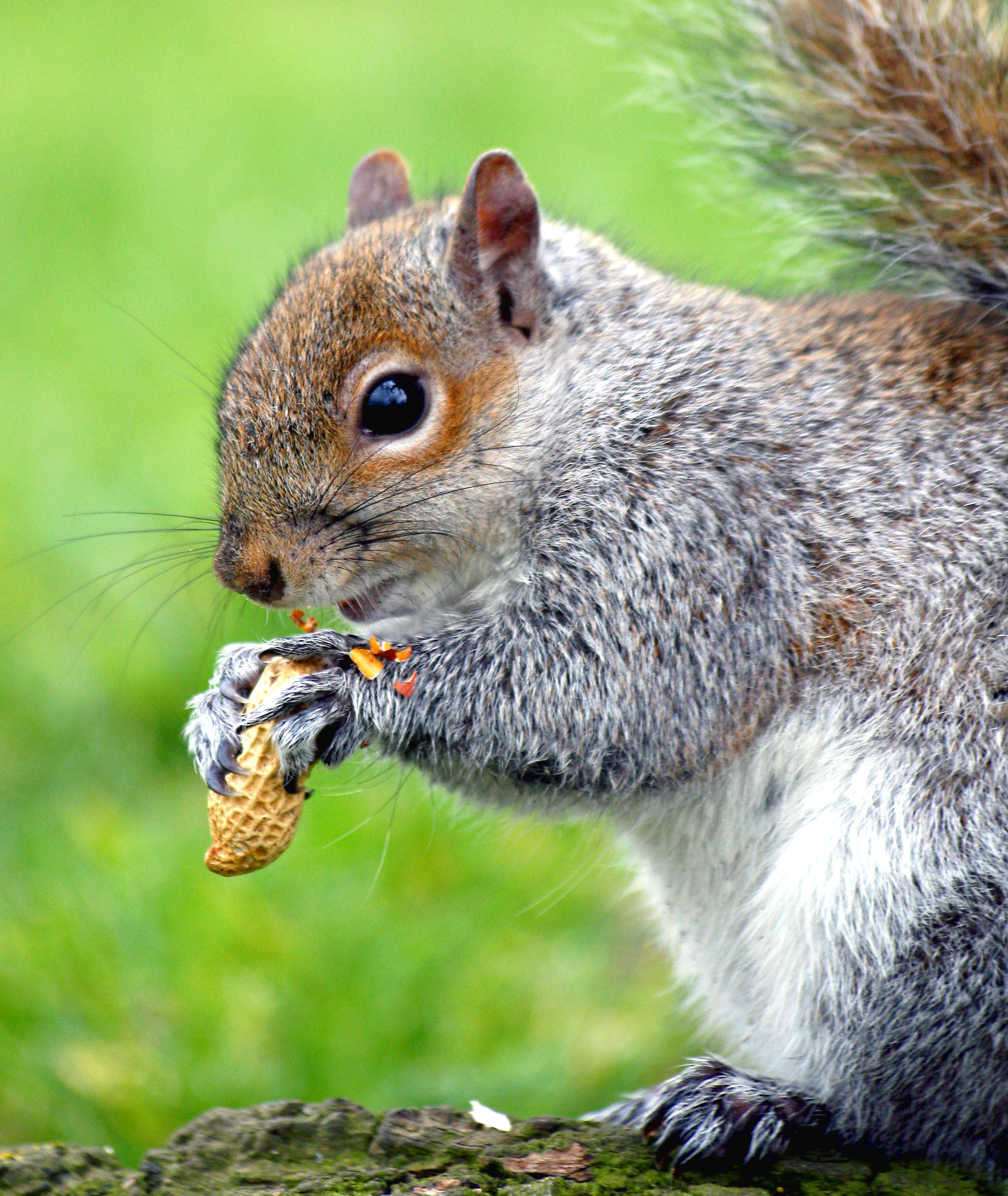
The squirrels' kindergarten

(Wikipedia photo)
... is in our back garden. We're being entertained every day by the glossy furred twin baby black squirrels who tumble over one another and chase one another round our deck. There's an equally small grey one who plays with his black friends when he's not stopping for a drink from his mother on the ledge of our kitchen window. The mother doesn't seem to mind us watching.*

We encourage them with peanuts or pieces of apples and pears. I wish I were quick enough to catch their antics on my camera.

The scurrying chipmunk family is bold enough to sit on Chris' lap stuffing their cheeks with peanuts after running up his leg while he reclines in the deckchair. One of them has had a piece of thread stuck tightly round its neck for over a year, now, surviving well in spite of that.

* Footnote: I have just witnessed the grey mother squirrel suckling one of the black baby squirrels as well, without trying to push it away! Is she colour-blind, I wonder, or simply generous?

Tuesday, September 24, 2013

Thomas Traherne and other English mystics

In Hereford Cathedral is a side chapel dedicated to Thomas Traherne, a clergyman and poet, who died in 1674. He was born in Hereford and died in Teddington, two of the places I stayed at on my latest travels. Traherne was a contemporary of Henry Vaughan, another visionary of 17th century England, of George Fox, founder of the Quakers, and of John Bunyan, the man who wrote The Pilgrim's Progress.

Most of Traherne's writings were not discovered until 200 years after his death, and his poems not published until 1903.

The Audley chapel has four stained glass windows, recently installed as a tribute to Thomas Traherne, created by another Thomas, Thomas Denny, in a style that reminds me of Samuel Palmer by whom Mr. Denny admits he was influenced. Dedicated in March 2007, the chapel provides a leaflet for its visitors to take home with them: a description of the windows, with quotations from Traherne. It says
The windows seek to be a visual expression of the visionary beauty and the richness of Traherne's imagery, and an inspiration to pray to the God who[m] Traherne loved and served.
The window or "light" on the left shows a figure running through a cornfield (like the cornfields in Palmer's "Valley of Vision") with trees beyond it:
The green trees when I saw them first ... transported and ravished me, their sweetness and unusual beauty made my heart to leap.
In the next window (not pictured here) is a cross with a bird rising above it: Love is a phoenix that will revive in its own ashes, said Traherne. You are as prone to love as the sun to shine.

In the third window a man stands "in wonder"––the leaflet quotes a line from one of Traherne's "Commentaries" in relation to this image.
An ant is a great miracle in a little room and no less a monument of eternal love than almighty power.
Which reminds me of (Lady) Julian of Norwich, saying:
...he showed me a little thing, the quantity of a hazel nut, lying in the palm of my hand, as it seemed. And it was as round as any ball. I looked upon it with the eye of my understanding, and thought, 'What may this be?' And it was answered generally thus, 'It is all that is made.'
I read another of Traherne's quotations aloud to my mother:
You never enjoy the world aright till the sea itself floweth in your veins, till you are clothed with the heavens and crowned with the stars.
"Isn't that wonderful?" I said.

"Oh yes," said my mother. "I know that one! I've got it in my Quote Book."

In the fourth window, on the right, is a crowded city scene that bears a resemblance to Hereford. The artist assumes that this is how Traherne saw people and things in his moments of ecstacy:
The city seemed to stand in Eden or to be built in Heaven ... The dust and the stones of the street were as precious as gold ... O what venerable and reverend creatures did the aged seem! ... And young men glittering and sparkling Angels, and maids strange seraphic pieces of life and beauty! Boys and girls tumbling in the street and playing were moving jewels.
Don't mock at mystics. It is rare to see the world like this, but not impossible. It's what you see at moments of great happiness, if, for example, you have come alive out of surgery that you feared would kill you. It's what you perceive whenever you are receptive enough to perceive it.
What shall I think therefore when the winds blow, the seas roar, the waters flow, the vapours ascend, the clouds fly, the drops of rain fall, the stars march forth in armies, the sun runneth swiftly round the world?

Monday, September 23, 2013

A trip to the UK (part 2)

After my rainy arrival in Teddington the weather continued variable. Mostly we stayed indoors, although Thomas picked up his umbrella and his mother's rubber shoes at one point, telling us he wanted to play in the garden. He talks and sings entertainingly now, just as his brother did at that age. Alexander and I played a game of chess and read Paddle-to-the-Sea, the Canadian children's classic written in 1941, but still good. We even found episodes of the film on Youtube. We all watched a BBC programme about vegetable harvesting, more interesting than you'd think.

On Monday I travelled through London to return to Cardiff. The sky was blue that morning and to my delight, when I reached Waterloo I still had an hour and a half to catch my next train, so could walk down to the Thames on the way, seeing the London Eye, Big  Ben, Westminster Abbey and the Houses of Parliament. Then crossing the Hungerford footbridge with my not too heavy luggage I saw the Thames boats and barges and the view down the river to St. Paul's Cathedral, nowadays dwarfed by nearby skyscrapers, which is not what Sir Christopher Wren intended.

From the Embankment tube station I took the Bakerloo line to Paddington and reached Cardiff (Whitchurch) in time for lunch at the Café Katz with Mum while the showers went through. She had met me off the bus. In the afternoon we ordered a new mattress for her bed and a magnifying glass on a stand. I did some gardening for her which was just as well as I didn't get another chance; it rained all the next day. We were drenched going shopping, after talking to a lady from Dusters who I hope will be cleaning Mum's house for her soon. That evening, being Tuesday, was the Pub Quiz night in Gwaelod y Garth, at the Gwaelod Inn (before which Mel cooked a wonderful supper for us complete with chanterelles he'd picked himself in the local woods, and my sister's plum crumble). Our team, "Mrs Pepperpot's Crew," came second to the usual champions, because we weren't very good at identifying examples of Soul Music.

The beach at Rest Bay
Wednesday was my last day in Wales. Mel joined us for lunch at the Deli-A-Go-Go a place I've failed to mention in my blog before, so I'm putting a link to it here and now. It sells Welsh (e.g. Perl Wen) cheese and other gourmet foods and drinks and has won a Best Bistro of the Year award more than once, justifiably so. Then we rode in Mel's car to Porthcawl (i.e. Rest Bay and Pink Bay) for an exciting walk by the sea, so exciting indeed that three of us fell in. Mum was the last to dry off but was unharmed and very uncomplaining for a 94 year old. She had fun scrambling over the rocks, too.

Meanwhile, other people were kitesurfing on the incoming tide.

I enjoyed my journey home on Thursday too, finding a surprisingly tasty lunch at the Rhubarb "British restaurant and bar" in Heathrow's Terminal 3, then, on the flight, watching Much Ado About Nothing in a modern (black and white) American context, as well as the latest (very colourful) version of The Great Gatsby and part of Burtynsky's Manufactured Landscapes, a documentary about his photography projects in China. With no luggage to collect from the hold, I was the first person through customs at Ottawa, and so back to normality.

Let the children play!

Martin, a Facebook friend of mine, has just posted a link to an excellently written, 5000 word article in a British-based online magazine, Aeon. The article is entitled The Play Deficit
Children today are cossetted and pressured in equal measure. Without the freedom to play they will never truly grow up ...
It's written by someone of my generation who probably grew up in the countryside, as Chris and I did. In the author's case, it was the American countryside, but it makes no difference. Although he didn't actually make this connexion, children have become more urban during the last half century and consequently, it seems, less self-sufficient. I worry about their lack of free time, myself. I added a comment, saying:
I absolutely agree with the message of this article. I grew up in the '50s too and see my grandsons deprived of this freedom to play. However, when I talked to my daughter, their mother, about this, she pointed out that the traffic on the roads near her house is too dangerous to let the children explore on their own out there. The children are aged 2 and 6 and live in London, England. Although they live near a big park, it is taboo to let them explore it on their own, although in my opinion they could have a wonderful time if they did so. Too "dangerous." In fact it's considered so dangerous that my grandsons' parents could be put on a blacklist by the local authorities for not being present while they play. Where they live, there's a communal lawn and a car park (parking lot) for residents immediately outside. If they play ball games outside with the other neighbours' children, their parents have to suffer endless complaints from the childless neighbours about the noise and damage to their cars, so for the sake of peace and harmony the children are mostly kept indoors, where they too often stare at computer or TV screens. What is the solution to these problems?
Thomas and Alex choosing their own way home in the rain
When they can, my daughter and son-in-law, who need to live close to their place of work, so moving to the countryside is not an option, do their best to find their own solutions. They often bring the boys home through the park after school / nursery and work, letting them run ahead through the long grass, just within sight. That's OK until the winter comes and it's too dark. At the weekends they take them to places like Wimbledon Common, which is virtual countryside, where they can go on "'dventures" (as little Thomas says) down the inviting pathways through the forest and up and down the hills, and climb trees. This summer the family went camping too, in the real country for a few days, where the boys had the freedom of big fields to play in. Still, their parents have always been close at hand.

In the old days, it was more acceptable for parents to take risks, my mother vaguely warning me about "bad men"––I hadn't a clue what she meant––when I wandered off by myself into the woods, as I had been doing since the age of three or four. Chris' parents didn't even know where he had gone with his untrustworthy pals once he'd left the house. One day he naughtily didn't come home for lunch and they had the river dragged for him, but he turned up safe and sound in the end. I don't think the outside world was that much less dangerous, although admittedly the roads weren't so busy. There were still just as many "bad men" out there, of course, everywhere. Dürrenmatt's horrible novella about the hunt for a child murderer, Das Versprechen––set in rural Switzerland!––was published in 1958.

On Sunday mornings Alexander attends his Rugby Club training sessions for the Under Sevens. The writer of The Play Deficit would probably disapprove of this, being so regimented a pastime, but it does give Alexander a taste of male discipline, it encourages self-discipline too, and he gets to play with a whole pack of other boys his age. Most important of all, the coaches and visiting professional rugby players are role models for him, in contrast to the lady-teachers he mostly has at school. I witnessed two hours of this on the weekend I spent in London, and came away impressed.

Alexander and other 6-year-olds, with a professional rugby player