blending an assortment of thoughts and experiences for my friends, relations and kindred spirit

blending an assortment of thoughts and experiences for my friends, relations and kindred spirit
By Alison Hobbs, blending a mixture of thoughts and experiences for friends, relations and kindred spirits.

Sunday, August 2, 2020

Twelve Bishops

I have once again been discussing family history with my cousin Wendy, who sent me this photo of our grandfather (on the left) with five of his brothers. 


The brother missing from the photo is Charlie, who emigrated to Canada as a Methodist minister (a missionary) and  in 1912 married a girl called May Wilson, who had followed him to Toronto. They later moved to Alberta and in 1996 I met a few of their descendants in British Columbia.

Because I tend to mix them up and get the names wrong, below is the correct list of names and dates-of-birth for this remarkable family whose parents were married in December 1873. My great-grandfather Benjamin spotted his wife Catherine Willis (whose ancestors were another interesting family) singing in a Darlington Methodist chapel choir during a long walk north from Somerset, and to judge by the frequency of their children's births, it was obviously a love-match. Benjamin senior, whose family were iron-foundry engineers, died in 1904 and his son Benjamin (my grandfather) died in 1940.


The Bishop siblings, as recorded in the "Family Register" and "Family Events" pages of the Bible they kept at home:

Will, b. October 1874 (musical director of a theatre company)
Ben, b. March 1876 (choirmaster at the Chapel, and a painter-decorator by trade)
Kate, b. September 1877 (she never married, became a formidable nurse instead)
Alice, b. March 1879 (did not marry either; lived to the age of 99)
George, b. August 1880 (see below)
Charles, b. November 1881 (see above)
Nell (Helen), b. March 1885 (directed a Secretarial College which employed her brother Walter)
John, b. July 1886 (his son is still alive in his late 90s)
Lil (Lily), b. June 1888, a teacher, married name Hardy
Ethel, b. September 1889 (a milliner), married name Blaylock 
Fred, b. July 1891 (a stationer), father of my aunt Ruth who married her cousin, my uncle Frank
Walter, b. 1896 (the only one of the brothers to go to university)

This is the whole family in a photo taken around 1901:


Left to right, back row—Ben, Lily, George, Helen, Charles, John; middle row—Kate, Benjamin Senior, Walter, Catherine, Will, Alice; front row—Ethel, Fred.

George was imprisoned during the 1st World War for being a Conscientious Objector. In spite of this he had a tremendous sense of humour (he was my mother's favourite uncle). At one point in his life he tutored Aldous and Julian Huxley when they were boys, I forget why and for how long.

Lily had one child, Douglas, who died as a young, pacifist member of the Friends' Ambulance Brigade in China during the 2nd World War. I wrote a blogpost about Douglas in November 2010.

Tuesday, July 28, 2020

Un peu de de flânage


The municipality has made several streets in Ottawa traffic-free again, this summer, so that you can stroll around without fear of being knocked over by any vehicle other than those pesky electric scooters (that's another story). What surprised and puzzled me was the use of the French verb "flâner" on this notice. According to linguee.fr, it means "stroll" or "wander", giving the example: Elle flânait le long de la plage. " The definition continues, "plus rare: roam · loiter · dawdle · amble." 

Elsewhere in downtown Ottawa (a couple of blocks further on, for example!) notices say "Pas de flânage!" in no uncertain terms. "Flânage" seems to be a euphemism for homeless street people. I'm not the only one wondering about this.

We mustn't have vagabonds lingering in the streets, although they do, of course, and always did. 

In Bright is the Ring of Words by R L Stevenson, in his Songs of Travel (the cycle of poems or songs that begins with The Vagabond), you can read these two lines:
[...] The lover lingers and sings
And the maid remembers!
Heinrich Heine's Der Doppelgänger, published 1827, (Chris enjoys singing Schubert's setting of this poem) is also about a strange man (and his double) loitering with intent, you might say:
Le Flâneur, Paul Gavarni, 1842.
Still ist die Nacht, es ruhen die Gassen,
In diesem Hause wohnte mein Schatz;
Sie hat schon längst die Stadt verlassen,
Doch steht noch das Haus auf demselben Platz. 
Da steht auch ein Mensch und starrt in die Höhe,
Und ringt die Hände, vor Schmerzensgewalt;
Mir graust es, wenn ich sein Antlitz sehe -
Der Mond zeigt mir meine eigne Gestalt.
 
Du Doppelgänger! du bleicher Geselle!
Was äffst du nach mein Liebesleid,
Das mich gequält auf dieser Stelle,
So manche Nacht, in alter Zeit?
In the nineteenth century it was probably the fashion among artistic types to dawdle or wander aimlessly through small towns or cities. Baudelaire, in Paris, was the architypal flâneur:
Observateur, flâneur, philosophe, appelez-le comme vous voudrez ... Quelquefois il est poète ...
[...] Pour le parfait flâneur, pour l'observateur passionné, c'est une immense jouissance que d'élire domicile dans le nombre, dans l'ondoyant, dans le mouvement, dans le fugitif et l'infini. Être hors de chez soi, et pourtant se sentir partout chez soi ; voir le monde, être au centre du monde et rester caché au monde, tels sont quelques-uns des moindres plaisirs de ces esprits indépendants, passionnés, impartiaux, que la langue ne peut que maladroitement définir. L'observateur est un prince qui jouit partout de son incognito. L'amateur de la vie fait du monde sa famille ...
After I posted some of the above on Facebook, a friend sent me the link to a nice essay by another blogger In Praise of the Flâneur, also mentioning Baudelaire.

Sunday, July 26, 2020

Can we choose to be happy?

Chris and I were arguing about this yesterday evening. Chris shocked me by saying he couldn't imagine how anyone could make such a deliberate choice, arguing that happiness was more likely an emergent property” of lucky circumstances. I, on the other hand, have believed otherwise for most of my adult life, and today I discover that, if I'm wrong, I'm wrong in awfully good company. 

Here are some quotations I found:


“Most folks are as happy as they make up their minds to be.”
Abraham Lincoln

“Happiness is a virtue, not its reward.”
Spinoza

“The greatest discovery of any generation is that a human can alter his life by altering his attitude.”
“The greatest weapon against stress is our ability to choose one thought over another.”
William James (1842-1910)

“Seek to know an inward stillness, even amid the activities of daily life. …. Live adventurously. …. Approach old age with courage and hope. … Consider which of the ways to happiness offered by society are truly fulfilling [...] Be discriminating when choosing means of entertainment and information ... A simple lifestyle freely chosen is a source of strength. … Rejoice in the splendour of God’s continuing creation ...  then you will come to walk cheerfully over the world, answering that of God in every one.”
― Quaker Advices and Queries

“A merry heart doeth good like a medicine, but a broken spirit drieth the bones.”
Proverbs 17, v. 22

That quotation reminds me of Beatrice in Act 2, Scene 1 of Shakespeare's 'Much Ado About Nothing'.
“DON PEDRO: Truly, lady, you have a merry heart.
 BEATRICE: Yea, my lord. I thank it, poor fool, it keeps on the windy side of care.”
“Whatsoever things are true, whatsoever things are honest, whatsoever things are just, whatsoever things are pure, whatsoever things are lovely, whatsoever things are of good report, if there be any virtue and if there be any praise, think on these things.”
Phillippians 4, v. 8

“Wrinkles should merely indicate where the smiles have been.”
“The two most important days in your life are the day you are born and the day you find out why.”
“We are all in the gutter, but some of us are looking at the stars.”
 “The best way to cheer yourself up is to try to cheer somebody else up.”
“Let us endeavor so to live so that when we come to die even the undertaker will be sorry.”
Mark Twain

“The greatest honour we can give Almighty God is to live gladly."
“You shall see for yourself that all manner of things shall be well. [...] Pay attention to this now, faithfully and confidently, and at the end of time you will truly see it in the fullness of joy.”
Julian of Norwich (14th century British anchoress)

“I would maintain that thanks are the highest form of thought; and that gratitude is happiness doubled by wonder.”
G.K. Chesterton

“Reflect upon your present blessings, of which every man has plenty; not on your past misfortunes, of which all men have some.”
Charles Dickens

“This a wonderful day. I've never seen this one before.”
Maya Angelou

“Adventurous men enjoy shipwrecks, mutinies, earthquakes, conflagrations, and all kinds of unpleasant experiences, provided they do not go so far as to impair health. They say to themselves in an earthquake, for example, ‘So that is what an earthquake is like,‘ and it gives them pleasure to have their knowledge of the world increased by this new item.”
Bertrand Russell: Conquest of Happiness

“Happiness is not something ready made. It comes from your own actions.”
“If you want others to be happy, practice compassion. If you want to be happy, practice compassion.”
“Although you may not always be able to avoid difficult situations, you can modify the extent to which you can suffer by how you choose to respond to the situation.
“Happiness is determined more by one's state of mind than by external events.”
“The purpose of our life needs to be positive. We weren't born with the purpose of causing trouble, harming others. For our life to be of value, I think we must develop basic good human qualities—warmth, kindness, compassion. Then our life becomes meaningful and more peaceful—happier.”
Dalai Lama XIV: The Art of Happiness

“Non s'efforcer vers le plaisir mais trouver son plaisir dans l'effort même, c'est le secret de mon bonheur.”
“Ne peut rien pour le bonheur d'autrui celui qui ne sait être heureux lui-même.”
André Gide

I too have learned that we cannot nudge the people with whom we interact towards happiness unless we first contrive to be happy ourselves. The artist I met a few years ago at Ste. Flavie in Quebec said exactly that in one of his poems:

“Pour rendre les autres heureux, je dois l'être d'abord.”
Marcel Gagnon

“A table, a chair, a bowl of fruit and a violin; what else does a man need to be happy?”
“All that we need to make us happy is something to be enthusiastic about.”
“Learn to be happy through the good fortunes and joys of your friends and not through senseless quarrels. If you allow these natural feelings to blossom within you, your every burden will seem lighter or more bearable to you, you will find your own way through patience, and you will spread joy everywhere.”
“If you want to live a happy life, tie it to a goal, not to people or things.”
“I have never looked upon ease and happiness as ends in themselves - such an ethical basis I call more proper for a herd of swine. The ideals that have lighted me on my way and time after time given me new courage to face live cheerfully, have been Truth, Goodness and Beauty.”
Albert Einstein

“I've spent my life observing the universe, mostly in my mind's eye. It's been a tremendously rewarding life, a wonderful life. I've been able to explore the origins of time and space with some of the great living thinkers. But I wish I were a poet. [...] It's a shame we live on different continents. [...] It's so beautiful at this hour. The sun is low, the shadows are long, the air is cold and clean. You won't be awake for another five hours, but I can't help feeling that we're sharing this clear and beautiful morning.
Your friend,
Stephen Hawking”

“Happiness is when what you think, what you say, and what you do are in harmony.”
“A man is but a product of his thoughts. What he thinks he becomes.”
“Nobody can hurt me without my permission.”
Gandhi

Saturday, July 25, 2020

Seeing with new eyes

I had back-to-back cataract operations on Monday and Tuesday, at the Herzig Eye Institute clinic on St. Laurent Blvd. I jumped the usual waiting time for surgery by paying a fee to have the surgery done promptly, at this private clinic. We've been debating with our friends whether or not it's hypocritical / immoral to take such a step while claiming to be in favour of universal, free healthcare. The rather poor defence is to say that our taking advantage of private medicare frees up spaces for people who can't afford to avoid the slowly moving hospital queue.

The staff at the clinic say that their clients get better than average treatment there, because of their superior diagnostic and surgical tools, super clean facilities, etc. I chose to pay an extra $1000 or so for each eye to have a preliminary procedure whereby a laser beam made the first few cuts, thus causing less bruising to the eye and minimizing the risk of imprecise surgery. This would speed up my recovery from the operation.

The clinic is doing very good business just now; because of the Covid-19 scare, people are willing to pay large amounts of money to stay away from hospitals.

Since I opted for a long-sighted lens in both eyes, my distance and middle-distance vision is already excellent; by Wednesday afternoon I already had 20-20 vision in both eyes, according to Dr. Bhargava who checked the state of my recovery that day, and I could have legally driven home from that appointment, although Chris was the one who drove.

From now on, I'll be needing reading glasses for computer work and for playing the piano, shall have to wait three or four weeks to let my eyes settle before I can get the prescription for those, but have bought a $15 pair from the drugstore in the meantime that are digging into the top of my nose.

I'm lucky to have all this happen at a time when I'm not too busy and not expecting to travel; Chris is also going to have cataract surgery (just in one eye) next month.

I can honestly report that the procedure on both days was painless. I was nervous, of course, and had to put up with a lot of waiting around, but they gave me a mild sedative so I relaxed during the actual operation. Recovery from the sedative took about 10 minutes. The colours and patterns that I saw while the surgeon was working on my eyes were amazing, quite the psychedelic light show!

For the record, this is the email I sent to some friends and relations on the night of the first operation:
I am managing to write this using my untreated eye. I can see some of the views in the distance through the new lens in the other eye, but nothing on the screen yet, apart from blurred outlines. I'm writing this now on the assumption I shan't be able to send a similar email this time tomorrow because by then my vision in both eyes will be blurred. 
Today's surgery was really not at all bad. No pain or discomfort worth mentioning. I felt a slight pressure on the eyeball at one point and one of the multiple eye-drops they gave me stung slightly, otherwise an amazingly tolerable experience. I was right when I anticipated that the worst of it would be not being allowed a cup of coffee or anything to eat beforehand. (I made up for that when I got home.) They had promised me a post-op snack but it came as a take-out. No eating or drinking on the premises because I'd have had to take my mask off. I even had to keep the mask on during the surgery. They taped it to my cheek so that it wouldn't slip. Anyhow I'm not in the least bit anxious about the repeat procedure (on the other eye) tomorrow.  
The experience so far went like this ... A very late 2nd supper, last night, and a drink just before going to bed. This morning, I slept in till after Chris had got up; I hadn't slept so well the previous night. No breakfast. Chris put eye-drops in and went to the pharmacy to get a top-up bottle because the Moxifloxacin was already nearly all gone! Drank two large mugs full of hot water flavoured with lemon juice and ginger and nothing more. I was allowed no liquids beyond 10 a.m. Went for a short walk to the Minto Bridges and back. More eye-drops. No lunch, no drinking.  
Chris drove me to the clinic, said goodbye and drove off at about 12:50. After having my temperature taken and signing a form saying I did not have any COVID symptoms, I spent another 15 minutes on my feet answering more questions and signing consent forms at the reception desk. Paid the bill for the first eye. Waited for about 40 minutes in a comfy chair. 
Accompanied into a 2nd waiting room in the surgery area where I waited some more. A nurse took my blood-pressure and oximeter readings, asking the same questions the receptionist had asked. More waiting. The nurse kept coming over to put in one more eye-drop (I lost count). She also put a sticker on my forehead above my right eye, so that everyone would know which eye was going to be dealt with. A robed chap (a second nurse) came across to tell me his name is David and that he'd be accompanying me to the operating table. He then went away again. It was now about an hour and a half since I arrived at the clinic—still fasting, of course—I was trying not to think about my rumbling stomach. More eye-drops. The nurse had a good aim. She then took me to a consultation room and told me the anaesthetist would be along in a minute. More waiting. I had time to read another chapter of the Maigret book I'd brought along. David poked his head round the door to tell me the anaestheseologist [sic] was coming over soon.  
Eventually, circa 2:30, I met the anaestheseologist, very courteous; he was East-Indian-Canadian, like the surgeon. He asked me most of the questions I'd answered before, including what was my name and my date of birth and which eye was going to be done today? He explained what he was going to be doing in the op. theatre and why. Then he went away. More waiting. Then Dr. Bhargava (the surgeon) came in. We recognised one another and said hello. I like this chap. He took a last look at my right eye in the diagnostic machine, gave me the chance to ask any last minute questions, explained the procedure again and said he'd see me in the operating theatre shortly.  
Not too much more waiting before David reappeared to accompany me to the first operating theatre. This is where the initial laser cut would be done. I needed to lie flat on the bed with my head on the support and have straps tied round my head to keep it still. A soft, rubbery ring was put over the eye to prevent me from blinking; it wasn't at all uncomfortable. The surgeon and some assistants were behind me but I couldn't see them. He seemed to be giving them (students, new colleagues?) a demonstration, with me as the experiment. A machine was positioned over my right eye and I was told to hold very still while the laser beam was being operated. At one point the doc. said "this will take 25 seconds" which I counted, but nothing new seemed to happen afterwards. I was told to keep watching the red light. I saw a lot of bright flashing lights and interesting shapes and colours. When I saw a brilliant display of green wiggles like lightning strikes, I imagine that's when the laser was functioning. I was then told that part was over and that I was doing very well. A whole lot more eye-drops followed. I sat up and couldn't see anything out of the treated eye, just a bright blur. 
David or the anaestheseologist (not sure) then guided me to a second operating theatre where there was a similar bed. This was where they were going to remove the debris from the cataract-lens and insert the artificial lens in my eye. Lay down, got strapped in, blood-pressure monitor tied on my arm, intravenous drip inserted in my arm. This was for the "I don't care" drug (ketamine, I think), which was fast-working. I soon felt more relaxed and rather sleepy. I was told to keep my eyes open and keep looking at the lights. For the operation, I once again had a machine to stare into for about 15 minutes (I had no way of measuring the time) while the surgeon worked on me. I decided to concentrate on the pretty colours and patterns I was seeing, quite fascinating really. I decided to think of them as interesting white clouds in a blue sky. Occasionally I saw sliding and intermeshing disc shapes—was that the new lens?—or decorative patterns. Occasionally the surgeon told me I was doing very well. After a while he stopped saying that and started telling me that we were nearly done. Excellent.  
To my surprise, as soon as the machine was put away and the blood pressure monitor removed from my arm, I was asked to get up, no recovery time granted! I was allowed to stand still for a moment before moving on. "Are you feeling dizzy?" —no. David took me back to the nearby waiting room where I was given a reclining chair to sit in. The nurse came straight over and said I'd be able to leave in about 10 minutes, so I phoned Chris, asking him to come and pick me up. Apart from the blur and the dazzle I felt pretty normal by then. I could see well enough to recognise my husband, anyhow. 
The nurse had let me choose an energy bar and a carton of apple juice, but I had to wait till I was in the car to consume this snack. I was also given a pair of large, all-surround sunglasses to wear for two weeks, every time I go out of doors. I also had a lecture about not getting dust or soap in my eyes. On the way out I stopped at the reception desk to pick up my receipt for the payment. Then I escaped, and Chris was on the landing by the lifts, already waiting for me. Chris, very relieved to see me so cheerful, had brought me a delicious croissant filled with smoked salmon and a bar of chocolate, which cheered me up even more.
The second day of surgery was much the same, but faster, since my appointment was three hours earlier this time.

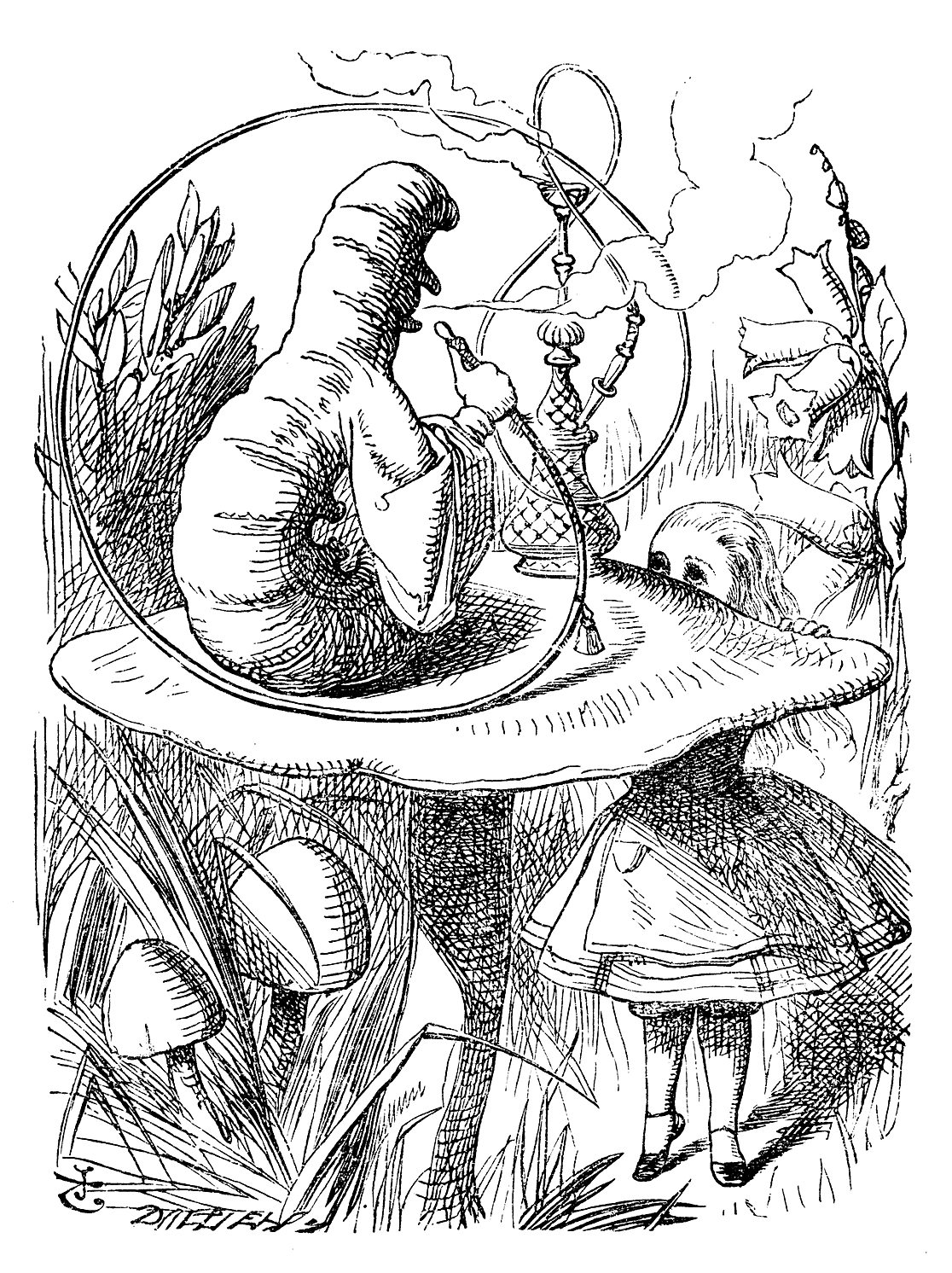
I went for a very short walk in the park on Wednesday evening (Chris walking alongside and being attentive) and noticed an after-effect I had not expected. I felt like Alice-in-Wonderland when she shrank, i.e. the ground I was walking on seemed about half a metre closer than before.; I seem to be shorter than ever! The garden plants looked huge too so I thought I'd better try to find some of that magic mushroom to nibble on the other side. Looking upwards, though, the trees with all their individual leaves looked spectacular.

Chris has been looking after me ever so well, driving me back and forth, doing the shopping, cooking our meals, administering the multiple eye-drops and making sure I behave myself properly 😉. I am not allowed to do any gardening (no soil on hands) or swimming till next month, and have to wear sunglasses with protective sides for at least a week, whenever I go outside.

Friday, July 24, 2020

Interracial harmony

Through our windows today, Chris and I have been entertained by the antics of two young squirrels chasing one another round the base of a tree in our garden, up and down the trunk and along the branches. Apart from their small size, we can tell these squirrels are young by the way they leap erratically into the air, turn somersaults on the ground or roll around in one another's arms. I saw one tag the tail of the other to get him to race around some more. They remind me of my grandsons and their friends engaged in blissful rough-and-tumble play in a park*, or gambolling lambs.

The interesting thing about this is that one of the squirrels is grey and the other one is black. They are about the same size and both are in perfect, glossy condition.

If squirrels don't care what colour their equals are, why should we humans?

*Not having played with his school friends or the neighbours' kids since March, during the lock-down, my grandson Thomas finally got the chance to spend a couple of hours running around with a friend of his age yesterday when their mums arranged for them to meet in the open air, in Bushy Park, Teddington. It did Thomas the world of good. He'd been showing signs of depression, which is abnormal for a nine-year-old. In other words, he'd been grieving.

Thursday, May 28, 2020

What we didn't foresee

I'm recording my observations at random here, because in ten years from now this period of our history will be worth remembering. What didn't we foresee, when the Covid-19 Pandemic was first announced?

Calmer households. Not everyone would agree, but that's my impression (of the middle-class families I know, at least). Die Hektik, as the Germans call it, has gone. Having to juggle career work, housework and full time parenting still causes enormous stress, agreed, but at least everyone is together, available; the frantic to-ing and fro-ing and the absences from one another have come to a halt. Daily routines are more straightforward, mealtimes more regular events, to such an extent that we have to concentrate to remember which day of the week it is. Family members are learning to compromise and to share their resources; surely all of this was important to learn in any case.

We are more inventive than we knew. Having to think of so many ways to keep children productively occupied at home is something in which modern society hasn't had much practice, but it's no bad thing that we're learning how, and getting that practice. Maybe there'll be a greater sympathy for teachers when this is over, but there again, maybe not. Lazy teachers are taking advantage of the enforced break and doing the bare minimum to keep their classes ticking over; other teachers, the imaginative, dedicated, empathetic ones, are working night and day at the preparation, reassessments and documentation of their work. Actually it was ever thus, even in the normal old days.

Worldwide acceptance of, and obedience to, new rules. What makes the headlines is the occasional exception. I've been flabbergasted by people's docility in this regard, especially in such populous countries as India or China. There's nothing like a death threat to make people do as they're told—I have never before observed or experienced anything like this before, although my parents' generation who lived through the 2nd World War, were used to such discipline. They were also familiar with stretching out their rations, with planning ahead, with make-do-and-mend, with bartering, with keeping one another's morale up, with growing their own vegetables and so on, as well, all of which is seeing a resurgence, this year. Worldwide, it seems, there's an overwhelming, sudden interest in small scale gardening. Everybody's doing it. To have to slow down to the natural rhythm of the growing season has to be good for us, surely, and besides, it smells good, to be out there.

A general lack of interest in travelling or planning journeys abroad, especially on jet planes and big ships. Even the keenest of frequent flyers (like me) now feel wary of booking a flight. Airlines and cruise lines are going out of business. This is going to impact coastal places usually visited by tourists from the ships, such as Gaspé, in Quebec. Iceland, desperate for contact with the rest of the world now, is going to be the first country to open its borders to tourism, in mid-June. They are hoping for incoming flights from Oslo, Copenhagen, Frankfurt and Berlin. Travel in the other direction may be more questionable.

We have seen incredibly blue skies with no contrails: a purity that had been missing from our lives. How we appreciate it when it comes! A photographer living in Kathmandu reported that, from the edges of that now smog-free city, he had been able to spot Everest behind the nearer Himalayan peaks, for the first time in years.

So much birdsong noticed this spring! So many wild creatures making their presence felt!

We're witnessing a widespread cycling mania. Ottawa has closed some of its parkways to motor traffic so that the numerous cyclists, many of them novices, may spread out, not breathe upon, nor collide with each other! The Dutch would be amused by this trend, having always used bikes en masse in their towns.

People are starting to prefer working at home. My husband and his colleagues had not expected to like this at all, but are not missing their commutes, and, more to the point, are discovering that just as much work, if not more, gets done from home as at the office. His company conducted a poll recently: about a third of the employees are likely to continue to work from home beyond the end of the crisis. There'll be no stigma in doing this. The ones with young children are in two minds about it. Chris says he misses being able to stroll over to somebody's desk to ask them a quick question; he now has to do this by email instead, which generates too many messages back and forth. He misses lunch break conversations too; although his usual companions from the workplace indulge in a short, online get-together at midday, once a week, it is hardly the same.

Birthdays without company are bitter-sweet occasions. Happy Birthday messages still come in, but the carefree fun's not there.

Grandparents not being allowed to visit their grandchildren or vice versa. This is one of the sad things, although personally I have noticed very little difference, geographically distanced from my children and their families in any case. Three months seem a long time in the life of a young child, though, and every grandparent is now experiencing the longing with which I'm so familiar. The hardest part is when things go wrong at the other end and one can't do anything to help. It's the same story if one has aged parents who have to cope alone or reside in a care home, or need to move into one. Worst of all are the cases where elderly relatives die from the virus in hospital with no familiar faces at their bedside, and where even the doctors and nurses are masked. This must be very terrible, inhumane for the dying, and traumatic for the medical staff and for relatives prevented from saying a proper goodbye. (Two people we know have had bereavements of this kind.) Again, reminiscent of wartime. The poorly-run nursing homes that have seen so many fatalities and have needed intervention from military units are horrific places, akin to gulags.

A Bolivian pan-pipes orchestra has been stranded in a German castle for weeks on end. Young people are remarkably adaptable in such situations. The secret of survival is to think of such a mishap as the adventure of a lifetime. My niece and her partner got stranded too, during a trip to Panama, back in March, and their account of their three-day escape home to Wales came across like an action movie, full of suspense at the checkpoints and secret scrambles at the dead of night. They'll be telling that story with relish for the rest of their lives.

Vagrants in Ottawa are being allowed to live in tents, an unprecedented phenomenon. They pitch their tents or construct their shelters in fairly visible places and the police seem to be turning a blind eye, probably because officially designated sheltered accommodation is so crowded it has become a health hazard, and a hazard to mental health, besides. I for one wouldn't dream of reporting illegal campers to the police because I sympathise with their dilemma. It's no longer too cold to sleep out of doors; their solitude in the fresh air may seem relatively pleasant, but the mosquito bites must be hard to bear, and it's an uncomfortable, unsanitary way to live.

Are you in casual clothes all week, the same clothes for days on end? Nobody sees us up close, so why worry? Many of us are no longer bothering to keep our hair cut. Some women have dispensed with wearing bras and the men-in-suits don't need suits any more, or dress shirts. All this means less use of the washing machine. It's a new world. We're supposed to wash our cloth shopping bags and our masks every day, but I haven't touched an iron for weeks. Make-up is only for when there's a Zoom call coming up or a presentation to give. Even then, one has the option of switching off one's webcam and activating voice only. "Unmute." Is that the trendiest word, this season?

Ubiquitous Zoom calls! (One of the CFUW ladies took it upon herself to teach the local membership to zoom, an uphill struggle. I helped edit her Instructions document.) Seeing my own face as well as the other person's / persons' while talking to them is a novelty that takes some getting used to. In the Gallery View window, it's like being at a dinner party in a hall of mirrors! In the circumstances, most of us find Zoom a reasonable substitute for meeting face-to-face, but exhausting, even though as hostess one doesn't have to provide refreshments. A double session (40 minutes x 2) is more than long enough. Online piano / singing lessons are also fairly intense. Chris positions the webcam so that his singing teacher spends the whole session observing my hands on the keyboard—I've had a few criticisms of my fingering technique, lately! Gavan can't see what I'm doing with the pedals, but he comments on that too, because he has good quality speakers and a sharp ear.

As musicians and other artistic performers are feeling the pinch from a loss of gigs, there has been a resurgence of demand for what they do. Pierre Brault, our best-known and brilliant local actor, is giving a series of solo performances online, from the empty Gladstone Theatre this month. Music is discovered to be one of the things by which we live. Online concerts take place every day in every community and there's usually the chance to make an online donation to the performer. Families are also discovering the joys of making music themselves; wonderful examples of this have gone viral on YouTube and Facebook.

Use of social media increased dramatically during March. Many newcomers to Facebook don't think much of it, though. They are especially put off by emailed notifications of other people's posts, not realizing that they could have adjusted their Settings to get rid of that annoyance.

Haircuts, eye tests, teeth cleaning appointments and the like have become less essential than we thought. We think twice before asking to see a doctor, too. I had twinges of pain that I couldn't identify the other day, so decided to call the medical helpline. It didn't seem I would ever get to speak to the nurse, so I gave up waiting in line, which probably saved me a lot of grief. The pain has since disappeared. My wise old mother used to say that most pains disappear eventually; you just have to be patient and trust your body to right itself. Emergency wards in hospitals are empty. Was that expected, at the start of the pandemic? Are people too scared to go for medical help, or were they going to hospitals too unnecessarily, before? People aren't taking so many risks just now and the roads are quiet. Apparently scheduled organ transplants have become more of a challenge because fewer people are dying in car crashes.

Having to choose and prepare three meals a day is a chore that palls from time to time, but I reckon it's better nutritionally and for our bank balance not to eat out (impossible at present) or order takeaways (not impossible but a nuisance, and I disapprove of the plastic containers). I try to make a fair proportion of our meals vegetarian, but I've also been ordering meat from Saslove's in the Byward Market, paying a $5 home delivery charge; they subcontract the work to a delivery company. Our weekly order costs more than I anticipated, but then, I never did this before, and when I calculate how many meals it covers and how much we're spending per meal, I'm surprised again. Because I spin out the meat, it works out at only around $2.50 per person on average for each meal, not so pricey after all. I intend to make a habit of this way of shopping because it saves me time, too, and forces me to be better at menu planning. Like the parents struggling to keep their children educated, I have become more inventive or adventurous recently, when preparing food. On the kitchen windowsill I have been growing micro greens, onions and basil, shall see what can be done with lettuce hearts next.

Like Prisoners of War, we are learning the crucial importance of good memories. Lock-down, like solitary confinement, leaves you to your own devices. If you don't have the inner resources to deal with it, you go crazy. I keep thinking of the extraordinary Canadian book / film called Room, in which a young mother trapped by her abusive partner in a shed with her young son, manages, against the odds, to keep herself and the child mentally and physically fit ... for seven years. Ironically they find it harder to cope when they're freed, released into the outside world. That has parallels with the POW experience too. My father was confined in a German POW camp for four years.

I have just read a sentence in a novel I'm reading, by V.S. Naipaul (Magic Seeds), that seems applicable. The narrator is in jail in this chapter:
There was no need for rush. Every everyday thing had to be stretched out now: a new form of yoga.
No more swimming for a while, I guess, unless I go in the river. All changing rooms in town are closed. Health clubs and gyms are closed for the foreseeable future. I don't miss the changing rooms exactly but I do miss the chance to move around in deep water.

Something else I am missing is the chance to sit, read and write in coffee shops. Standing in line with a mask on to pick up a take-out coffee in a paper cup from the counter and walk off with it is no substitute for those relaxing half hours (or more) that I used to spend at Bridgehead and other such places.

Having to cover our faces! In the lead up to the Canadian election in 2014 there was a whole lot of fuss about Muslim women who concealed their faces with niqabs. They shouldn't be allowed to take part in citizenship ceremonies, some felt. By contrast, in 2020, we all have to wear masks that hide just as much of our faces, whenever we are standing around in public spaces. There's a certain irony here.

Another turnaround is that until lately it would have seemed worthy of a badge of honour to turn up at work or at school with a bad cold; people used to boast that they had "never missed a day". From now on, such attitudes are going to be greatly frowned upon.

Calls for a Global Ceasefire are being taken seriously.

More of us are understanding the importance of simplicity.

For the sake of comic relief, a "Jurisdiction of the Mininstry of Silly Walks" has been marked with flags on the sidewalk outside the vicarage on MacKay Street.

Monday, May 25, 2020

Notes from the Environmental Defence Canada webinar of May 21st

Notes on the Environmental Defence Webinar in The Recovery Series, given May 21st.

The majority of Canadians support the concept of a Green New Deal, but Alberta is blocking Canada's progress during the Corona virus crisis. Nineteen environmental requirements have been ignored by that province lately. How do we regain the ground lost to "big oil" companies and their supporters?

Keith Brooks (whose "passion for the environment was born in a canoe on the rivers and lakes of Northern Ontario"), Programs Director at Environmental Defence, was "cautiously optimistic", spoke of ways to build a clean economy. More investment should be made in
  • environmentally friendly retrofits to houses
  • a clean transportation infrastructure (in particular, more charging stations)
  • requirements to sell more electric vehicles
  • clean energy generation
  • the development of a circular economy
Recovery programs are proven to do better if green; the EU is already going in this direction in order to reach zero emissions by 2050. Massive investments are being made in Europe, but it's "not yet a done deal" in Canada, so as individuals we must be prepared to take action:
  • Sign the petitions
  • Call our MPs, requesting a meeting with them(!)
  • Write a letter to the editor of our local paper
We need to communicate with the people in authority who have the time and the inclination to listen.

The other featured presenter in this Webinar was a young representative of Fridays for Future, Allienor (Allie) Rougeot. She didn't seem happy about having to comply with the lock-down rules — "I had to be, like, introspecting," she confessed.

The pandemic has killed the momentum of the youth climate strikes; on the other hand, it has given their participants the time and opportunity to build "resilient networks" for future activism and to educate both themselves and their supporters. For example, "mobilization squads" have formed at the universities. Since the student strikers left the streets, the opposition (oil lobbyists and company) have tried to fill the void. "We're fighting hard not to be pessimistic," Allie says. "If we weren't idealists we'd be crying."

However, although Canada is producing more oil than ever before, the economic returns aren't visible, and there's no point in placing bets on a dying industry. Governments are searching for alternative solutions and industries are realizing that they need to rethink their strategies. Covid-19 is teaching us that public pressure works and people are now more likely to trust experts and scientists and to understand how acting fast can save lives.

Small nuclear installations are not the immediate solution because they still need 10-20 years of development before they become viable. The technology is still too risky and they are not cheaper than wind and solar farms, where the costs have dropped faster than anticipated. We should be investing in battery storage, rather than nuclear power.

The government of Canada is the biggest investor in fossil fuels, the oil sands project being the biggest sponsored project* in Canadian history. Billions of dollars have been spent and the massive liabilities will leave taxpayers with a big debt to pay. The governments of Germany and China, on the other hand, are supporting the development of renewable energy; that's where the future is, and their actions are driving costs down.

* It is thought-provoking to see that the Government of Canada does not appear to have updated its public webpage about future developments in the fuel industry since 2015.