(I still need to add photos to this post.)
Written on Wednesday, 30th November
It feels like ages since we were still in Timisoara, but it was only two days ago. Monday. Chris and Berndt met for breakfast at the hotel before walking to the meeting together. I gather it was a gruelling, but productive one. Chris had to answer some searching technical questions which left Berndt to answer the commercial ones. Meanwhile I walked around the city again, making the most of the brighter weather that day, to take photos that would compliment the ones I took under cloudy skies. I bought a few hand painted souvenirs and postcards (lining up in the post office for stamps for them) and stepped inside the cathedral again, where a colourfully robed priest was sitting in a corner with a young woman, hearing her confession. There were no private confessionals there. Lesser priests and nuns were robed in black. I walked by the river again and had lunch, some ravioli, at a place called Riviere, by the bridge over the Bega. Large Romanian and European flags were hanging from an imposing white building called the Primaria Timisoara (city hall, I guess) and more Romanian flags were being put up around the Christmas Market huts that will soon open for business in the Piata Victoriei outside our hotel. In the sky towering cumulus clouds were building.
Hurrying in from a sudden hailstorm, the men joined me in the hotel lobby where I was waiting with our luggage. The subsequent journey was quite stressful. The taxi we ordered to Timisoara airport picked up someone else instead, outside the hotel, so we had to wait for another one. At the airport were long, slow queues for the bag drop and security checks (I got chatting to some friendly girls from Cheng Du --- in Chinese). Finally we made it to the departure lounge, but hardly any seats were left, because three flight loads of people were waiting to board, some to London, Stanstead, on a Ryan Air flight, others to Madrid on Wizz Air and our lot. The Lufthansa Cityline flight to München was late leaving, so we only just caught our connecting flight, fortunately also delayed, entailing interminable bus rides round München airport, a hasty trot down the long corridors and nothing to eat or drink. But at least these pilots were not on strike and I'm glad to say our luggage also made it to Stuttgart. We landed half an hour late, with not just one but two of the ladies WCs labelled defekt, therefore unusable, and didn't have our supper till nearly 10pm (at the Fässle in Sindelfingen, me in a state of near-collapse from low blood-sugar), after checking into the Torgauer Hof on Hirsauen Straße, when our taxi driver eventually found it. We have a sort of suite here, with kitchen; it's a nice, a quiet little hotel with easy Wifi access, breakfasts inklusiv and complimentary bottles of carbonated mineral water in our room every evening.
Tuesday, Wednesday, Thursday
I believe this is now the fourth time we have stayed in Sindelfingen; we feel at home here and I am unwinding gently. I have walked through old haunts and new haunts, discovering the park beyond the Klostersee (with its present crust of ice) on Tuesday, and the Mineraltherme (thermal spa with two outdoor and three indoor pools) across the railway at Böblingen today, Thursday. It was a dreamlike experience, swimming slowly into the outdoor pool under the blue sky. The air was so cold and the water so warm, just about blood-warm (36 degrees), that it created a blanket of radiation fog through which distant heads of the other swimmers appeared and disappeared, like a scene from some experimental, surrealist film. In the middle of the pool geysers likewise appeared and disappeared, generating bubbles, and round the edges bathers could sit or stand under waterfalls that massaged shoulders and spine or against warm jets. At the far edge of the pool they had a cool shower of sprinkled water too. The water in every pool was salty, containing a cocktail of healthy minerals, so that swimming under the surface didn't sting one's eyes at all. Indoors were two Entspannungsbecken, relaxation pools, where I could either float on my back and contemplate the hanging decorations or lie back in dimmed blue lighting, with a huge wall of red poppy pictures behind me. In the central indoor pool I joined in with some water exercises, one of the staff calling out instructions for swishing arms and legs around. He had a large class of fairly elderly participants there. When I got tired of being told what to do, I swung my legs over the edge and climbed out. I thought I'd check out the sauna area downstairs but finding it full of naked men (and some naked women) I thought better of that and beat a retreat back to the outdoor pool, far more entspannend. I lay in the water in my swimsuit and gazed at the sky and the trees.
Lazing around in the water had made me surprisingly hungry; I took advantage of the on-site restaurant which served me a delicious lunch with mineral water. Something I hadn't ordered from the menu was a little glass of warm vegetable soup blended with herbs, as a starter, an idea I think I'll copy at home. My main course was herbed rice and fish in a tasty sauce (von der Fischpfanne).
The weather has been crisp and fine. Yesterday (Wednesday) I took a series of local trains to Tübingen and back, where I walked under the row of giant beech trees on the Neckarinsel between the Neckar and its canal. I have been to Tübingen before and knew where the poet Friedrich Hölderlin had lived: in the yellow tower by the river; I went inside and looked around the museum there, then stroked the white cat who came out of the little garden to sit on his doorstep. I peered out of his windows and imagined the swans he saw dipping their heads in the water, as in his famous poem, Hälfte des Lebens. I saw a swan in Tübingen, myself, on the Anlagensee near the station. Up the hill in the old town were crowds of people because this was the day the Schoko-, or Choco-Markt was taking place, chocolate stalls filling the market square and neighbouring streets. I bought a cheese crepe for my lunch and sat on a bench overlooking the old roofs.
The trains trundled me back to Sindelfingen through the half-timbered towns and past dormant vineyards on the hillsides, sloping up to the Black Forest.
blending an assortment of thoughts and experiences for my friends, relations and kindred spirit

By Alison Hobbs, blending a mixture of thoughts and experiences for friends, relations and kindred spirits.
Showing posts with label Tübingen. Show all posts
Showing posts with label Tübingen. Show all posts
Thursday, December 1, 2016

Wednesday, December 21, 2011
Old Tübingen
 |
| The famous view of Tübingen by the River Neckar |
 The old part of Tübingen, built on a hill by the Neckar is all half-timbered old houses with plane trees, steep roofs and cobbled streets, squares and alleyways, very attractive as you can see from my pictures. It's been a university town since the 15th century and is still obviously prosperous. Klaus was a student there himself, at the school of Theology. Goethe spent a week there in 1792, perhaps on his way home from witnessing the French Revolution. In last week's blogpost I mentioned Hölderlin's and Hesse's connections with the town as well.
 I saw the 16th century Rathaus with the murals on its façade, the Jacobuskirche and the beautiful Stiftskirche where the stone tombs of the Hoffürsten (the princes of Baden-Württemberg) were and where a series of J.S. Bach concerts was taking place. In the footsteps of all the people we were imagining, we walked down the Nonnengasse and the other Gassen and followed the steep steps down to the banks of the Neckar, in the middle of which was an island park featuring the Avenue of Sighs (Seufzerallee) where students throughout the centuries have paced up and down, worrying about their exams. The city's patron saint was St. George and there's a statue of him brandishing a sword against the dragon at the stone well (Brunnen) in the market square. This is the spot where, according to Klaus, a chosen Theology student always used to have to give a "Final Dissertation" to his fellows at the end of the school year.
 |
| Figure decorating the Rathaus |
As well as the Neckar, a smaller canalised river, the Ammer, runs through Tübingen. In the summer my friends, who live further up the valley, cycle 6km along the bike path beside the Ammer to do their shopping in town. This is typical of the region; the locals are very eco-friendly and have elected a young, "Green" mayor (Oberbürgermeister). The shops sell stylish Naturkleidung and organic fruit and vegetables. The greenery being sold for Christmas decorations was lovely; Annegret bought a bunch of Christmas roses (helleborus) in a flower shop there. She had recently been working at a Pflegeheim (nursing home for the elderly) in this part of town, with a peaceful, secluded courtyard.
At the end of my tour I was driven on to Unterjesingen for coffee and a cake at the flat which had a lovely view of the Wurmlinger Kapelle, a place of pilgrimage on a hill across the valley. It reminded me of St. Martha's on the Pilgrim's Way in Surrey, England, on the ridge of the North Downs.
Saturday, December 17, 2011
Hölderlin, Heine and Hesse
 |
| Friedrich Hölderlin |
Friedrich Hölderlin lived for a long time in Tübingen. Here's a poem by him that I know and love:
Hälfte des Lebens (1805)A reasonable translation by Michael Hamburger goes like this:
Mit gelben Birnen hänget
Und voll mit wilden Rosen
Das Land in den See,
Ihr holden Schwäne,
Und trunken von Küssen
Tunkt ihr das Haupt
Ins heilignüchterne Wasser.
Weh mir, wo nehm’ ich, wenn
Es Winter ist, die Blumen, und wo
Den Sonnenschein,
Und Schatten der Erde?
Die Mauern stehn
Sprachlos und kalt, im Winde
Hölderlin's house by the Neckar
Klirren die Fahnen.

The Middle of Life
With yellow pears the land
And full of wild roses
Hangs down into the lake,
You lovely swans,
And drunk with kisses
You dip your heads
Into the hallowed, the sober water.
But oh, where shall I find
When winter comes, the flowers, and where
The sunshine
And shade of the earth?
The walls loom
Speechless and cold, in the wind
Weathercocks clatter.
 |
| Hesse's bookshop in Tübingen |
Hermann Hesse worked at the Heckenhauer bookshop in that same town (from 1895-1899), publishing his first book of poems there.
 |
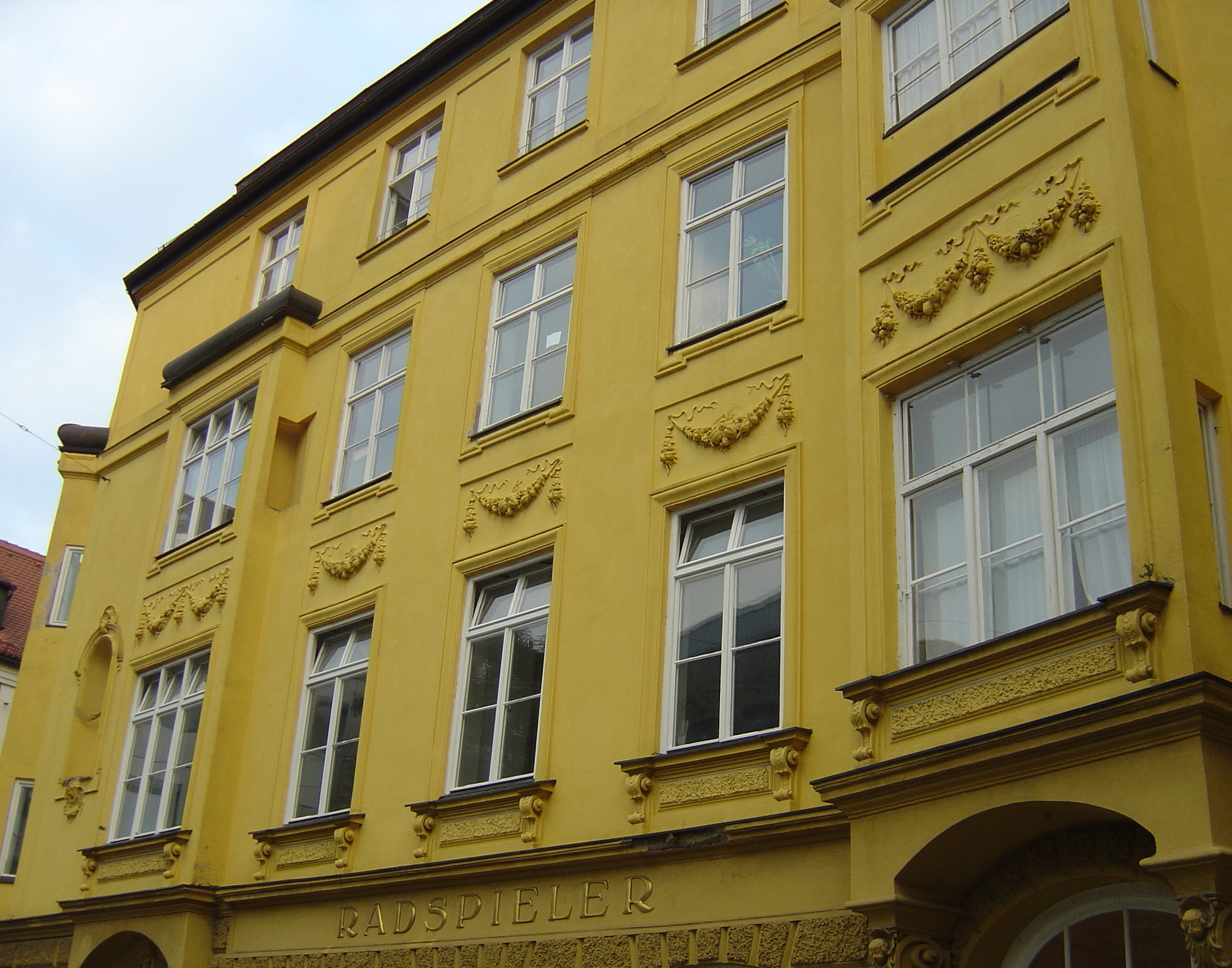
| On the wall of Heine's lodgings |
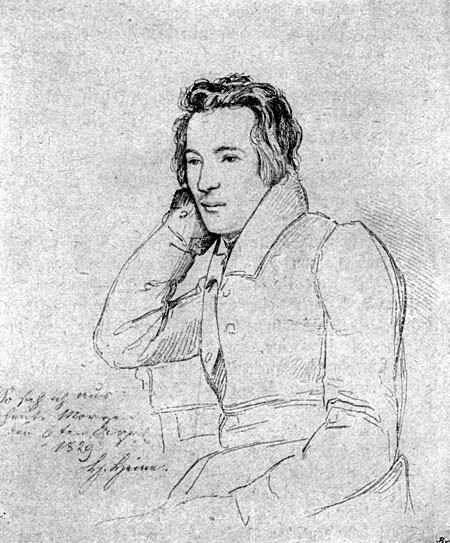 |
| Heinrich Heine |

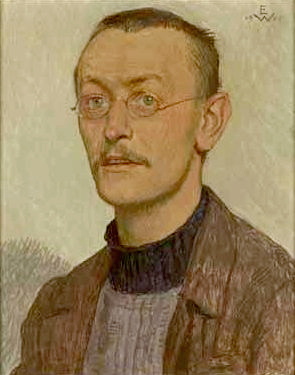 |
| Hermann Hesse |
Subscribe to:
Posts (Atom)