blending an assortment of thoughts and experiences for my friends, relations and kindred spirit

blending an assortment of thoughts and experiences for my friends, relations and kindred spirit
By Alison Hobbs, blending a mixture of thoughts and experiences for friends, relations and kindred spirits.
Showing posts with label Mandarin. Show all posts

Sunday, October 28, 2012

German and Chinese

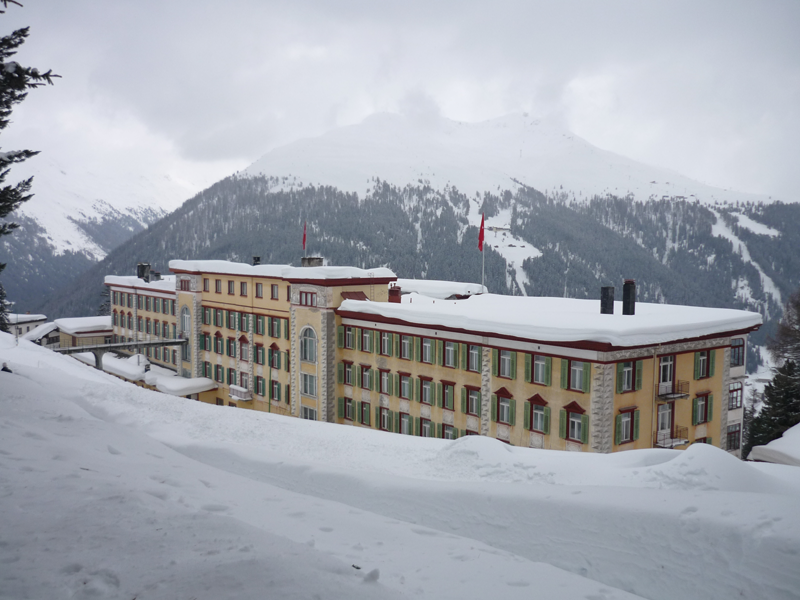
The old sanatorium at Davos, the setting of Mann's novel
I spent a few weeks this summer reading in German. I read both volumes of Thomas Mann's Der Zauberberg again (a "set book" when I was studying German at university and a favourite of mine) and got hold of a film of the novel that wanders rather from the original, but is still in keeping with its spirit, though I was disappointed with its interpretation of the last chapter. I've been watching DVDs of a German TV dramatisation of Buddenbrooks as well. Sabine of the German Embassy left some books behind when she left Ottawa this summer, one of which was the novel Eine Handvoll Glück by Barbara Noack, set in wartime Berlin and the few years before. Apart from the Berliner Dialekt used in the dialogue I found that story a very readable one.

Since September I've been in charge of the weekly meetings of the German-speaking Konversationsgruppe (26 people) that's part of Ottawa-CFUW's Diplomatic Hospitality service. Chris, who is also needing to study the language like mad in preparation for a business trip to Bremen, Stuttgart, etc. discovered something useful on the Deutsche Welle website: Langsam gesprochene Nachrichten: international news read out by German newsreaders at an abnormally slow pace and very clearly articulated, which gives non-Germans a better chance to follow what's being said––brilliant idea. I wish I'd had access to this when I was a teacher in the old days. I've told my Konversationsgruppe about it, anyhow. We've had five meetings so far and at the last one I decided to hand out some copies of extracts from a little book of old Chinese stories ("Anekdoten") entitled "Und Buddha Lacht" and translated by a German sinologist called Franz Kuhn, who died in 1961. As a matter of fact, Dr. Kuhn was the great uncle of Dagmar, one of my German-Canadian friends, and Dagmar was there to tell us a great deal more about him than appears in the Wikipedia article! Also present was Lolan, Chinese by origin, who with her in-depth knowledge of China's history and culture could help us appreciate the background to the stories.

I have also been taking some more Mandarin Chinese lessons on Skype with Mr. Yin of the Ottawa Chinese Language Centre, and practising with my daughter-in-law Sha or my friend Yiwen when the opportunity arises. I hope I'm making progress, have been trying to use modifying words like "yīnggāi" (should) and "kěnéng" (perhaps) as well as the very basic vocabulary, in order to make my sentences in Chinese a bit longer than they were to start with.

Thursday, October 28, 2010

Snow-flowers

Huā chá
I spent an hour practising Chinese phrases with my friend Yìwén yesterday evening, the phrase for "We're drinking beer! / "We'd like some beer" for instance, which is "Wǒmen hē píjiǔ!" This is a particularly useful phrase; according to Yìwén even bottled water is suspect over there and red wine (hóng pútáojiǔ) is more akin to sherry than what we're used to. "yī ping píjiǔ," (a bottle of beer) and then "Cheers!" "Gān bēi!" After which I'll probably need to know the word "wèishēngjiān," as in "duibuqi, wèishēngjiān zài nǎli?" (Excuse me, where's the washroom?)"...zenme zǒu? (How do I get there?)

Anyway, the brand of beer that Yìwén recommends is known as "xuě huā", Snow Beer, she called it.

"But doesn't 'huā' mean flower, as in flower tea / jasmine tea ('huā chá)?" I asked.

That's right, said Yiwen, it means 'snowflake.'

So a chinese snowflake = a snow flower. How lovely.

Sunday, September 5, 2010

Tigers, monkeys, Arctic char ...

Miào-miao, girl's first name.
Don't roll r.
bù: 2nd tone if neighbouring word demands it
xiānsheng = husband, lit.= first birth, because husband is usually older than wife. In different contexts, zhàngfu and aìren also mean "husband"
-ung combination not used in mainland China, only in Taiwan.
nín used to older people and strangers
Tiger is king of animals (wáng). When no tigers, monkey is king.
Wáng is the most common surname in China. 100 million Wangs. Also huge number called Lǐ.

Those were some of the notes I took during my four hours of Mandarin lessons this week. The tutor, Allan Yin, is giving me copious examples of Chinese characters, but I can't really take them in at this stage, so am concentrating on the pinyin. Even there, the rules of pronunciation are very complicated. The trouble is, pinyin was created by a committee, a Chinese communist committee at that; if a westerner had been on it, he might have requested rather different spellings. That word for husband, for example, spelled xiānsheng in pinyin, sounds a lot more like "shieng-shung". When one says "thanks" xièxie seems to be pronounced something like "share sea air," rather than "shee-shee," as one might have supposed.

During Lesson 3, I'll be learning the phrase: What is your favourite number? 

Jill and John last weekend
Fascinating stuff, but other business has been distracting me from it this week, including work on Crosswinds, the RFC's newsletter. I'm getting some good input for this issue from friends and acquaintances, including an description by Jill of flying in John's plane to Newfoundland where they climbed Gros Morne. (I commissioned this article.) Another one was a report from a trio of club members, all male, who took a plane to Oshkosh and back, also in July. Another page will feature Chris' IFR instructor Kathy Fox who won a prestigious award this summer. Not only is she a famous aviatrix, she does other adventurous things, such as this ...
Kathy's catch
"From Aug. 2-15, I paddled the last 400km of the Coppermine River, from the Northwest Territories into Nunavut, most of it above the Arctic Circle. The Coppermine River is wild with a combination of lake, lazy river and whitewater paddling (my first such experience in rapids). Our intrepid group of twelve, including two Black Feather guides, had numerous adventures and wildlife sightings along the way, including a grizzly bear that wandered into our camp late one evening when we inadvertently camped close to a fresh caribou kill. This required us to beat a hasty retreat - packing up, paddling downstream and across the river to re-establish our camp. Fortunately we still had 24 hours of light, though the cloudy skies made it quite dusky.

One of the highlights of the trip (for me) was catching a large Arctic char. In all we caught 6 that day which we enjoyed for dinner that night, and the next day's lunch, and dinner...etc. I had never fished before and caught this estimated 12-13lb. char on my 4th cast! It was the biggest fish of the entire trip! I'm hanging up my rod now since any lesser catch would only be a letdown...."

Wednesday, December 9, 2009

The quirks of various languages

The mathematician S.M. (Stan) Ulam wrote:

...there is a clarity to French which is not there in other tongues ...thoughts are steered in different ways. In French generalizations come to my mind and stimulate me toward conciseness and simplification. In English one sees the practical sense; German tends to make one go for a depth which is not always there. In Polish and Russian, the language lends itself to a sort of brewing, a development of thought like tea growing stronger and stronger. Slavic languages tend to be pensive, soulful, expansive, more psychological than philosophical... Latin is something else again. It is orderly; clarity is always there ... words are separated; they do not glue together as in German; it is like well-cooked rice compared to overcooked... When I speak German everything I say seems overstated, in English on the contrary it feels like an understatement. Only in French does it seem just right, and in Polish, too, since it is my native language and feels so natural.

Those fascinating comments appear in Ulam's autobiography, my husband's birthday present from his sister and brother-in-law. Chris bought himself a copy of Teach Yourself Ancient Greek the other day which looks well nigh impossible to me. It's got grammar notes like this:

When a reflexive sense is involved (i.e. when the reference is to the subject of the clause to which the noun-group containing the possessive belongs), the genitive of the reflective pronouns is used, again in the attributive position.

Anyway, not to be outdone, because my son now has a Chinese girlfriend, I have bought a BBC guide to Mandarin Chinese. What gluttons for punishment we are.

Did you know that the opposite of yes in Chinese is not yes (apparently the same words as for am / are / is and am not / aren't /isn'tbu shi?

Shi bu shi...? means Are you or are you not?

I spent a very interesting afternoon yesterday hearing a friend talk in French about Anton Tchekhov and tomorrow morning I'm off to see the German film of Lilly Unter Den Linden again, this time at the Ambassador's Residence. Next Tuesday Daniella (she's Romanian) is going to say goodbye to our Spanish conversation group, so I'll have to struggle away in Spanish there. Last time we met, Dawn told us that the polite Spanish word for you, Usted, abbreviated to Vd., is a corruption of a respectful but now obsolete way of addressing people as Your Mercy (i.e. Your Honour), vuestra merced, which prompted a Polish Canadian to tell us how, in Poland, people address one another, or used to, as Pan or Pani (like Monsieur... Madame) to show respect. It seems that those rules are still quite complicated. In Mandarin, too, nin is more respectful than ni. Oh dear, I'm afraid that's just reminded me of The Knights Who Say Ni in the Monty Python sketch.

Is English the only language that shows "you" no respect?