Sunday, September 2nd
That was the day that ten members of our family met at the Millenium Centre in Cardiff Bay (not to be confused with the Millenium Stadium in the city centre, the place I described in my previous post). International catamaran races were taking place on the water, the event advertised as Extreme Sailing. Music and the "cat" race commentary was being broadcast through loud speakers and the surroundings were crowded with people enjoying their day out. A merry-go-round (out of doors) and a very noisy break-dancing demo (indoors) were to hand. In the pedestrian area outside the Millenium Centre a once-a-year gourmet European food market was in business, selling paella, crêpes, Bratwürste, etc. I queued to buy a cheesy baguette slice from a couple from Montpelier, talking to them in French.
Alexander, who had brought his rugby ball along in case of an opportunity to play with it, was dressed in the Welsh colours that day. He went missing temporarily but had simply wandered off with Justin, my niece Rhiannon and their baby, Phoenix.
We wandered back towards town through the wide spaces of the Atlantic Wharf, a nicely landscaped development including a playground that kept the boys satisfied for a long time. Alexander scaled a climbing wall and his little brother Thomas wanted to copy him, saying, "Up! Up!"
This post should have been posted closer to Saturday, September 1, 2012.
While I was staying with my mother, my daughter and her family came to Cardiff to see us there. On the afternoon of their arrival, Emma, Peter, the children and I (minus Great-Grandma) took a guided tour of the Millenium Stadium on Westgate Street, stomping ground of the Welsh Rugby Union (WRU) and the venue for football matches, car races, pop concerts and the like. The surface of the ground inside the stadium is modified accordingly, pallets of turf being brought in, for example, for the ball games. It takes three weeks for the grass to settle in and grow over the cracks between the pallets. Amazing. I'd had no idea.
The stadium can hold a crowd of over 70,000, with boxes at exorbitant prices for VIPs or rich people. We stepped into one overlooking the stadium where a table was laid for a formal dinner. One of our tour group found himself sitting in the Queen's seat in the stands, that had wider armrests than the others.
The tour had begun behind the souvenir shop (filled with items coloured red, mostly dragons); we were then shepherded into a small theatre to watch a 10 minute BBC documentary about the history and merits of the stadium, which confirmed our suspicions that rugby is not so much a sport as a religion in these parts. A recorded pep talk was broadcast in the home team's changing rooms as well, so that we could get a sense of the awe and drama of big match days. The coach's speech had the ring of Shakespeare's Once more unto the breach, dear friends, once more ... and if not proclaimed by an actor, by someone who should have been––Remember, boys, that although we come in here as individuals, we go out as a team!––and we were led along the corridors, via the press conference room, to do just that, to a recording of deafening cheers from the crowd, my grandson Alexander pretending all the way that he was wearing one of those numbered, red shirts. New team members inherit the shirts of their predecessors, apparently. After playing in an international match, they are awarded souvenir caps. We got to see the cup itself, too, the Holy Grail of Welsh rugby.
His name was actually Constantin Brâncuși, but the Romanian lady whom I heard talking about this artist, spoke about him in French, and I took a few notes as she did so (this was about 5 weeks ago). We were in the lounge of an Ottawa seniors' residence, since several of the people listening with me were very elderly (but alert, articulate and very interested in what she had to say).
*****
Brancuse, né 1876 au sud de la Romanie près d'un monastère (mort 1957 à Paris). Il quitte sa famille à 11 ans, un fils jamais reconnu de son père, et en 1902 il entre l'Ecole Nationale de Beaux Arts à Paris. Invité par Rodin comme son assistant, il était trop à son ombre. Brancuse évite le cubisme, le dadaisme, etc. Un de ses premiers oeuvres était scandaleux, considéré comme pornagraphique et retiré d'une exposition de 1919: Princesse X. Il crée une sculpture Le baiser qu'on trouve dans la cimetière à Montparnasse. Autres examples de son art: La colonne sans fin (d'acier) dans un parc de sculpture en Romanie, La table du silence et La porte du baiser (1938). Le nouveau-né a la forme d'un oeuf.
"Sleeping Muse" by Brancusi
1927 il est arrêté aux Etats-Unis à propos d'une pièce non-identifiée comme un objet d'art à la douane. Il doit payer $4000 pour importer ses sculptures, L'oiseau dans l'espace, par exemple.
(Quels sont les critères pour juger si quelque chose est un objet d'art ou non? Qui doit juger? Quelles sont les limites de l'art?)
En 1928 une école dite d'art moderne s'est développée autour de lui. C'est l'abstraction sculpturale, minimaliste, un peu surréaliste. Son atelier est a Montparnasse, plein de bustes en bois, en marbre, en bronze ...
Toujours il utilise des femmes pour atteindre ses idéaux. Quelques-unes "ont la curiosité fatale de vouloir faire sa connaissance"! Liste des muses de Brancuse:
la petite fille de François Napoléon, Marie Bonaparte, qui pose pour la scandaleuse Princesse X
Eileen Lane (américaine catholique)
Léonie Ricou, parisienne (sujet de Madame LR, vendue par Christie's pour €20 million)
Agnès Mayer, la femme du directeur du New York Times ...
... et sa fille!
*****
I noticed a piece by Brancusi myself, earlier this year, when I visited the SFMOMA (the Museum of Modern Art in San Francisco). La négresseblonde, it was called. I thought it looked rather like a fish.
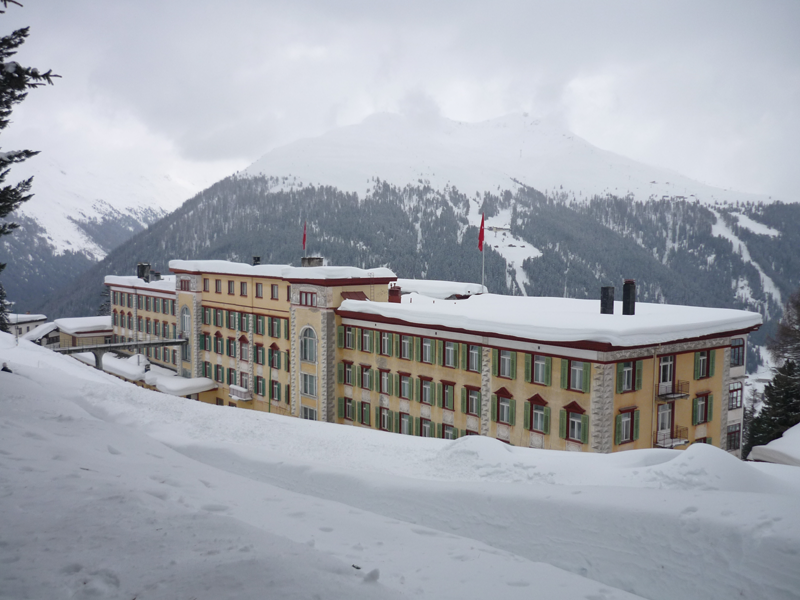
The old sanatorium at Davos, the setting of Mann's novel
I spent a few weeks this summer reading in German. I read both volumes of Thomas Mann's Der Zauberberg again (a "set book" when I was studying German at university and a favourite of mine) and got hold of a film of the novel that wanders rather from the original, but is still in keeping with its spirit, though I was disappointed with its interpretation of the last chapter. I've been watching DVDs of a German TV dramatisation of Buddenbrooks as well. Sabine of the German Embassy left some books behind when she left Ottawa this summer, one of which was the novel Eine Handvoll Glück by Barbara Noack, set in wartime Berlin and the few years before. Apart from the Berliner Dialekt used in the dialogue I found that story a very readable one.
Since September I've been in charge of the weekly meetings of the German-speaking Konversationsgruppe (26 people) that's part of Ottawa-CFUW's Diplomatic Hospitality service. Chris, who is also needing to study the language like mad in preparation for a business trip to Bremen, Stuttgart, etc. discovered something useful on the Deutsche Welle website: Langsam gesprochene Nachrichten: international news read out by German newsreaders at an abnormally slow pace and very clearly articulated, which gives non-Germans a better chance to follow what's being said––brilliant idea. I wish I'd had access to this when I was a teacher in the old days. I've told my Konversationsgruppe about it, anyhow. We've had five meetings so far and at the last one I decided to hand out some copies of extracts from a little book of old Chinese stories ("Anekdoten") entitled "Und Buddha Lacht" and translated by a German sinologist called Franz Kuhn, who died in 1961. As a matter of fact, Dr. Kuhn was the great uncle of Dagmar, one of my German-Canadian friends, and Dagmar was there to tell us a great deal more about him than appears in the Wikipedia article! Also present was Lolan, Chinese by origin, who with her in-depth knowledge of China's history and culture could help us appreciate the background to the stories.
I have also been taking some more Mandarin Chinese lessons on Skype with Mr. Yin of the Ottawa Chinese Language Centre, and practising with my daughter-in-law Sha or my friend Yiwen when the opportunity arises. I hope I'm making progress, have been trying to use modifying words like "yīnggāi" (should) and "kěnéng" (perhaps) as well as the very basic vocabulary, in order to make my sentences in Chinese a bit longer than they were to start with.
Since flying back from New Brunswick and Quebec, I've had a wealth of different experiences, not least of which was my attendance yesterday evening at the extraordinary solo performance of Goethe's Faust (Part I),at St. Paul's University.
St. Paul's, originally intended for the "Oblates of Mary Immaculate," is still to some extent a Theology college, and indeed when I arrived (alone in the dark) at the front entrance there was a tall monk on the steps wearing a long skirt and a hood, talking French into a cellphone, but nowadays it is also shares its premises with the Ottawa branch of the Goethe Institut. I know Cristina, the lady who runs the Goethe Institut here, and she had invited me along to the show in the auditorium.
The visiting performer was Bridge Markland from Berlin, a woman who has mastered multiple roles as a high school teacher, translator, drag artist, dancer, children's theatre producer, actor, puppeteer, and performer in variety shows. Not necessarily in that order. She gives "one-woman-transgender-performances" in sex clubs and performances of classical drama by Schiller, Goethe, Kleist, in schools. It seems to me she belongs to the German cabaret tradition of the 1920s and 30s; she'd have been quite at home with those people (I noticed that she used a Brecht-Weill song at one point in her show).
Anyway, what we were watching was Ms. Markland's performance of Faust in the Box:
It was so clever, thoroughly kreativ! (It had taken two years of preparation.) As you can see in the video, she pops in and out of a cuboidal box and dons various dressing-up hats in order to be different characters, although as Mephistopheles, in a very devilish interpretation, she doesn't wear any hat on her bald head. Sometimes, in the scenes where two or three people are interacting, she resorts to glove puppets. For the famous "poodle" scene she unpacked a wind-up dog from a toy shop that stood on its back legs and did somersaults. For the cathedral scene she simply hung a Holy Virgin doll over the side of the box and lit a candle on the floor of the stage. For example.
She knew the play backwards, every line, and her mouth moved to the voice-over reading, a recording by a cast of German actors (collaborators) that came through concealed speakers, the muscles of her face also responding to whichever character was speaking as she "listened" to her puppets saying their lines. Sometimes all we saw were two puppets, as she herself hid in the box below. The most original idea she'd had was to integrate the words of pop songs into the text (she mouthed those too, along to the music), so that, for example, when Gretchen was meeting Faust, we saw the Gretchen character singing and jigging about to Madonna's Like a Virgin, which had the audience in stitches. Sometimes only half a line from a song was used to interrupt the Goethe dialogue––technically it was very well done and a lot of the songs were in English––so that the audience really had to concentrate to work out the allusions.
I was pretty much exhausted at the end, after 80 minutes of this, and so must she have been, but she's used to it. She then took a swig of water and proceeded to solicit questions and comments from the audience, which took another twenty minutes or so. She seems completely bi-lingual, spoke in a mix of German and English. She also performs an English version of Faust-in-the-Box, combining two established translations with some ideas of her own, is doing that in Vermont on the next stage of her tour, and has begun to perform Robbers-in-the-Box too, in various places (her take on Schiller's Die Räuber). Somebody asked her if she'd be willing to come to Ottawa again to give another of her performances and she answered, "As long as you'll pay for my air fare!" and added, interestingly, that she'd also like a hotel room to herself, because, off stage, she likes to be privat.
That was a bad case of writer's block. According to this blog I've been stuck in Quebec for the last two-and-a-half months! Let me post this and move on now.
August 9th
Our flight from Rimouski to Riviere-du-Loup was short and sweet, over enchanting scenery; the valley leading to St.-Fabien and the little harbour at Trois-Pistoles looked particularly appealing from the air.
We landed, found a motel (the one in this photo) and in the afternoon took a three hour whale watching cruise from the mouth of the Rivière to the other side of the St. Lawrence on a small boat accommodating a large party of Chinese tourists, so full that we didn't even get a seat. It was a perfect day for the experience though, the water, unusually, as smooth as silk.
Hungry when we came back on shore, we tried for a table at the pub on the headland, Au Boucaneux, but it was full––you need a reservation if you don't want to wait for a table for hours––so we had sandwiches and chips at the snack bar next door instead.
Next morning we were fog bound. It was raining too, with the cloud ceiling and visibility so low that we couldn't fly anywhere. Instead, after breakfast at Mike's we rented a car and, having made sure that PTN was still safely tied down at the airport, we went for a walk from the Parc des Chutes at the edge of the town. The notices encouraged us to "...Observez la chute de 33 mètres, du haut des deux passerelles surplombant la rivière du Loup" where there was an old, recently renovated hydro station and the gateway to a network of walking trails. In spite of the rain, we followed the longest, Path No. 1, keeping a look out for red squares on the trees. This route took us through an apple orchard where sculptures had been planted too. In fact the whole area was a park for experimental art. A curtain of eyes had been hung under the footbridge spanning the river.
At lunchtime we found a nice coffee shop on the main street on the hill, then made another visit to the airport again, still swathed in cloud. It was worth the detour, because an extraordinary sight met our eyes. A Junkers 52 had flown in, defying the clouds at a low altitude (skud running all the way from Toronto! We'd heard it flying in before we spotted it. "What's that?" we said.)
Being a groovy plane, the Junkers (built in Germany in 1939, but now Swiss owned) on this flight was being sponsored by Rimowa: "the luggage with the grooves." It wasn't just any old flight; the crew had taken the aircraft from Switzerland to California via the Faroes, Iceland, Greenland, etc. and were now on their way back home, a real adventure. The journey log is on their website. As a newly captured prisoner-of-war after the Battle of Crete, my father had once ridden in a 'plane like this: it was his first ever flight, in fact, in 1941. We walked all around the one at Rivière-du-Loup, and talked to its crew before they left for their supper in town.
Our supper was at Les Jardins de Lotus after we had checked into the Loupi once again.
The following day, August 10th, we flew home via Trois-Rivières, taking a half-way break there and breaking through the cloud there too.
Hey, I'm back at last. Now I can start writing about all the other experiences I have had since.
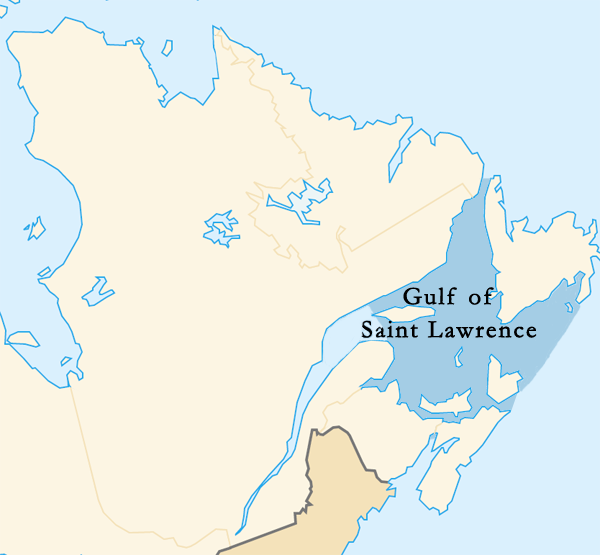
Lifting off from Charlo we struck out across the Baie des Chaleurs, IFR but in good visibility, climbing to cross the hills on the Quebec side and eventually "maintaining 6000" feet ASL, which gave us a good vantage point for spotting the towering cumulus ahead. Even in the morning the bigger clouds appeared to be building quite rapidly above the Gaspésie once we had left the coast. We requested a detour around one cloud before returning on course which took us straight towards another, that we penetrated. We reckoned it was towering to 20,000' at most, not really dangerous yet; despite definite turbulence as we entered and left the cloud it didn't seem too drastic in the middle, just very wet––heavy rain washed our windscreen clean; it needed that. Beyond this encounter with "active weather" we could see our way to the coast, i.e. the Gulf of St. Lawrence.
A twin-prop Navajo ahead of us cancelled IFR to allow us to do a long RNAV approach over the water, partly covered in a thin low layer of mist, to Mont Joli (CYYY). We know this airport but hadn't approached it like this before, flying a 12 mile final quite low over the sea! This airport is much livelier than the one at Charlo, advertising chartered flights to the Ile d'Anticosti: rich people fly there, willing to pay $4000 for their hunting and fishing experience. Another vehicle that stops at Mt. Joli airport is the courtesy shuttle bus from the Motel Gaspésiana by the shore at Ste. Flavie down the hill. This institution takes pride in the service it provides, so we were willing to order our lunch at their restaurant with its view of the rocky beach (tide out). The tables were stylishly laid, the waitresses looked smart in their navy blue uniforms and freshly caught cod was on the menu.
Before going back up the hill to our 'plane we decided to take a walk along the road (Rte 132) to see Le Grand Rassemblement again, Marcel Gagnon's concrete figures emerging from the sea and clustering together by his house, the Centre d'Art that I've mentioned before in this blog, where we stayed in 2009. There they were again, none of them submerged because of the low tide and some with seaweed for hair, this year. There were extra ones on tethered rafts, and when we turned away and returned up the road to the airport we passed another Gagnon creation, a flock of concrete sheep with their shepherd on the grassy slope by the Mont Joli Motel.
This time round we chose not to stay in Ste. Flavie but to fly on to Rimouski, taking the precaution of booking a room at the Comfort Inn before setting off. It was the high season. We feared we'd be too far from the centre, around the Institut Maritime, but we found we could walk there in less than an hour, along the Promenade de la Mer. Rimouski is a cultured town and a chamber music festival was going on in the area: the Concerts aux Iles du Bic, now in its 11th season. If we'd known about this beforehand we might have planned our summer trip differently! Unfortunately most of the concerts were happening in country churches at some distance, e.g. in St.-Fabien-sur-mer. The Bic islands are in an area of outstanding natural beauty, but we'd have needed more time and preparation to get there and back from Rimouski ... or perhaps not! I have just discovered from the website that a festi-bus shuttle could have served our purpose: how frustrating to find that out too late. Anyhow, we did catch part of a free, outdoor concert that was taking place in the central gardens of Rimouski's Place Publique, hearing two young performers, David Stylenko, on saxophone and Olivier Tremblay-Noël, on the marimba. I haven't been able to discover who composed their duet for "anche et baguettes" (reed and sticks) but it was French-style music of very good quality. Lots of people were sitting on the grass listening carefully.
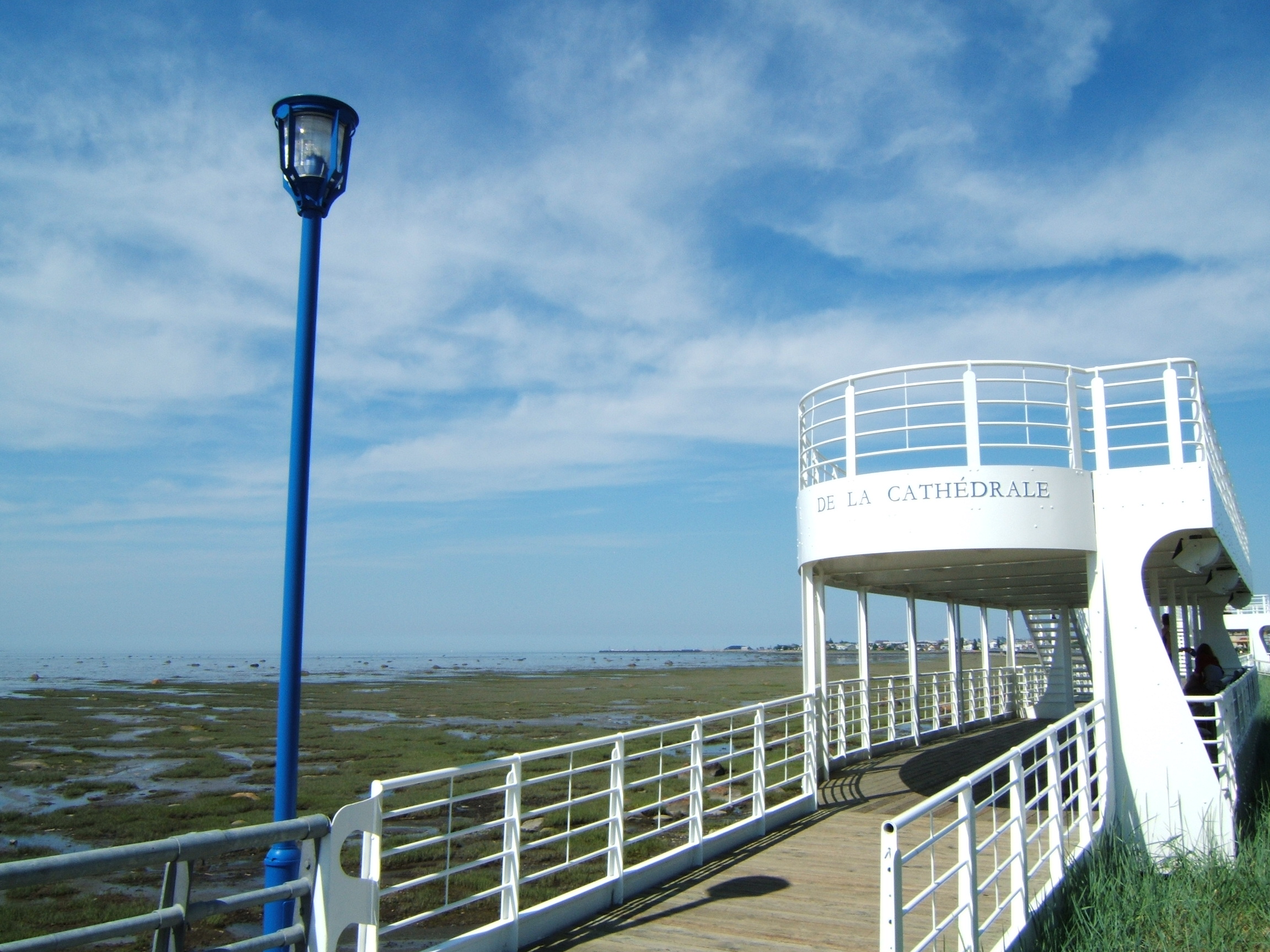
We had a panini at Tim Horton's, a walk down the Boulevard where the shops are, including a good French bookshop that stays open 12 hours a day in the summer season, and wandered back to the Promenade just before high tide. If you scroll down to the bottom of this page (or read the French version) you'll find some information about the Tide Tower. We climbed onto the lookout to see the view and while we were up there heard the signal announcing the turn of the tide––la pause entre le flot et le jusant. An elderly gentleman sitting on the bench up there told me that, and kept talking to me when not reading his book (marking it with a pencil from time to time). He comes up to sit there every evening. He said he was born in Rimouski but had left the town for 43 years until he came back six years ago. He had missed the sunsets.


 We wandered back towards town through the wide spaces of the Atlantic Wharf, a nicely landscaped development including a playground that kept the boys satisfied for a long time. Alexander scaled a climbing wall and his little brother Thomas wanted to copy him, saying, "Up! Up!"